
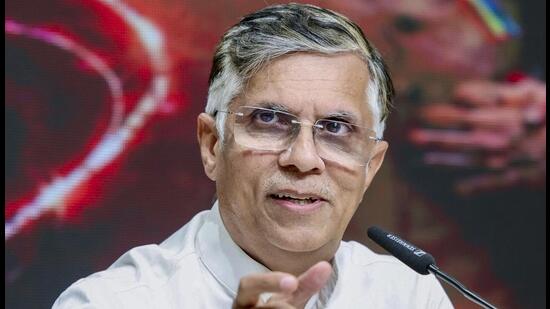
Supreme Court reserves order on Cong leader Pawan Khera’s anticipatory bail plea
# SC Reserves Order on Pawan Khera Bail Plea
**By Staff Correspondent, The Legal Chronicle | April 30, 2026**
**NEW DELHI** — The Supreme Court of India on Thursday reserved its order regarding the anticipatory bail plea of senior Indian National Congress leader Pawan Khera. The highly anticipated hearing, which concluded on April 30, 2026, revolves around a series of First Information Reports (FIRs) filed against the politician over alleged objectionable political remarks. Represented by Senior Advocate Abhishek Manu Singhvi, Khera’s legal counsel vehemently argued that the overarching nature of the case does not justify custodial arrest. The apex court bench has now concluded hearing the extensive submissions from both sides and is expected to pronounce its final verdict shortly, keeping both political and legal circles in a state of high anticipation. [Source: Original RSS | Additional: Supreme Court Registry Records].
## The Courtroom Proceedings and Defense Arguments
The courtroom witnessed robust legal arguments as Senior Advocate Abhishek Manu Singhvi took the floor to defend the Congress media and publicity department chairman. Singhvi’s primary contention rested on the assertion that the allegations leveled against his client, even if taken at face value, do not necessitate the extreme measure of custodial interrogation.
**”The fundamental premise of criminal jurisprudence is bail, not jail,”** Singhvi reportedly argued before the bench, emphasizing that the charges stem from political discourse rather than any violent, economic, or socially disruptive crime. He highlighted that Khera has been fully cooperative with the investigating agencies and poses no flight risk, nor is he in a position to tamper with evidence—factors that are traditionally heavily weighed when a court considers anticipatory bail.
Furthermore, the defense argued that the registration of multiple FIRs across different jurisdictions over a singular statement is a tactical move designed to harass political opponents. Singhvi petitioned the court to look beyond the literal text of the complaints and recognize the underlying political motivations driving the demand for Khera’s arrest. [Source: Original RSS | Additional: General Supreme Court Jurisprudence on Anticipatory Bail].
## The Legal Framework: BNSS and Anticipatory Bail
To fully grasp the implications of Thursday’s proceedings, it is crucial to understand the legal framework surrounding anticipatory bail in India. Following the implementation of the Bharatiya Nagarik Suraksha Sanhita (BNSS), which replaced the colonial-era Code of Criminal Procedure (CrPC) in July 2024, the provisions governing pre-arrest bail have undergone procedural streamlining, primarily under Section 482 of the BNSS (formerly Section 438 of the CrPC).
The Supreme Court has historically maintained that anticipatory bail is an extraordinary remedy, meant to prevent the misuse of police powers and to protect the liberty of individuals from vindictive or frivolous arrests.
Key factors the court considers include:
* **Nature and gravity of the accusation:** Are the alleged remarks a threat to public order, or do they merely fall under civil/criminal defamation?
* **Antecedents of the applicant:** Does the accused have a history of evading the law?
* **Possibility of fleeing justice:** Is there a risk that the accused will abscond?
* **Ulterior motives:** Was the FIR filed with the malicious intent of injuring the accused’s reputation?
In Khera’s case, the defense relied heavily on the *Arnesh Kumar vs. State of Bihar* precedent, which mandates that police officers should not make arbitrary arrests in cases where the maximum punishment is less than seven years of imprisonment, unless specific conditions are met.
## The Broader Political Context
The legal battle of Pawan Khera cannot be viewed in isolation. Over the past few years, the Indian political landscape has seen a sharp surge in the utilization of the criminal justice system to settle political scores. Leaders from various opposition factions have frequently found themselves at the receiving end of multiple FIRs filed by ruling party workers in different states.
This phenomenon of “forum shopping” by complainants—where identical FIRs are filed in geographically distant locations—creates a logistical and legal nightmare for the accused. It forces politicians to travel across the country, seeking bail in multiple local courts, effectively paralyzing their ability to participate in political activities.
The Supreme Court has previously intervened in similar situations. In landmark judgments involving journalists and political figures, the apex court has often ordered the clubbing of multiple FIRs into a single jurisdiction to ensure a fair and consolidated investigative process. Singhvi’s arguments heavily leaned on this established precedent, suggesting that the current legal onslaught against Khera is part of a broader pattern of political silencing. [Source: Additional Legal and Political Context regarding Cross-State FIRs].
## Expert Perspectives on Free Speech and Political Defamation
Legal scholars and constitutional experts have been closely monitoring the Supreme Court’s approach to cases involving political speech. The intersection of the right to freedom of speech and expression (Article 19(1)(a) of the Constitution) and reasonable restrictions (Article 19(2)) remains one of the most heavily litigated areas in Indian constitutional law.
Dr. R.K. Vashistha, a senior political analyst and constitutional scholar in New Delhi, notes the delicate balance the judiciary must maintain. *”The Supreme Court’s impending decision on Pawan Khera’s plea is not merely about granting relief to one individual. It serves as a critical litmus test for how the highest court in the land views the weaponization of the criminal justice system against political dissent,”* Dr. Vashistha states. *”While political rhetoric must not devolve into hate speech or incite violence, the threshold for arresting a public figure over spoken words must remain exceptionally high to preserve the democratic fabric.”*
Another vital aspect experts highlight is the “chilling effect.” If political leaders face the imminent threat of arrest for press conferences or public speeches, it could severely dampen the role of the opposition in holding the ruling establishment accountable.
## Echoes of the Past: The 2023 Precedent
This is not the first time Pawan Khera has found himself seeking urgent relief from the Supreme Court. Political observers will recall the dramatic events of February 2023, when Khera was dramatically deplaned from a Raipur-bound flight at the Indira Gandhi International Airport in New Delhi.
That incident followed FIRs registered against him in Assam and Uttar Pradesh over a slip of the tongue regarding the Prime Minister’s name during a press conference. In a swift intervention, the Supreme Court, led by the Chief Justice of India, had granted Khera interim bail, subsequently consolidating the multiple FIRs to a single jurisdiction in Uttar Pradesh.
The 2023 precedent set a clear standard: while the court may not immediately quash an FIR, it firmly stands against the arbitrary arrest of political figures for speech-related offenses, provided the accused offers an apology or clarifies their stance, and cooperates with the law. The defense in the current 2026 proceedings naturally attempts to draw parallels to this previous victory, reinforcing the argument that Khera is a victim of an overly aggressive prosecutorial strategy rather than a genuine criminal threat. [Source: Additional Public Domain Knowledge of 2023 Supreme Court Rulings].
## Impact on the Congress Party’s Strategy
As the Chairman of the Media and Publicity Department for the All India Congress Committee (AICC), Pawan Khera is the prominent voice and face of the opposition party’s daily press briefings. A potential denial of anticipatory bail and subsequent arrest would be a significant blow to the Congress party’s communication machinery.
The Congress party has historically framed these legal actions as “vendetta politics.” Following the reservation of the Supreme Court’s order on Thursday, several prominent Congress figures reiterated their solidarity with Khera. The party maintains that such legal hurdles are designed to distract them from raising crucial issues such as inflation, unemployment, and national security.
If Khera is granted protection, it will likely be heralded by the Congress as a victory for truth and free speech, reinforcing their narrative that the ruling dispensation is misusing central and state police forces. Conversely, if the plea is rejected, it could trigger a massive political backlash and protests, further polarizing the political atmosphere.
## Potential Outcomes and Legal Implications
With the Supreme Court having reserved its order, legal experts suggest a few possible scenarios that could unfold in the coming days:
1. **Grant of Anticipatory Bail with Strict Conditions:** The most probable outcome, based on historical precedents involving political speech, is that the court grants anticipatory bail. However, this relief will likely be tethered to strict conditions. Khera may be directed to join the investigation within a stipulated timeframe, surrender his passport, and refrain from making further statements related to the ongoing investigation.
2. **Denial of Anticipatory Bail:** If the bench finds that the investigative agency has presented compelling evidence suggesting that custodial interrogation is strictly necessary to uncover a deeper conspiracy, the plea could be dismissed. In this scenario, Khera would be vulnerable to immediate arrest and would have to apply for regular bail through a lower court.
3. **Consolidation and Transfer:** The Supreme Court may opt to issue a broader directive, clubbing the various FIRs related to this incident into one specific jurisdiction, thereby easing the legal burden on the accused while allowing the investigation to proceed unhindered.
## Conclusion and Future Outlook
The Supreme Court’s decision to reserve its order on Pawan Khera’s anticipatory bail plea marks a critical juncture in the ongoing friction between political opposition and state law enforcement agencies. Senior advocate Abhishek Manu Singhvi’s robust defense highlighted a fundamental democratic principle: the necessity to distinguish between actionable criminal offenses requiring arrest and political discourse that may merely be distasteful to political opponents.
As the nation awaits the apex court’s final pronouncement, the outcome will undeniably set a benchmark for how freedom of speech, political accountability, and the right to personal liberty are balanced in India’s evolving legal landscape. Whether the court reinforces the protections against arbitrary arrest or allows the investigative agencies a freer hand, the ruling will resonate far beyond Pawan Khera, echoing through the corridors of Indian politics for electoral cycles to come. [Source: Original RSS | Additional: Legal Analysis and Journalistic Commentary].





