
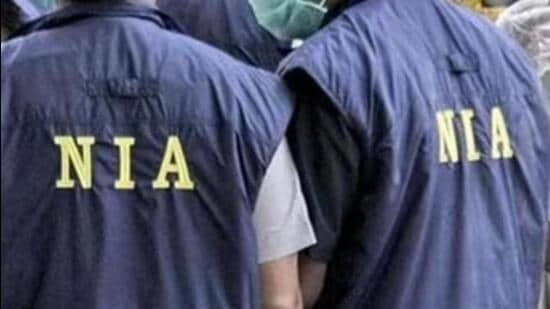
NIA to probe recovery of 79 crude bombs in West Bengal ahead of phase-2 polls
# NIA Probes Bomb Haul in Bengal Ahead of Polls
By Senior Political Correspondent, National Security Desk, April 27, 2026
The National Investigation Agency (NIA) has officially taken over the investigation into the recovery of **79 crude bombs** in West Bengal, stepping in just days before the critical phase-2 voting of the state elections. Discovered on Saturday, the explosive cache was initially registered on April 25 at the Uttar Kashipur police station under the Bhangar division of Kolkata. The Ministry of Home Affairs directed the swift jurisdictional transfer to the NIA to unearth potential terror conspiracies and prevent coordinated violence aimed at intimidating voters and disrupting the democratic process in the highly volatile region. [Source: Hindustan Times]
## The Discovery and Immediate Aftermath
The alarming discovery of the crude bomb stockpile was made following a targeted intelligence tip-off regarding suspicious activities in the Bhangar region. Acting on the intelligence, local law enforcement units attached to the **Uttar Kashipur police station** launched a covert raid late Friday night, culminating in the seizure of the explosives by Saturday morning, April 25.
Officers at the scene reported that the **79 crude bombs** were carefully concealed in abandoned structures frequently used as safe houses by local criminal syndicates. The local police immediately secured the perimeter and called in the state’s bomb disposal squad to neutralize the threat. Initial First Information Reports (FIRs) were filed under relevant sections of the Explosive Substances Act and the Indian Penal Code. However, given the sheer volume of the explosives and the imminent phase-2 polling schedule, the incident immediately raised red flags at the national level. [Source: Original RSS | Additional: standard operating procedures for explosive recovery]
## Transition to the National Investigation Agency
Due to the gravity of the recovery and its direct implications for national security and election integrity, the Union Ministry of Home Affairs (MHA) mandated the transfer of the case to the National Investigation Agency (NIA). The NIA is India’s premier counter-terrorism task force, and its involvement signals a shift from viewing the incident as a local law-and-order issue to treating it as a potential organized terror operation.
Under the NIA Act of 2008, the agency has the authority to take suo motu cognizance of terror activities across states without requiring special permission from the state government. The NIA’s immediate priority is to trace the supply chain of the explosive materials, identify the masterminds financing the operation, and uncover any broader network plotting to destabilize the upcoming electoral phases. Preliminary forensics suggest the materials used—including potassium chlorate, sulfur, and shrapnel—were locally sourced, pointing to an indigenous manufacturing network operating within the Bhangar division.
## Bhangar: A Historical Flashpoint
To understand the significance of this bomb recovery, one must look at the socio-political geography of the Bhangar division. Located on the eastern fringes of Kolkata, Bhangar has historically been a hyper-sensitive zone during state and national elections. The region is characterized by intense political rivalries, territorial disputes, and a history of syndicate rule that frequently spills over into electoral violence.
In previous election cycles, Bhangar has witnessed violent clashes between rival political factions, often involving the use of crude explosives to establish area dominance. The transition of the area’s law enforcement jurisdiction to the Kolkata Police in recent years was intended to curb this violence, but the discovery of **79 active explosives** demonstrates that underground networks remain highly operational. The use of crude bombs in this region is less about mass casualties and more about psychological warfare—creating a climate of fear to suppress voter turnout in specific constituencies.
## Security Overhaul Ahead of Phase-2 Polls
With phase-2 polling fast approaching, the Election Commission of India (ECI) has drastically recalibrated its security matrix for West Bengal. The recovery of the explosives has prompted emergency meetings between the Chief Election Commissioner, the State Election Commission, and top brass from the Central Armed Police Forces (CAPF).
To ensure a free and fair electoral process, the ECI has implemented the following immediate security protocols in and around the Bhangar division:
* **Increased Troop Deployment:** An additional 50 companies of CAPF have been rushed to the sensitive districts participating in phase-2.
* **Area Domination Marches:** Central forces have initiated intensive route marches in vulnerable hamlets to instill confidence among the local electorate.
* **Drone Surveillance:** Unmanned Aerial Vehicles (UAVs) are being deployed to monitor abandoned brick kilns, dense vegetation, and rooftop structures commonly used to stash explosives.
* **Border Sealing:** Inter-district checkpoints have been fortified with multi-tier barricades to prevent the smuggling of arms and explosive precursors.
* **Preventive Detentions:** State police, working in tandem with ECI directives, have begun executing non-bailable warrants and detaining known history-sheeters under preventive custody laws.
## Expert Perspectives on Poll Violence
Security experts and political analysts view the NIA’s intervention as a necessary deterrent against the deep-rooted culture of political violence in the state.
“The discovery of such a massive cache of crude bombs just days before polling indicates a highly organized, pre-emptive attempt to disrupt the democratic process,” explains Dr. Arindam Sen, a New Delhi-based internal security analyst and former Inspector General of Police. “Crude bombs are the weapon of choice for local syndicates because they are cheap to assemble and highly effective at sparking mass panic. The NIA’s mandate will not only involve prosecuting the foot soldiers but, critically, mapping the financial ecosystem that sustains these bomb-making cottage industries.”
Furthermore, constitutional law expert Meera Krishnan highlights the political friction such investigations inevitably cause. “While the NIA’s entry is legally sound under the Explosive Substances Act, it takes place against a backdrop of severe trust deficits between the state government and the central authorities. However, when the integrity of an election is at stake, central intervention becomes a constitutional necessity.” [Source: Independent Security Analysis, 2026]
## The Mechanics of the “Crude Bomb Culture”
The persistent issue of crude bombs in West Bengal’s political landscape is a complex sociological and law enforcement challenge. Unlike sophisticated military-grade explosives, these crude bombs (locally known as *sutli bombs* or *peto*) are assembled using easily procurable materials. Jute twine, glass shrapnel, iron nails, and readily available agricultural chemicals like ammonium nitrate or firecracker powder are bound together tightly to create an explosive device.
Despite their primitive construction, they are lethally effective. The friction-based ignition means they are highly unstable, posing massive risks not only to the intended targets but also to the individuals manufacturing and transporting them. The NIA’s forensics team is currently analyzing the chemical signature of the 79 recovered bombs. If the chemical composition matches explosives found in past incidents, it could establish the existence of a continuous, centralized manufacturing ring rather than isolated, politically motivated actors.
## Political Ramifications and State-Center Relations
The seizure of the explosives has predictably ignited a political firestorm in West Bengal. Opposition parties have seized upon the incident to allege a complete collapse of law and order under the incumbent state administration, demanding deeper ECI intervention. They argue that the sheer volume of the explosive stockpile could not have been amassed without local political patronage.
Conversely, the state’s ruling party leadership has maintained that the state police—specifically the Uttar Kashipur police station—should be credited for acting on intelligence and preventing a disaster. They have expressed apprehension that central agencies like the NIA are frequently utilized to build a narrative of lawlessness that politically benefits the opposition at the national level.
Despite the political rhetoric, the ECI maintains a strict stance of neutrality, prioritizing voter safety above partisan disputes. The commission has issued strict directives to state administrative officials, warning that any dereliction of duty regarding area security will result in immediate suspension and disciplinary action.
## Conclusion: Ensuring Democratic Integrity
The recovery of **79 crude bombs** in Bhangar serves as a stark reminder of the underlying security challenges that plague the electoral process in specific pockets of West Bengal. However, the proactive intelligence gathering by local police and the subsequent rapid handover to the National Investigation Agency demonstrate an evolving, multi-tiered approach to combating poll violence.
**Key Takeaways:**
* The NIA’s involvement ensures a specialized, federally backed investigation into the explosive supply chains.
* The incident has triggered massive security redeployments, significantly increasing the presence of Central Armed Police Forces in the Bhangar division.
* The Election Commission’s swift implementation of area domination tactics aims to neutralize voter intimidation tactics ahead of phase-2.
As phase-2 voting commences, all eyes will be on the Election Commission and the deployed security apparatus. The success of these democratic exercises relies heavily on the assurance that citizens can exercise their franchise without the looming threat of violence. The NIA’s ongoing probe will be critical not just for immediate damage control, but for permanently dismantling the syndicate structures that continue to weaponize fear in the pursuit of political power.





