
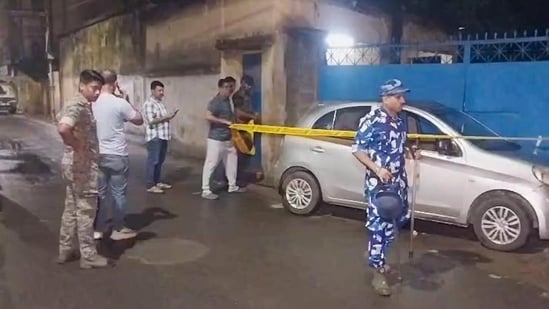
Suvendu aide's murder: Probe hinges on links with UP and UPI
# Suvendu Aide Murder: UPI Trail Exposes UP Link
**By Special Investigative Desk, News Wire Reporter** | May 11, 2026
The political landscape of West Bengal was rocked on Sunday after the highly orchestrated killing of Chandrakant, a prominent aide to the state’s Leader of the Opposition, Suvendu Adhikari. Executed in a terrifyingly brief window of less than a minute, the targeted strike initially appeared to be a flawless contract hit. However, critical lapses by the assailants have provided law enforcement with major breakthroughs. Investigators are currently decoding a complex interstate conspiracy, with the probe deeply hinging on physical vehicle links to Uttar Pradesh (UP) and a definitive digital footprint left via a Unified Payments Interface (UPI) transaction at a highway toll plaza. [Source: Hindustan Times | Additional: Law Enforcement Procedural Analysis].
## Precision and Planning: A Professional Strike
The sheer mechanics of the incident have left security analysts profoundly concerned. According to preliminary reports from the investigating agencies, the assailants possessed granular intelligence regarding the victim’s movements and routines. Most alarmingly, the attackers knew exactly where the target was seated within his vehicle—a detail that indicates a prolonged period of sophisticated physical and potentially electronic surveillance.
The execution of the crime was completed in under 60 seconds. This clinical efficiency suggests the involvement of highly trained professionals rather than amateur criminals or local political operatives. The attackers managed to intercept the vehicle, positively identify their target despite the briefest of visual windows, carry out the hit, and abscond before any local security or bystanders could mount a response.
“When an operation is conducted in under a minute, it dictates that a dry run—or multiple dry runs—were executed beforehand,” notes Dr. Aravind Sengupta, a retired Indian Police Service (IPS) officer who previously specialized in organized crime. “They knew the topography, the traffic patterns, and the blind spots in the local CCTV grid. But what they failed to account for was the unavoidable nature of India’s digital infrastructure.”
## The Digital Breadcrumbs: A Crucial UPI Transaction
While the physical escape was rapid, the perpetrators made a critical error during their exfiltration. In an era where physical anonymity is increasingly compromised by digital tracking, a toll plaza on the escape route has become the epicenter of the investigation.
Sources close to the ongoing probe reveal that the getaway vehicle passed through a regional toll booth shortly after the incident. Whether due to a malfunctioning FASTag or a deliberate attempt to bypass standard RFID tracking, a digital payment was made using the Unified Payments Interface (UPI).
This single transaction has unraveled the assailants’ carefully constructed cloak of anonymity. A UPI transaction immediately provides cyber forensics teams with a treasure trove of metadata. Investigators now have access to the mobile number linked to the bank account, the Virtual Payment Address (VPA), the associated banking institution, and the crucial Know Your Customer (KYC) details mandated by the Reserve Bank of India.
Furthermore, time-stamped logs from the toll plaza’s servers are being cross-referenced with the booth’s high-definition security cameras. This dual-layer verification—matching the digital payment timestamp with the exact frame of video footage—is expected to yield facial recognition data of the driver and a definitive confirmation of the vehicle’s make, model, and physical modifications. [Source: Hindustan Times].
## Tracing the Uttar Pradesh Connection
The second major pillar of the investigation rests on the physical vehicle used in the crime. Initial tracking has pointed investigators toward an interstate syndicate, specifically linking the operational logistics to Uttar Pradesh.
While criminals frequently use forged or stolen license plates to obfuscate their origins, modern investigative techniques rely on deeper identifiers. Police are actively examining the vehicle’s chassis and engine numbers (tracked via automated number plate recognition systems on highways) and its specific transit history. The trajectory of the vehicle leading up to the day of the crime strongly suggests it was driven across state lines from UP to West Bengal specifically for this operation.
To accelerate the manhunt, the West Bengal Criminal Investigation Department (CID) has already established a direct line of communication with the Uttar Pradesh Special Task Force (UP STF). The UP STF has a formidable reputation for dismantling interstate contract syndicates and tracking fugitives. Joint operations are reportedly underway to verify the addresses linked to the UPI KYC data and to raid known hideouts of arms suppliers and vehicle handlers operating in the eastern UP corridor.
“The involvement of out-of-state assets is a classic operational tactic in high-profile political hits,” explains Meera Desai, a criminologist and geopolitical risk analyst. “By importing a hit squad from a different state, the masterminds ensure that local police informants have no prior chatter about the impending attack. However, moving across state lines in today’s India leaves a massive electronic wake—from cell tower handshakes to highway toll transactions.”
## Political Shockwaves Ahead of the Elections
The timing and target of this incident cannot be viewed in isolation from the deeply polarized political climate of West Bengal. As the state navigates the volatile waters of the 2026 political calendar, the assassination of a close aide to the Leader of the Opposition has dramatically escalated tensions between the ruling establishment and the primary opposition party.
Suvendu Adhikari, a central figure in West Bengal’s political theatre, relies heavily on his core team of strategists and aides to manage his extensive grassroots network. The targeted removal of an aide like Chandrakant is being viewed by political analysts as an attempt to trigger panic, dismantle organizational structures, and send a chilling message to political workers across the spectrum.
Following the incident, opposition leaders have demanded a Central Bureau of Investigation (CBI) probe, citing a lack of faith in the state machinery to conduct an impartial investigation. The political fallout has already resulted in heightened security protocols for key political figures, with the Ministry of Home Affairs (MHA) reportedly reviewing the threat perception levels of various VVIPs and their immediate entourages. [Source: Additional Regional Political Context].
## The Paradox of Modern Crime: Physical Precision vs. Digital Vulnerability
This case serves as a quintessential example of the paradox defining modern criminal enterprises. While the physical execution of the crime was characterized by meticulous planning and lethal efficiency, the perpetrators’ digital tradecraft was fundamentally flawed.
In the current landscape of Indian law enforcement, “Tower Dump Analysis” and financial forensics are the primary tools of detection. Investigators are currently analyzing mobile tower dumps from three critical geographic zones:
1. **The Crime Scene:** To identify overlapping mobile signals present at the time of the incident.
2. **The Victim’s Route:** To track “shadowing” devices that may have been following the victim in the days leading up to the attack.
3. **The Toll Plaza:** To match the exact timestamp of the UPI payment with active mobile devices communicating with nearby cellular towers.
By intersecting these massive datasets, cyber units can isolate the exact SIM cards used by the assailants. Even if the SIM cards were procured using forged documents, the IMEI numbers (the unique hardware identifiers of the mobile phones) will eventually expose the individuals once those phones connect to any network or Wi-Fi hotspot in the future.
## Implications for VVIP Security Protocols
The assassination also forces a critical re-evaluation of security protocols for political aides and secondary targets. While prominent politicians are often surrounded by heavily armed security details (such as Z or Z+ category protection), their closest aides—who manage their schedules, handle their finances, and navigate the same volatile environments—are frequently left exposed.
Security experts are now advocating for “bubble security” measures that extend protective intelligence to the immediate staff of high-risk individuals. The fact that the attackers knew Chandrakant’s exact seating position indicates a severe breach in operational security. It suggests that his daily schedule was either physically surveilled or digitally compromised through spyware or insider information.
## Conclusion: A Race Against Time
As the investigation enters its most crucial phase, authorities are engaged in a race against time. The digital footprints derived from the UPI payment and the physical trail pointing toward Uttar Pradesh have provided law enforcement with a highly actionable roadmap. However, capturing the executioners is only the first step.
The ultimate test for the investigating agencies will be tracing the chain of command backward from the UP-based hit squad to the masterminds who financed and ordered the strike. In the hyper-charged political atmosphere of West Bengal in 2026, delivering rapid, transparent, and irrefutable justice is not just a matter of law and order—it is essential for maintaining public faith in the democratic process.
As forensic teams continue to pore over toll plaza footage and financial cyber-logs, the case stands as a stark reminder: in the digital age, no escape is entirely invisible, and every transaction leaves a trace.





