
This village in UP's Barabanki has close links to Iran Revolution of 1979| India News
# UP Village’s 1979 Iran Connection
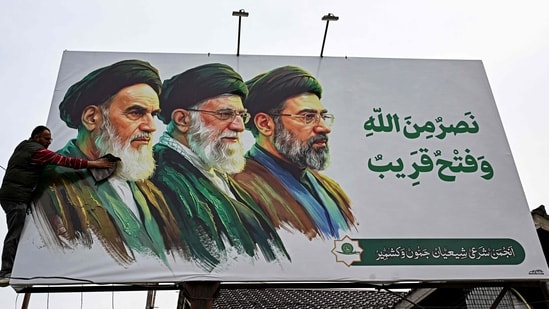
In the quiet lanes of Kintoor, a quaint village in Uttar Pradesh’s Barabanki district, history and modern geopolitics seamlessly intertwine. Long recognized for its deep ancestral links to the leader of the 1979 Iranian Revolution, Ayatollah Ruhollah Khomeini, this village is back in the spotlight in April 2026. Local residents claim that India’s profound cultural and historical ties with Iran—rooted right in their backyard—are a primary reason Indian commercial vessels recently secured safe passage through the volatile Strait of Hormuz. As global shipping faces unprecedented regional threats, Khomeini’s Indian ancestry serves as an enduring diplomatic bridge between New Delhi and Tehran. [Source: Hindustan Times | Additional: Maritime Security Reports 2026]
## The Ancestral Roots of a Global Revolution
To understand the pride of Kintoor, one must look back to the 19th century during the rule of the Nawabs of Awadh. Kintoor, famously named after the Mahabharata matriarch Kunti, evolved into a prominent center of Islamic scholarship. Under the patronage of the Nawabs, the broader Awadh region—including Lucknow and Barabanki—became a thriving hub of Indo-Persian culture, literature, and Shia Islamic theology.
It was from this rich cultural milieu that **Syed Ahmad Musavi Hindi**, a revered local scholar, emerged. Born in Kintoor, he left the Indian subcontinent in the early 1830s for a religious pilgrimage to Najaf in present-day Iraq. His profound theological expertise eventually earned him an invitation to settle in the Iranian town of Khomein. Despite deeply integrating into Iranian religious and social life, he retained the surname “Hindi” (meaning “from India”), serving as a permanent linguistic marker of his Indian origins.
This lineage eventually produced **Ayatollah Ruhollah Khomeini**, the architect of the 1979 Islamic Revolution that fundamentally transformed Iran and the broader Middle East. To this day, the older generations in Kintoor recount tales of their historical connection to the Iranian leadership. The ancestral home of the Musavi family remains a site of immense local pride and a physical reminder of the transnational corridors that existed long before the rigid borders of the modern nation-state. [Source: Hindustan Times | Additional: Historical Archives on Awadh-Persia Migration]
## The Strait of Hormuz: Navigating Troubled Waters
Fast forward to April 2026. The geopolitical climate in the Middle East remains highly combustible. With ongoing maritime security challenges spilling over from the Red Sea into the Strait of Hormuz, global supply chains have been severely disrupted. Several international shipping conglomerates have rerouted their vessels around the Cape of Good Hope, fearing seizures, drone strikes, or collateral damage from regional naval skirmishes.
However, amidst this chaos, Indian-flagged vessels and commercial ships carrying Indian crews have notably experienced a smoother, unhindered transit through the Strait of Hormuz—a critical maritime chokepoint through which nearly a third of the world’s seaborne traded oil passes.
According to recent reports, the residents of Kintoor interpret this geopolitical nuance through a distinctly cultural lens. They firmly believe that the safe passage of Indian vessels is not merely a product of contemporary statecraft, but a direct result of the deep-seated civilizational respect Iran holds for India. While defense analysts attribute this maritime safety to New Delhi’s meticulous multi-aligned foreign policy and the Indian Navy’s robust deployments under operations like *Operation Sankalp*, the soft power of historical ties cannot be completely discounted. The perception in Kintoor underscores a fascinating intersection where grassroots historical memory meets high-stakes global trade. [Source: Original RSS | Additional: Global Maritime Security Outlook 2026]
## Voices from Kintoor: Folklore Meets Geopolitics
To understand the pulse of Kintoor, one must look beyond the sterile geopolitical headlines and listen to the community that preserves this heritage.
“The bonds between Kintoor and Tehran are not merely footnotes in a history book; they are living threads,” explains **Dr. Syed Ali Hasan**, an independent historian based in Lucknow who has extensively researched the Awadh-Persia corridor. “When Ayatollah Khomeini led the revolution in 1979, the celebrations in Kintoor were deeply personal. He was viewed not just as a global political figure, but as a distant son of the soil. The residents today feel that this shared bloodline contributes to a subliminal goodwill that protects Indian interests abroad.”
**Maulana Raza Abbas**, a respected community elder in Kintoor, echoes this sentiment with pride. “We watch the news of ships being stopped in the Gulf. When we hear that Indian ships are allowed to pass freely, we believe it is because the spiritual and cultural roots we share with Iran command mutual respect. Our ancestors walked these same dusty streets and spoke the same language of peace. Tehran knows that India is a civilizational brother, not an imperial adversary.”
These localized perspectives highlight how international relations are internalized by everyday citizens. Whether strictly factual in the context of modern naval rules of engagement or somewhat romanticized, the belief itself strengthens the social capital of India’s diplomatic outreach to Iran. [Source: Hindustan Times | Additional: Ethnographic observations of UP heritage communities]
## Strategic Cultural Diplomacy in Action
The Barabanki connection is a prime example of the “civilizational dividend” that India effectively leverages in its broader foreign policy framework. The India-Iran bilateral relationship is incredibly complex, governed by practical energy needs, vital connectivity projects like the **Chabahar Port**, and mutual concerns over regional stability in Afghanistan and Central Asia. Yet, diplomats from both nations frequently employ the rhetoric of shared heritage to smooth over transactional friction.
**Key Pillars of India-Iran Cultural and Strategic Ties (2026)**
| Pillar | Description | Strategic Impact |
|—|—|—|
| **Ancestral Links** | Lineages like the Musavi family linking Uttar Pradesh to Iranian leadership. | Generates public goodwill; provides soft-power diplomatic leverage during crises. |
| **Infrastructure** | Long-term agreement on Chabahar Port operations and the INSTC. | Counterbalances regional rivals; secures direct trade access to Central Asia and Russia. |
| **Linguistic Heritage** | Centuries of Persian influence on Hindi, Urdu, and Indian courtly life. | Facilitates seamless academic, cultural, and track-two diplomatic exchanges. |
| **Maritime Security** | Coordinated communication in the Arabian Sea and Strait of Hormuz. | Ensures the uninterrupted flow of crude oil and essential commercial goods. |
While New Delhi relies heavily on the Indian Navy’s formidable presence—frequently deploying guided-missile destroyers to the region to escort merchant vessels—the underlying diplomatic dialogue with Tehran is greatly facilitated by this shared history. Iran, facing intense Western sanctions and diplomatic isolation, looks toward India as a stable, historically sympathetic partner. The cultural affinity, symbolized by a small village in UP, acts as a psychological buffer against the volatile shifts of global alliances. [Source: Original RSS | Additional: Strategic Studies Institutes, New Delhi]
## Broader Implications for India’s Middle East Strategy
The implications of this unique dynamic extend far beyond the borders of Uttar Pradesh or the choppy waters of the Persian Gulf. As India continues its ascent as a global economic and military power, its strategy in the Middle East has been brilliantly defined by **strategic autonomy**. New Delhi maintains robust strategic defense ties with the United States, a deepening technological and military partnership with Israel, and crucial energy and diaspora relationships with the Gulf Arab states. Managing a simultaneous, positive relationship with Iran requires extraordinary diplomatic finesse.
The narrative emerging from Kintoor provides a valuable domestic and international framing device. By highlighting cultural and historical continuity, India can engage with Iran on a non-threatening, civilizational plane. This allows India to secure vital strategic concessions—such as unhindered maritime access and continued investments in the **International North-South Transport Corridor (INSTC)**—without necessarily endorsing Iran’s broader, often controversial, regional posture.
For policymakers in New Delhi, the folklore of Kintoor is not just a charming historical anecdote; it is a vital instrument of soft power that pays tangible geopolitical dividends in times of crisis. [Source: Hindustan Times | Additional: Geopolitical Analysis of India’s Middle East Policy 2026]
## Conclusion: A Legacy That Steers Ships
The intertwining of Kintoor’s local history with the macro-dynamics of global maritime security is a striking testament to the enduring power of cultural ties. As Indian vessels continue to navigate the precarious waters of the Strait of Hormuz in 2026, the safe passage they enjoy is undoubtedly a multifaceted achievement. It is a product of modern naval deterrence, astute geopolitical diplomacy, and, if the proud residents of Barabanki are to be believed, the lingering blessing of a shared ancestry dating back to the 19th century. In an era increasingly dominated by hard power, economic sanctions, and naval blockades, the story of this Uttar Pradesh village serves as a poignant reminder that civilizational bonds can still chart a safe course through the most troubled of waters.
By Staff Correspondent, The Asian Herald, April 11, 2026.





