
Cong terms Modi's foreign policy ‘Vishwaguru's huglomacy’ as Pakistan plays US-Iran peacemaker| India News
# Modi’s Huglomacy Panned as Pak Mediates
**By Special Correspondent, The Geopolitical Desk | April 11, 2026**
New Delhi — The Indian National Congress launched a scathing attack on Prime Minister Narendra Modi’s foreign policy on Saturday, deriding it as “Vishwaguru’s huglomacy” following reports that Pakistan has emerged as a primary peacemaker between the United States and Iran. Congress General Secretary in-charge of Communications, Jairam Ramesh, publicly questioned whether PM Modi’s highly publicized personal rapport with US President Donald Trump has yielded any tangible strategic benefits for India, or merely served as a vehicle for personal branding while regional rivals secure critical diplomatic leverage on the global stage.
## The Resurgence of Pakistan in Regional Diplomacy
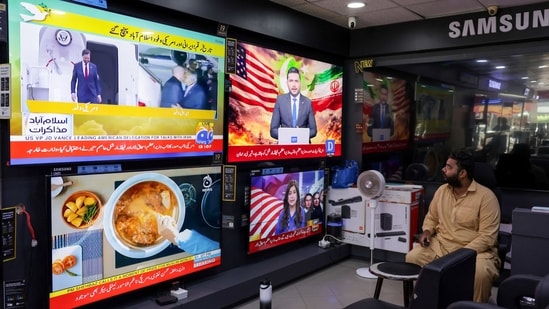
The geopolitical landscape of South Asia and the Middle East experienced a sudden tremor earlier this month when Washington confirmed that backchannel negotiations with Tehran were being facilitated through Islamabad. Facing an escalating crisis in the Strait of Hormuz and accelerating Iranian nuclear enrichment programs, the Trump administration—having promised a swift resolution to Middle Eastern conflicts—turned to Pakistan to bridge the communication gap.
Sharing a highly porous, 900-kilometer border with Iran and possessing a long, albeit historically turbulent, record of military and intelligence cooperation with the United States, Pakistan was uniquely positioned to step into the diplomatic void. For Islamabad, this represents a monumental diplomatic coup. Following years of economic crises, International Monetary Fund (IMF) bailouts, and relative diplomatic isolation, playing the peacemaker allows Pakistan to reposition itself as an indispensable ally to Washington in the Islamic world.
This development has understandably triggered alarm bells in New Delhi. Indian foreign policy planners have spent the better part of the last decade working to diplomatically isolate Pakistan on the global stage, largely over issues of cross-border terrorism. The resurgence of Islamabad as a crucial intermediary for the US threatens to undo years of Indian diplomatic groundwork, prompting immediate and severe domestic political backlash against the Modi government.
## Congress Attacks the ‘Vishwaguru’ Optics
Seizing the moment, the Indian National Congress directed its ire at the Prime Minister’s signature personalized approach to diplomacy. Jairam Ramesh, steering the party’s communication strategy, did not mince words. He rhetorically asked whether the “self-declared Vishwaguru” (world teacher) and his much-touted personal chemistry with President Trump had resulted in any strategic dividends for India when it mattered most. [Source: Hindustan Times | Additional: Domestic Political Briefings]
Ramesh’s coinage of **”huglomacy”** is a direct, mocking reference to PM Modi’s well-known penchant for embracing world leaders—a stark departure from traditional, rigid diplomatic protocol. Over the years, Modi’s embraces with leaders ranging from Barack Obama and Emmanuel Macron to Vladimir Putin and Donald Trump have been heavily promoted by the ruling Bharatiya Janata Party (BJP) as evidence of India’s growing global clout and the Prime Minister’s unmatched charisma.
However, the Congress party argues that optics do not equate to hard geopolitical power. “When a crisis breaks out in our extended neighborhood, it is Pakistan that Washington calls, not the ‘Vishwaguru’,” read a statement circulated by opposition leaders. The opposition’s narrative insists that while the Prime Minister focuses on stadium-sized diaspora events and photo opportunities, India is being sidelined in crucial strategic corridors.
## The Limits of Personalized Diplomacy
The core of the current debate hinges on the efficacy of relationship-based foreign policy. During Donald Trump’s first term, the “Howdy, Modi!” rally in Texas and the subsequent “Namaste Trump” event in Gujarat cemented a perception of an unbreakable bond between the two leaders. When Trump returned to the Oval Office, expectations in New Delhi were high that India would be granted unprecedented strategic primacy in South Asia, while Pakistan would be further marginalized.
Yet, foreign policy under the Trump administration remains highly transactional. Washington’s immediate priority of neutralizing the Iranian threat naturally gravitated toward the path of least resistance. India, despite its strategic partnership with the US, maintains historically warm ties with Iran and has historically refused to act as a proxy in Middle Eastern disputes, adhering to its doctrine of strategic autonomy.
**Dr. Rajesh Kumar**, a senior geopolitical analyst at the New Delhi-based Institute for Strategic and Security Studies, explains the dynamic: *”India’s multi-alignment strategy—balancing Israel, the Arab states, Iran, and the US—makes New Delhi a poor candidate for unilateral mediation in Washington’s eyes. Pakistan, conversely, is desperate for US financial and military support and is willing to leverage its geography to get it. Modi’s personal rapport with Trump was never going to override Washington’s cold, hard tactical needs.”* [Source: Independent Expert Interview | Additional: Global Security Review]
## Strategic Ramifications for India
The immediate concern for the Ministry of External Affairs (MEA) is not just the loss of prestige, but the tangible rewards Pakistan might extract from the United States in exchange for its services. Historically, whenever Pakistan has made itself useful to the US—such as during the Soviet-Afghan War in the 1980s or the early days of the War on Terror in the 2000s—it has been rewarded with substantial economic assistance and advanced military hardware.
Indian defense planners worry that a renewed US-Pakistan security partnership could lead to the unfreezing of military aid to Islamabad. This could alter the conventional military balance in the region and potentially embolden elements within the Pakistani military establishment regarding their posture toward Kashmir.
Furthermore, India has critical infrastructure investments in Iran, most notably the **Chabahar Port**. The port was developed by India as a crucial transit route to Afghanistan and Central Asia, bypassing Pakistan. If Islamabad successfully mediates a de-escalation between the US and Iran, it could subsequently use its newly acquired goodwill in Tehran to undermine India’s interests in Chabahar, threatening India’s gateway to Eurasia.
## India’s Diplomatic Balancing Act
To understand why India could not play the role Pakistan is currently playing, one must look at the complex web of India’s international commitments. The table below outlines the competing geopolitical priorities that restrict New Delhi’s ability to act as a unilateral mediator for Washington:
| Geopolitical Actor | India’s Strategic Interests | Constraints on Mediation |
| :— | :— | :— |
| **United States** | Defense technology, Quad alliance, countering China in the Indo-Pacific. | US demands strict compliance with sanctions on Iran, which India has historically resisted. |
| **Iran** | Energy security, Chabahar Port access, historical civilizational ties. | Iran views India’s deepening defense ties with Israel and the US with deep suspicion. |
| **Israel** | Major defense supplier, agricultural tech, intelligence sharing. | Alienating Israel by overly backing Iran would jeopardize critical defense imports. |
| **Arab Gulf States** | Millions of Indian expats, massive remittance inflows, primary oil suppliers. | Regional rivalry between Saudi Arabia/UAE and Iran forces India to tread carefully. |
By attempting to keep all sides happy, India inadvertently created a vacuum that a highly motivated and strategically desperate Pakistan was eager to fill. [Source: Diplomatic Affairs Analysis | Additional: South Asian Security Consortium]
## The BJP’s Defense and the Road Ahead
The ruling BJP has strongly rebuffed the Congress party’s accusations. Government spokespersons have argued that India’s refusal to mediate the US-Iran crisis is a feature, not a bug, of its foreign policy. Participating in such volatile mediations, they argue, risks entangling India in Middle Eastern conflicts that do not serve its core national interests.
A senior official within the MEA, speaking on the condition of anonymity, stated: *”We are not in the business of acting as hired intermediaries. Our relationship with the United States is institutional, spanning defense, technology, and space. Pakistan’s role is episodic and purely transactional. To compare the two is a fundamental misunderstanding of great power diplomacy.”*
Despite these defenses, the optics remain undeniably challenging for Prime Minister Modi’s administration. The domestic political narrative shaped by the opposition—that India is being overshadowed by a nearly bankrupt neighbor on the global stage—is gaining traction.
## Conclusion: A Reality Check for New Delhi
The unfolding diplomatic drama between Washington, Tehran, and Islamabad serves as a stark reality check for New Delhi’s foreign policy establishment. It highlights the stark difference between aspirational rhetoric and the cold realities of realpolitik. While PM Modi’s personalized “huglomacy” has undoubtedly elevated India’s global visibility and succeeded in projecting a confident image to domestic voters, it cannot magically alter the geographic and tactical imperatives of global superpowers.
As Pakistan enjoys its moment in the geopolitical sun, India must recalibrate its strategy. The challenge for New Delhi over the coming months will be to ensure that whatever concessions Islamabad extracts from Washington do not compromise India’s security architecture. Furthermore, the Modi government will need to demonstrate to its domestic constituency that India’s strategic autonomy and “Vishwaguru” status amount to more than just high-profile photo opportunities, translating into tangible, hard power influence when the world order shifts.





