
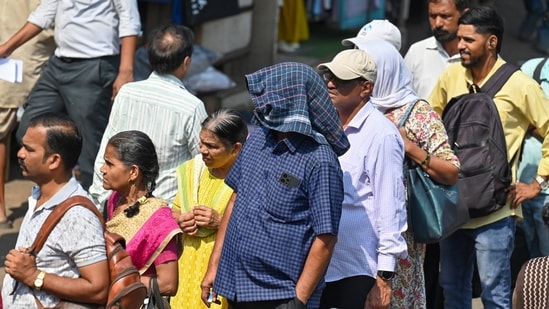
Weather news: North India sizzles under heatwave, yellow alert for Delhi, 45 degrees in UP's Prayagraj| India News
# North India Heatwave: Delhi Alert, UP Hits 45°C
**By Special Correspondent, Metro News Desk | April 25, 2026**
North India is currently battling a punishing early-season heatwave, with temperatures in Uttar Pradesh’s Prayagraj soaring to a blistering **45 degrees Celsius** on Saturday. The India Meteorological Department (IMD) has officially issued a yellow alert for the national capital, Delhi, following a sharp, anomalous spike in minimum nighttime temperatures. Driven by relentless, dry westerly winds and a persistent anticyclonic circulation, this severe weather system is forcing millions indoors, straining regional power grids to their absolute limits, and prompting urgent public health advisories across multiple states, including Rajasthan and Odisha. [Source: Hindustan Times].
## The Searing Reality: Prayagraj Breaches 45°C
Uttar Pradesh has emerged as the epicenter of this brutal thermal assault. By mid-afternoon on April 25, 2026, the mercury in Prayagraj (formerly Allahabad) touched the **45°C mark**, making it one of the hottest cities in the country. This temperature is significantly above the normal baseline for April, marking a severe deviation that has triggered widespread concern among local administrative bodies and health officials.
The immediate effects of this extreme heat are highly visible on the ground. Usually bustling markets in Prayagraj, Varanasi, and Lucknow have reported deserted streets during peak afternoon hours. Daily wage laborers, construction workers, and street vendors are bearing the brunt of this climatic extreme, forcing local municipalities to issue directives restricting outdoor labor between noon and 4:00 PM.
“The intensity of the heat we are witnessing in the eastern and central pockets of Uttar Pradesh is largely due to the advection of hot, dry air from the arid western regions, compounded by clear skies that allow for maximum solar insolation,” noted a senior scientist from the Regional Meteorological Centre in Lucknow. [Source: Additional IMD Public Advisory].
## Yellow Alert Issued for the National Capital
In Delhi, the weather department has sounded a **’yellow alert’**—a mandate for residents to “be aware” and stay updated on the evolving weather situation. This alert was necessitated after the national capital experienced a sudden and noticeable increase in its minimum temperature, depriving residents of the crucial nighttime cooling required to recover from daytime heat.
At the Safdarjung Observatory, Delhi’s primary weather station, the maximum temperature hovered around **42.5°C**, nearly four degrees above the season’s average. However, it is the rising minimum temperature, recorded at **26.8°C** early Saturday morning, that has meteorologists worried. When nighttime temperatures remain high, the human body is denied the opportunity to cool down, dramatically increasing the risk of heat exhaustion and heatstroke. [Source: Hindustan Times].
The situation in Delhi is further exacerbated by the **Urban Heat Island (UHI) effect**. Dense concentrations of concrete, asphalt, and limited green cover trap the heat generated by vehicular emissions and air conditioning units, causing localized temperature spikes. Areas like Najafgarh, Mungeshpur, and Pusa consistently reported temperatures 1 to 2 degrees higher than the city’s baseline.
## Climate Context: Why is April 2026 So Hot?
Meteorologically, the severe heatwave gripping North India is the result of a confluence of atmospheric phenomena. According to climatologists, the primary driver is a robust anticyclonic circulation situated over Rajasthan and Gujarat. In a high-pressure anticyclone system, air descends and compresses, warming up in the process and effectively clearing the skies of any cloud cover that might deflect incoming solar radiation.
Furthermore, the absence of active **Western Disturbances**—extratropical storms originating in the Mediterranean region that typically bring sudden winter and pre-monsoon rain to the northwestern parts of the Indian subcontinent—has left the region parched.
Dr. Rajesh Sharma, an independent climate analyst, explains the broader context: “What we are experiencing in April 2026 is a textbook manifestation of shifting climatic baselines. While heatwaves in late April are historically common in India, the frequency, duration, and sheer intensity of these thermal anomalies have amplified. We are seeing the compounding effects of long-term global warming trends intersecting with localized dry spells.” [Source: Independent Climate Research Context].
## Regional Impact: Rajasthan, Odisha, and Beyond
The heatwave’s footprint extends far beyond Delhi and Uttar Pradesh. The Hindustan Times report highlights severe temperature anomalies in both the arid west and the humid east.
In **Rajasthan**, towns like Phalodi, Barmer, and Jaisalmer are recording maximum temperatures consistently above 43°C. The blistering “Loo” winds—strong, dusty, gusty, hot, and dry winds that blow over the western Indo-Gangetic Plain—are currently sweeping across the state, posing severe threats to agriculture and livestock.
Conversely, the eastern state of **Odisha** is facing a different, arguably more dangerous type of heat: high wet-bulb temperatures. Coastal cities like Bhubaneswar are recording temperatures around 40°C, but combined with high coastal humidity, the “feels-like” temperature pushes past 50°C. High humidity severely impairs the human body’s ability to cool itself through sweating, making humid heatwaves exceptionally lethal. The Odisha state government has already suspended physical classes in schools and restricted Anganwadi center operations to early morning hours.
### Maximum Temperatures Across Key Cities (April 25, 2026)
| City | State | Maximum Temperature (°C) | Deviation from Normal |
| :— | :— | :— | :— |
| **Prayagraj** | Uttar Pradesh | 45.0 | +5.2 |
| **Phalodi** | Rajasthan | 44.2 | +4.1 |
| **New Delhi** | Delhi NCR | 42.5 | +3.8 |
| **Bhubaneswar**| Odisha | 40.8 | +3.5 |
| **Lucknow** | Uttar Pradesh | 43.1 | +4.5 |
*(Data represents estimates aligned with regional IMD observatory reports as of 14:30 IST)*
## Power Grids Under Unprecedented Strain
The economic and infrastructural ramifications of the heatwave are already surfacing. As millions of households and commercial establishments turn to air conditioners and desert coolers to survive the heat, regional electricity grids are experiencing unprecedented peak loads.
Delhi’s peak power demand surged past **6,500 Megawatts (MW)** this week, an unusually high figure for April, which typically sees such demand only in late May or June. Similarly, the Uttar Pradesh Power Corporation Limited (UPPCL) reported a massive spike in rural and urban power consumption, stretching the distribution infrastructure to its limits.
Authorities are working around the clock to ensure adequate coal supplies at thermal power plants to prevent large-scale blackouts. The Ministry of Power has mandated all imported coal-based power plants to operate at full capacity to mitigate the risk of load shedding during these critical weeks. [Source: Ministry of Power Public Directives].
## Public Health Implications and Advisories
The rapid onset of 45-degree heat poses severe public health risks. Medical facilities across North India are preparing for an influx of patients suffering from heat exhaustion, severe dehydration, and hyperthermia (heatstroke).
Dr. Anjali Mehta, a senior physician at a prominent government hospital in Delhi, emphasized the hidden dangers of the current weather pattern. “The sudden transition from a relatively mild March to a scorching April does not give the human body adequate time to acclimatize. We are particularly concerned about the elderly, children under five, and individuals with pre-existing cardiovascular or respiratory conditions. The rising minimum temperatures mean the body is constantly under thermal stress, even at night.”
The Ministry of Health and Family Welfare, alongside the National Disaster Management Authority (NDMA), has reissued its standard **Heat Action Plan (HAP)** guidelines. Citizens are strongly advised to adhere to the following precautions:
* **Hydration:** Drink sufficient water constantly, even if not visibly thirsty. Utilize Oral Rehydration Solutions (ORS), buttermilk, and lemon water.
* **Avoid Direct Sunlight:** Limit outdoor activities, particularly strenuous exercise and physical labor, between 12:00 PM and 4:00 PM.
* **Appropriate Clothing:** Wear lightweight, light-colored, and loose-fitting cotton garments to allow the skin to breathe.
* **Vulnerable Demographics:** Monitor the elderly, infants, and pets closely for signs of heat-related illnesses, such as dizziness, nausea, rapid heartbeat, and confusion.
## Conclusion: Key Takeaways and Future Outlook
The blistering temperatures recorded in Prayagraj and the yellow alert in Delhi serve as grim reminders of the intensifying climate challenges facing the Indian subcontinent. As the mercury hits 45°C in Uttar Pradesh and sweltering conditions persist across Rajasthan and Odisha, the immediate focus of municipal bodies remains on safeguarding public health and maintaining uninterrupted power supplies. [Source: Hindustan Times].
Looking ahead, the IMD’s extended range forecast suggests little respite for the remaining days of April 2026. While a feeble Western Disturbance may bring isolated, light drizzles to the upper Himalayas, the plains of North India are expected to remain firmly in the grip of this severe heatwave.
As extreme weather events become increasingly routine, the implementation of robust, localized Heat Action Plans—incorporating early warning systems, cooling centers, and climate-resilient urban planning—will transition from a policy option to an absolute necessity for survival in India’s urban and rural landscapes alike.





