
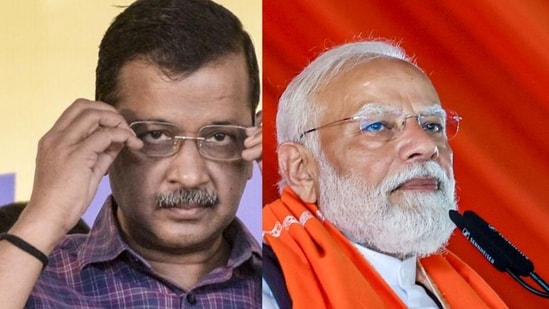
‘What if Modiji loses Bengal elections even after taking over all institutions’: Kejriwal targets PM| India News
# Kejriwal Targets Modi Ahead of Bengal Polls
By Staff Political Correspondent, National News Insight, April 12, 2026
New Delhi — Aam Aadmi Party (AAP) national convenor Arvind Kejriwal launched a sharp attack on Prime Minister Narendra Modi on Saturday, questioning the political fallout if the Bharatiya Janata Party (BJP) loses the upcoming West Bengal Assembly elections. Publicly asking, “What if Modiji loses Bengal elections even after taking over all institutions?”, Kejriwal amplified a core opposition narrative. The remark, arriving amid heightened tensions just before the critical eastern state votes in two phases on April 23 and April 29, underscores the escalating rhetoric between the national ruling party and regional opposition blocs vying for democratic mandates. [Source: Hindustan Times | Additional: Public Electoral Records].
## Heightened Political Tensions in West Bengal
The political temperature in West Bengal has reached a boiling point as the state prepares for its crucial two-phase assembly elections scheduled for late April 2026. West Bengal has historically been a fiercely contested battleground, characterized by high voter turnouts, intense grassroots mobilization, and, occasionally, localized political violence. For the ruling Trinamool Congress (TMC), the election is a battle to protect its fortress and secure another consecutive term. For the BJP, it represents a determined push to unseat a formidable regional opponent and expand its ideological and political footprint in eastern India.
Arvind Kejriwal’s intervention from New Delhi highlights the interconnected nature of modern Indian politics. Although the AAP does not have a significant electoral presence in West Bengal, Kejriwal’s comments reflect a unified opposition strategy designed to put the BJP on the defensive on a national scale. By interjecting national narratives into a state election, opposition leaders aim to frame the West Bengal contest not just as a regional choice of governance, but as a referendum on the health of India’s democratic institutions.
**Key Fact:** The Election Commission of India has mandated massive deployments of Central Armed Police Forces (CAPF) across the state’s voting booths to ensure a free, fair, and peaceful electoral process during the April 23 and April 29 phases.
## The “Institutional Control” Debate
At the heart of Kejriwal’s rhetorical question is a long-standing allegation leveled by various opposition parties: the claim that the ruling BJP at the center has exerted undue influence over autonomous federal institutions. This narrative frequently targets investigative agencies such as the Enforcement Directorate (ED) and the Central Bureau of Investigation (CBI), as well as constitutional bodies like the Election Commission of India.
In West Bengal, this debate is particularly polarized. Over the past few years, central investigative agencies have probed several high-profile corruption cases in the state, including the widely publicized teacher recruitment irregularities and municipal administration scandals. Several senior figures within the state’s ruling apparatus have faced prolonged interrogations, raids, and arrests.
From the opposition’s perspective—echoed by Kejriwal—these actions are viewed as strategically timed political vendettas intended to cripple regional leaders and drain their resources ahead of elections. The narrative suggests that an uneven playing field is being created through the “weaponization” of state machinery.
Conversely, the BJP and federal agencies maintain that these actions are strictly legal, independent, and evidence-based measures meant to root out deeply entrenched systemic corruption. The ruling party argues that regional leaders use the “institutional overreach” argument merely as a shield to deflect from their own governance failures and financial malfeasance. The BJP has consistently campaigned on a platform of “zero tolerance” for corruption, presenting the agency actions as a fulfillment of their promise to deliver clean governance to the people of West Bengal.
## Echoes of the 2021 Assembly Battle
To understand the weight of the current political discourse, it is necessary to contextualize it within the legacy of the 2021 West Bengal Assembly elections. That contest was widely regarded as one of the most polarized and high-stakes state elections in recent Indian history. Despite a massive, resource-heavy campaign by the BJP featuring top national leaders, the TMC secured a decisive victory, retaining power with a robust majority.
The 2021 outcome became a rallying point for opposition parties nationwide, proving that formidable regional leadership combined with localized welfare schemes could successfully counter the BJP’s formidable national election machinery. Kejriwal’s recent comments deliberately invoke the memory of 2021, subtly suggesting to voters and opposition cadres that a similar outcome is possible in 2026.
The upcoming April phases will test whether the incumbent state government has maintained its connection with the rural electorate through popular welfare schemes like *Lakshmir Bhandar* (a direct cash transfer scheme for women), or whether anti-incumbency, corruption allegations, and the BJP’s persistent developmental pitch have finally tipped the scales. [Source: Election Commission Public Archives | Additional: Regional Socio-Economic Analyses].
## Expert Perspectives on the High-Stakes Contest
Political analysts view Kejriwal’s statement as a calculated move in the broader chess game of Indian federalism. By pre-emptively framing the election around the integrity of institutions, the opposition sets a narrative trap.
Dr. Alok Ranjan, a political sociologist specializing in electoral behavior at a prominent New Delhi think tank, observes the strategic underpinnings of this rhetoric. “When leaders like Kejriwal emphasize the supposed control of institutions, they are managing expectations while simultaneously attempting to magnify the perceived heroism of a potential regional victory,” Dr. Ranjan notes. “If the regional party wins, it is framed as a victory of the common people against an omnipotent state apparatus. It serves as an immense morale booster for opposition cadres nationwide.”
On the other hand, strategic affairs analyst Smita Chakravarty points out the risks of this narrative for the opposition. “Continuously questioning the independence of institutions can sometimes backfire by projecting a sense of defeatism before the votes are even cast,” she explains. “Voters in West Bengal are highly politicized and typically vote on immediate livelihood issues, state-level welfare delivery, and local law and order, rather than abstract national debates about institutional autonomy.”
## BJP’s Response to the Allegations
The BJP has historically adopted an aggressive counter-strategy against such allegations from the AAP and other opposition parties. In response to statements questioning the integrity of the democratic process or federal agencies, BJP spokespersons frequently highlight the opposition’s own administrative and legal vulnerabilities.
National leaders of the BJP argue that parties like the AAP, which have faced their own share of scrutiny from investigative agencies regarding excise policies and other administrative decisions, lack the moral high ground to lecture on institutional integrity. The ruling party frames Kejriwal’s interventions in West Bengal politics as sheer political opportunism—an attempt to stay relevant in the national news cycle despite lacking a grassroots presence in the eastern state.
Furthermore, the BJP’s campaign in West Bengal remains laser-focused on grassroots issues. They are highlighting what they describe as “cut-money” culture (extortion at the local level), political violence, and minority appeasement by the incumbent state government. By emphasizing Prime Minister Modi’s vision of *Sabka Saath, Sabka Vikas* (Inclusive Growth for All) and contrasting it with the state government’s record, the BJP aims to bypass the opposition’s national institutional critique and appeal directly to the developmental aspirations of Bengali voters.
## Broader Implications for the 2026 Political Landscape
The outcome of the West Bengal Assembly elections on April 23 and 29 will have profound implications that resonate far beyond the borders of the state. State elections are fundamentally tied to the arithmetic of the Rajya Sabha (the upper house of India’s Parliament). A strong showing by the ruling party in West Bengal would significantly bolster its legislative muscle, making the passage of complex national reforms easier.
Conversely, a loss for the BJP in a state where it has invested massive political capital would reinvigorate opposition unity. It would validate the strategy of regional satraps who advocate for strong, localized campaigns to counter national narratives. It would also likely intensify the ongoing debate over federalism, with states demanding greater financial autonomy and pushing back against what they perceive as centralization of power.
Arvind Kejriwal’s provocative question—“What if Modiji loses Bengal elections even after taking over all institutions?”—is thus more than just campaign rhetoric. It is a reflection of the deep ideological schisms currently defining Indian democracy. It sets the stage for a dramatic counting day, where both the resilience of regional politics and the enduring appeal of the Prime Minister’s national vision will be put to the ultimate democratic test.
## Conclusion and Future Outlook
As West Bengal enters the final stretch of campaigning before the April 23 and 29 voting phases, the political atmosphere remains deeply polarized. Arvind Kejriwal’s targeting of Prime Minister Modi over institutional independence underscores how local assembly elections in India are increasingly fought on dual fronts: immediate state-level governance and sweeping national ideologies.
**Key Takeaways:**
* **High Stakes:** The two-phase West Bengal election is a critical test for both the incumbent regional government and the BJP’s eastern expansion strategy.
* **Narrative Warfare:** The opposition continues to deploy the narrative of “institutional capture” to frame their political battles as existential democratic struggles.
* **Focus on Corruption vs. Vendetta:** The debate over the role of central investigative agencies remains a central, unresolved friction point in Indian federal politics.
Ultimately, it is the millions of voters across West Bengal—from the tea gardens of the north to the urban sprawl of Kolkata—who will deliver the final verdict. When the electronic voting machines are opened, the results will not only determine who governs the state but will also dictate the momentum of national political discourse for the remainder of the year.





