
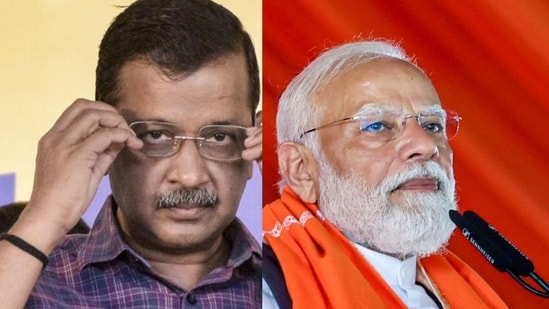
‘What if Modiji loses Bengal elections even after taking over all institutions’: Kejriwal targets PM| India News
# Kejriwal Targets PM Ahead of Bengal Polls
By Political Desk, Independent Election Monitor, April 11, 2026
On April 11, 2026, Aam Aadmi Party (AAP) national convener Arvind Kejriwal launched a sharp rhetorical attack against Prime Minister Narendra Modi, questioning the political fallout if the ruling Bharatiya Janata Party (BJP) fails to win the fiercely contested West Bengal Assembly elections. Speaking amid an increasingly polarized campaign environment, Kejriwal asked, “What if Modiji loses Bengal elections even after taking over all institutions?” This high-profile jab arrives just weeks before the critical two-phase voting scheduled for April 23 and 29, highlighting the opposition’s broader narrative concerning the autonomy of democratic institutions ahead of a pivotal state ballot. [Source: Hindustan Times]
## Unpacking the Opposition’s Core Allegation
Arvind Kejriwal’s remarks cut to the heart of the unified opposition’s primary argument against the current ruling dispensation at the Centre. For several electoral cycles, leaders of various opposition factions, including the Trinamool Congress (TMC) and AAP, have consistently accused the BJP-led Union government of weaponizing central investigative agencies—such as the Enforcement Directorate (ED) and the Central Bureau of Investigation (CBI)—to target political rivals.
By questioning what happens if the Prime Minister “loses Bengal elections even after taking over all institutions,” Kejriwal is attempting to frame the upcoming electoral contest not just as a regional political dispute, but as a referendum on the health of India’s democratic infrastructure. The opposition alleges that the deployment of central agencies disproportionately focuses on non-BJP leaders, creating an uneven playing field. [Source: Hindustan Times | Additional: Public domain political analysis].
Kejriwal’s intervention in the Bengal discourse is strategically significant. Although his own party, AAP, has a limited electoral footprint in West Bengal, his vocal support for the opposition cause serves a dual purpose. It signals solidarity with the incumbent TMC and Chief Minister Mamata Banerjee, while simultaneously attempting to preemptively shape the national narrative should the BJP fall short of its electoral goals in the eastern state.
## West Bengal: The Ultimate Electoral Battleground
West Bengal remains one of the most fiercely contested political terrains in India. Following the dramatic 2021 Assembly elections, where the TMC successfully defended its fortress against a massive BJP surge, the political landscape in the state has only grown more intense. The BJP emerged from that election as the principal opposition party in the state, effectively sidelining traditional forces like the Left Front and the Indian National Congress.
The 2026 Assembly elections are viewed by political analysts as a critical juncture. For the TMC, securing another term would cement Mamata Banerjee’s legacy and reinforce her position as a dominant regional satrap capable of resisting the BJP’s national electoral machinery. For the BJP, capturing West Bengal would represent a monumental ideological and territorial victory, expanding its footprint in the eastern corridor of the country.
**Key factors driving the political tension in Bengal include:**
* **Anti-Incumbency vs. Welfare Politics:** The TMC relies heavily on its expansive social welfare schemes, particularly those targeting women, to offset localized anti-incumbency sentiments.
* **Corruption Allegations:** The BJP campaign has intensely focused on allegations of corruption at the local level within the state administration, utilizing these claims to appeal to swing voters.
* **Polarization and Identity Politics:** Both parties have engaged in complex demographic strategies, appealing to various linguistic, religious, and caste-based voting blocs across different regions, from the northern hills to the southern delta.
## The Ruling Party’s Counter-Offensive
In response to allegations of institutional capture, the BJP has consistently maintained that investigative agencies operate independently and are merely fulfilling their mandate to root out systemic corruption. Leaders of the ruling party frequently dismiss comments like those made by Kejriwal as preemptive excuses crafted by an opposition that anticipates electoral defeat.
The BJP’s election strategy in West Bengal heavily emphasizes a narrative of “Double Engine Sarkar” (alignment between the state and central governments) to accelerate economic development, infrastructure growth, and industrialization. The party argues that West Bengal has suffered under years of what they describe as appeasement politics and administrative mismanagement by successive state governments.
Furthermore, BJP spokespersons argue that the opposition’s focus on “institutional takeover” is a distraction from their own lack of cohesive governance models. By focusing the campaign heavily on the Prime Minister’s personal popularity, the BJP’s central leadership aims to consolidate a broad coalition of voters who prioritize national security, economic formalization, and strong central leadership over regional affiliations. [Additional: General Knowledge of BJP Electoral Strategies].
## Logistics and Security: Preparing for April 23 and 29
The Election Commission of India (ECI) has scheduled the West Bengal Assembly elections in two distinct phases, set for April 23 and April 29, 2026. The decision to phase the elections reflects the complex logistical and security challenges inherent in conducting polls in a state with a historical precedent of localized political violence.
To ensure a free and fair electoral process, the ECI has ordered the deployment of a massive contingent of Central Armed Police Forces (CAPF). These forces are tasked with area domination, confidence-building measures among vulnerable voter demographics, and securing polling booths.
**Election Preparations at a Glance:**
* **Phase 1 (April 23):** Focuses heavily on constituencies in regions with complex topographical and demographic challenges, requiring specialized security protocols.
* **Phase 2 (April 29):** Covers high-density urban and peri-urban centers, where voter turnout is traditionally high and the contest is fought booth-by-booth.
* **Surveillance and Monitoring:** The ECI has implemented rigorous webcasting from polling stations, GPS tracking of Electronic Voting Machines (EVMs), and strict monitoring of campaign financing to prevent the distribution of illicit cash and goods.
## Demographic Drivers and Key Voter Blocs
Understanding the West Bengal election requires a deep dive into its demographic drivers. The state’s electorate is highly diverse, and both the ruling TMC and the opposition BJP have meticulously crafted targeted appeals to specific groups.
Women voters have emerged as arguably the most critical demographic in Bengal. The incumbent government’s direct cash transfer initiatives have created a loyal base of female voters that cuts across traditional caste and religious divides. In response, the BJP has promised enhanced welfare measures and highlighted issues of women’s safety and local law-and-order concerns, attempting to fracture this consolidation.
Additionally, the Matua community, marginalized caste groups, and tribal populations in regions like Junglemahal and North Bengal hold the keys to several dozen swing constituencies. Both national and state leaders have aggressively courted these communities, promising everything from citizenship rights and land ownership to specialized cultural recognition and infrastructure development. Kejriwal’s commentary, while nationally focused, plays into the broader psychological warfare aimed at swaying these crucial undecided voters by projecting confidence in an opposition victory.
## Expert Perspectives on Democratic Resilience
Political analysts are closely monitoring the rhetoric leading up to the polls, noting that the tone of the campaign reflects the high stakes for all parties involved.
“Arvind Kejriwal’s strategy of questioning the independence of institutions while simultaneously predicting an electoral loss for the ruling party is a classic rhetorical pincer movement,” observes Dr. Meenakshi Sanyal, an independent political scientist specializing in Indian electoral dynamics. “If the opposition wins, they claim a victory for democracy against all odds. If they lose, the groundwork is already laid to blame institutional bias rather than a failure of political messaging.”
Conversely, experts note that the BJP’s challenge lies in managing expectations. “The BJP has poured immense resources into West Bengal,” notes electoral strategist Rohan Verma. “For the central leadership, the state is the final frontier in the East. However, overcoming the deeply entrenched grassroots network of the regional incumbent requires more than just high-profile rallies; it demands a flawless last-mile voter mobilization strategy.”
The debate over institutional independence is not unique to India, but it takes on specific regional flavors during high-stakes state elections. The ECI’s ability to conduct the April 23 and 29 polls without significant controversy will be a critical test of the very institutions currently under the political spotlight.
## Conclusion: The Road Ahead
As the West Bengal Assembly elections approach their definitive dates of April 23 and 29, 2026, the political temperature continues to rise. Arvind Kejriwal’s sharp inquiry into the potential consequences of a BJP defeat in Bengal underscores the deeply polarized nature of contemporary Indian politics, where electoral battles are fought as much over the integrity of democratic processes as they are over local governance issues.
The voters of West Bengal now face a profound choice. They must weigh the incumbent government’s regional pride and welfare schemes against the opposition’s promises of centralized development and systemic reform. Ultimately, the outcome of these two phases of voting will not only determine the administrative future of the state but will also serve as a crucial barometer for the national political climate, validating or repudiating the intense rhetorical claims made by leaders on all sides of the political spectrum.





