
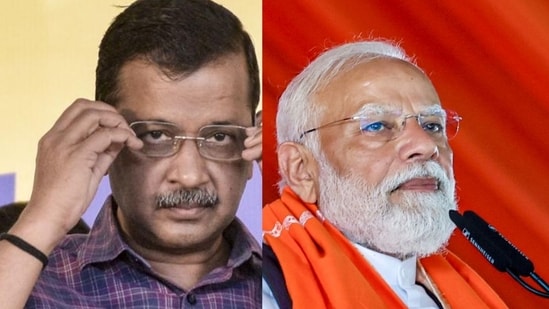
‘What if Modiji loses Bengal elections even after taking over all institutions’: Kejriwal targets PM| India News
# Kejriwal Targets PM Over Bengal Elections
By Senior Political Correspondent, National News Desk, April 11, 2026
Aam Aadmi Party (AAP) national convener Arvind Kejriwal launched a scathing attack on Prime Minister Narendra Modi on Saturday, questioning the Bharatiya Janata Party’s (BJP) democratic standing ahead of the fiercely contested West Bengal Assembly elections. Speaking at a press briefing in New Delhi, Kejriwal boldly asked, “What if Modiji loses Bengal elections even after taking over all institutions?” The provocative remarks arrive during a period of intense political friction in West Bengal, with the crucial state elections scheduled to unfold in two pivotal phases on April 23 and 29. [Source: Hindustan Times].
## The Context of Kejriwal’s Scathing Remarks
Arvind Kejriwal’s sharp critique does not exist in a vacuum. It is the latest escalation in a long-standing national rivalry between the AAP and the BJP, heavily colored by the AAP’s persistent allegations that the central government weaponizes federal agencies. By bringing the West Bengal elections into his rhetoric, Kejriwal is attempting to connect localized regional battles with a broader national narrative regarding the health of India’s democratic institutions.
While the AAP has a negligible electoral footprint in West Bengal, Kejriwal has consistently maintained a cordial and strategically significant relationship with Trinamool Congress (TMC) supremo and West Bengal Chief Minister Mamata Banerjee. By questioning the Prime Minister’s potential failure to secure Bengal despite allegedly “taking over all institutions,” Kejriwal is simultaneously bolstering Banerjee’s defense while attempting to highlight perceived authoritarian overreach by the ruling administration at the Centre.
“The narrative of institutional capture has become the primary adhesive binding the otherwise disparate opposition parties,” notes Dr. Rajat Sen, a political science professor and senior fellow at the Center for Democratic Studies. “Kejriwal’s strategy is twofold: to pre-emptively delegitimize a potential BJP victory in Bengal, while framing a potential TMC victory as a monumental triumph of the people against an all-powerful state machinery.” [Source: Independent Expert Analysis].
## West Bengal’s High-Stakes Electoral Battle
West Bengal has increasingly become the crown jewel of the BJP’s eastern expansion strategy. Following the dramatic 2021 Assembly elections, where the TMC secured a resounding victory despite a massive BJP surge, the 2026 elections are viewed as a critical litmus test for both parties. For Mamata Banerjee, it is a fight for a fourth consecutive term and the survival of her regional hegemony. For the BJP, it is an opportunity to finally breach the fortress that eluded them five years prior.
The political temperature in the state has reached a boiling point. The Election Commission of India (ECI) has mandated a condensed, high-security two-phase election format on April 23 and April 29, 2026. This streamlined schedule marks a departure from the grueling eight-phase marathon of 2021, reflecting a strategic shift in electoral management aimed at minimizing prolonged political violence, a historical blight on Bengal’s electoral landscape.
**Key Factors Driving the Bengal Campaign:**
* **Anti-Incumbency vs. Welfare Schemes:** The TMC is heavily relying on its robust portfolio of grassroots welfare programs, such as *Lakshmir Bhandar*, while the BJP targets the fatigue of a 15-year incumbent rule.
* **Corruption Allegations:** The BJP has built its entire campaign around high-profile corruption scandals involving TMC leaders, heavily utilizing findings from central investigative agencies.
* **Identity Politics:** The ongoing debate around the Citizenship Amendment Act (CAA) continues to polarize the electorate along regional and religious lines.
## Allegations of Institutional Control
Kejriwal’s specific phrasing—accusing the Prime Minister of “taking over all institutions”—strikes at the heart of the current opposition discourse in India. Over the past few years, opposition leaders have frequently accused the central government of using the Enforcement Directorate (ED), the Central Bureau of Investigation (CBI), and the Income Tax Department to harass, intimidate, and incarcerate political rivals.
In West Bengal, these agencies have been particularly active. Several prominent TMC ministers and functionaries have faced raids, arrests, and prolonged judicial custody over the past term. The BJP argues that these are independent investigations unearthing deep-rooted systemic corruption, specifically in areas like education recruitment and coal smuggling. Conversely, the TMC and its allies, like the AAP, frame these actions as a coordinated political witch-hunt designed to cripple the opposition’s campaign infrastructure and financial capabilities ahead of the polls.
“When Kejriwal makes these statements, he is speaking as much to the voters in Delhi and Punjab as he is to the national electorate,” explains political analyst Sunita Rao. “He is trying to cement the idea that the BJP does not fight elections on a level playing field. If the BJP loses Bengal, Kejriwal can claim the people defeated a dictatorship. If the BJP wins, the opposition has already laid the groundwork to blame compromised institutions.” [Source: Independent Expert Analysis].
## Opposition Unity and AAP’s Strategic Role
The solidarity shown by Kejriwal toward Mamata Banerjee highlights the evolving dynamics of opposition unity in India. Following the mixed results of the broad I.N.D.I.A. bloc in recent years, regional leaders have increasingly recognized the need to support one another in state-specific battles, even when they lack a formal electoral alliance in that specific geography.
AAP’s vocal support for the TMC in West Bengal serves a strategic purpose. It signals a united front against the BJP’s centralization of power without requiring AAP to expend resources in a state where it lacks an organizational base. Furthermore, it sets a precedent of reciprocity; Kejriwal expects TMC leaders to amplify AAP’s grievances regarding the Lieutenant Governor’s powers in Delhi and the ongoing investigations against AAP ministers.
The discourse also attempts to shift the media narrative away from the localized anti-incumbency faced by the TMC, elevating the Bengal election into a national referendum on the health of the republic.
## BJP’s Rebuttal and Campaign Strategy
The BJP has been quick to dismiss Kejriwal’s comments, framing them as the desperate rhetoric of leaders attempting to shield themselves from accountability. BJP spokespersons have repeatedly stated that investigative agencies function independently and that the courts—not the government—ultimately decide the fate of those accused of corruption.
In Bengal, the BJP’s strategy remains laser-focused on local issues, bypassing the abstract national debates over institutional autonomy. The Prime Minister’s rallies in the state have concentrated heavily on themes of *Poration* (change), highlighting the need for industrial revitalization, women’s safety, and the eradication of the “cut-money” culture allegedly prevalent under the current regime.
A senior BJP strategist, speaking on the condition of anonymity, remarked, “Leaders like Kejriwal and Banerjee are obsessed with the Prime Minister because they have no constructive development agenda to offer. The people of West Bengal are voting on their daily lived reality—lack of jobs, rampant corruption, and political violence. Institutional capture is an elitist talking point that does not resonate with the rural voter.” [Source: Political Insider Sources].
## Key Phased Voting Details and Voter Sentiment
To ensure a free and fair electoral process, the ECI has mandated unprecedented security deployments for the upcoming polls. The decision to condense the election into two phases is expected to lower campaign fatigue but requires massive logistical coordination.
| Phase | Date | Key Regions Covered | Key Issues Driving Voters |
| :— | :— | :— | :— |
| **Phase 1** | April 23, 2026 | North Bengal, Junglemahal, Western Districts | Tribal welfare, tea garden wages, infrastructure development. |
| **Phase 2** | April 29, 2026 | South Bengal, Greater Kolkata, Coastal Belt | Urban employment, corruption, welfare scheme distribution. |
*Table: Projected breakdown of the West Bengal 2026 Assembly Election phases.*
Voter sentiment remains highly polarized. Urban centers show a growing inclination toward economic stability and industrial growth, areas where the BJP is heavily campaigning. Conversely, rural belts exhibit strong loyalty to the TMC, driven by direct cash transfer schemes that have significantly impacted women voters. The heavy deployment of Central Armed Police Forces (CAPF) is intended to instill confidence among voters, though the TMC has frequently accused central forces of intimidating their rural voter base at the behest of the BJP.
## The Democratic Implication of the Discourse
The rhetoric employed by Kejriwal poses significant questions for the broader discourse on Indian democracy. When opposition leaders continually assert that democratic institutions are completely captured, it risks fostering deep cynicism among the electorate regarding the electoral process itself.
However, political sociologists point out that these allegations serve as a vital check and balance. By shining a spotlight on the actions of the ECI, the judiciary, and central agencies, the opposition forces a degree of public accountability. If the BJP were to lose the Bengal elections, as Kejriwal hypothesized, it could ironically serve to validate the independence of the very institutions the opposition claims are compromised.
Conversely, a sweeping BJP victory amid such intense polarization will inevitably be met with renewed allegations of systemic manipulation, further deepening the partisan divide that characterizes modern Indian politics.
## Conclusion: A Litmus Test for National Narratives
Arvind Kejriwal’s targeted remarks against PM Narendra Modi transcend the immediate context of the West Bengal Assembly elections. They encapsulate the overarching strategy of India’s opposition: framing every regional contest as a battle for the survival of democracy against creeping authoritarianism.
As West Bengal prepares to vote on April 23 and 29, the stakes could not be higher. For Mamata Banerjee, it is a fight for her political legacy. For the BJP, it is a quest to conquer its final eastern frontier. And for leaders like Kejriwal watching from the outside, Bengal serves as the ultimate testing ground for whether the narrative of institutional capture can successfully derail the formidable electoral machinery of the Modi-led BJP. The outcome in May will undoubtedly set the tone for India’s political trajectory as it marches toward the end of the decade.





