
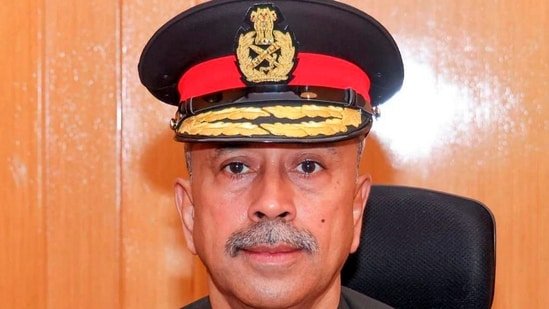
Who is Lt General NS Raja Subramani, the next Chief of Defence Staff of India?
# Lt Gen NS Raja Subramani: India’s Next CDS
**By Defense Correspondent | Strategic Affairs Desk | May 9, 2026**
In a decisive move to accelerate the integration and modernization of its armed forces, the Government of India has announced that Lieutenant General NS Raja Subramani is set to be the nation’s next Chief of Defence Staff (CDS). Slated to formally assume the role in New Delhi this month, the highly decorated infantry officer brings nearly four decades of tactical and strategic expertise to the highest military office. Having last served as the 47th Vice Chief of Army Staff until his retirement in July 2025, Lt Gen Subramani has been chosen to drive India’s ambitious theaterisation agenda. His appointment comes at a critical juncture, as New Delhi seeks to fortify its military apparatus against evolving geopolitical threats while optimizing its defense expenditures. [Source: Hindustan Times | Additional: Ministry of Defence Archives]
## A Storied Military Career and Rise to the Top
Lt Gen NS Raja Subramani’s elevation to the role of Chief of Defence Staff is the culmination of an illustrious and multifaceted military career. Commissioned into the prestigious Garhwal Rifles in December 1985, his journey through the ranks of the Indian Army has been characterized by command, staff, and instructional appointments across diverse and challenging operational environments.
An alumnus of the National Defence Academy (NDA), Khadakwasla, and the Indian Military Academy (IMA), Dehradun, he has consistently demonstrated tactical brilliance. His academic and strategic grounding was further honed at the Joint Services Command and Staff College in the United Kingdom, and later at the National Defence College in New Delhi. Over his career, he commanded a battalion during counter-insurgency operations, an infantry brigade along the International Boundary, and a division in the Northern sector.
Perhaps most significantly, Lt Gen Subramani commanded the Ambala-based Kharga Corps—India’s premier strike corps—equipping him with a profound understanding of offensive mechanized warfare and cross-border operational readiness. Before his stint as the Vice Chief, he served as the General Officer Commanding-in-Chief (GOC-in-C) of the Central Command in Lucknow, where he oversaw crucial peacetime logistics and strategic reserves.
**Key Career Milestones:**
| Year | Key Appointment | Operational Focus Area |
| :— | :— | :— |
| **1985** | Commissioned into Garhwal Rifles | Infantry Operations, Counter-Insurgency |
| **2021** | General Officer Commanding, Kharga Corps | Strike Formations, Mechanized Warfare |
| **2023** | GOC-in-C, Central Command | Strategic Reserves, Civil-Military Synergy |
| **2024** | 47th Vice Chief of Army Staff (VCOAS) | Capability Development, Modernization |
| **2026** | Chief of Defence Staff (CDS) | Theaterisation, Tri-Service Integration |
## Tenure as the 47th Vice Chief of Army Staff
Before his retirement in July 2025, Lt Gen Subramani’s tenure as the 47th Vice Chief of Army Staff (VCOAS) was widely regarded as a period of transformative modernization for the Indian Army. As the VCOAS, he was essentially the chief operating officer of the force, directly responsible for capital procurement, revenue budgets, and capacity building.
During his term, he championed the integration of niche technologies into the conventional warfighting matrix. Under his watch, the Army saw a rapid infusion of artificial intelligence (AI) in surveillance, the induction of swarm drones, and the upgrading of mechanized formations. He was a vocal advocate for *Atmanirbhar Bharat* (self-reliant India), aggressively pushing for the procurement of indigenous defense equipment and reducing reliance on foreign imports.
“Lt Gen Subramani’s time as the Vice Chief was marked by a highly pragmatic approach to capability development. He understood that the nature of warfare was changing, shifting from sheer numbers to technological asymmetry,” notes Dr. Abhinav Sharma, a New Delhi-based defense analyst and former member of the National Security Advisory Board. “His ability to bridge the gap between complex technological requirements and the operational realities of the frontline makes him an exceptional choice for the CDS.” [Source: Independent Defense Analysis]
## The Mandate: Advancing India’s Theaterisation
As the next Chief of Defence Staff, Lt Gen Subramani inherits the monumental task of completing India’s military theaterisation process. Initiated by the late Gen Bipin Rawat and advanced by Gen Anil Chauhan, theaterisation aims to merge the individual commands of the Army, Navy, and Air Force into unified, geographically and functionally integrated theater commands.
The traditional siloed approach, where each service operates independently, is no longer viable in multi-domain, high-intensity conflicts. Lt Gen Subramani will be responsible for ironing out the remaining differences among the three services—particularly regarding the command structures and asset allocation for the proposed Maritime Theatre Command (MTC) and the Air Defence Command (ADC).
His deep experience in strike corps operations and strategic reserves will be invaluable as he navigates the complex institutional sensitivities. The new CDS is expected to prioritize the operationalization of Joint Logistics Nodes (JLNs), ensuring that ammunition, fuel, and supplies are interoperable across the services, thereby eliminating redundant supply chains and optimizing the defense budget.
## Navigating Geopolitical Complexities
The appointment of Lt Gen NS Raja Subramani comes at a time of heightened global volatility and persistent regional security challenges. India continues to face a complex “two-front” threat scenario, with unresolved border disputes along the Line of Actual Control (LAC) with China and the Line of Control (LoC) with Pakistan.
In recent years, the militarization of the Himalayan frontiers has necessitated a shift in India’s strategic posture from passive defense to proactive deterrence. The new CDS will need to ensure that the integrated military framework provides New Delhi with a unified response mechanism capable of rapid mobilization.
Furthermore, as China aggressively expands its naval footprint in the Indian Ocean Region (IOR), the CDS will play a crucial role in enhancing India’s maritime domain awareness. Lt Gen Subramani will be expected to work closely with the Indian Navy to bolster anti-submarine warfare capabilities and strengthen strategic partnerships in the Indo-Pacific, aligning military diplomacy with broader national security objectives.
## Overcoming Bureaucratic Hurdles in the DMA
Beyond his role as the permanent Chairman of the Chiefs of Staff Committee (COSC), Lt Gen Subramani will serve as the Secretary of the Department of Military Affairs (DMA). Created in 2019, the DMA was established to promote civil-military synergy and ensure that military perspectives are intrinsically woven into the Ministry of Defence’s policymaking.
One of the stiffest challenges the new CDS will face is managing the competing budgetary demands of the three branches. The Indian Air Force requires rapid modernization of its fighter squadrons, the Navy is pushing for a third aircraft carrier and nuclear submarines, while the Army needs constant upgrades for its infantry and mechanized units.
Lt Gen Subramani’s mandate will involve making hard choices. He will need to ruthlessly prioritize acquisitions based on joint capability requirements rather than service-specific wish lists. Furthermore, he will be instrumental in scaling up defense exports, pushing the domestic defense-industrial base to meet global standards while fulfilling the internal demands of the armed forces.
## Expectations from the Defense Fraternity
The broader defense fraternity and strategic community have reacted positively to the announcement. Observers note that a retired officer with recent, high-level administrative experience (having retired just a year prior in July 2025) brings fresh operational memory combined with the diplomatic tact required for the CDS role.
“He is a soldier’s general and an administrator’s delight. His deep involvement in the Army’s restructuring over the last five years means there is no learning curve,” states retired Major General Sunil Verma, a commentator on national security. “The real test for the new CDS will not be conceptualizing theaterisation, but executing it against entrenched institutional resistance. His tenure as VCOAS showed he has the temperament to build consensus without compromising on strategic goals.” [Source: Independent Defense Analysis]
## Conclusion: A Defining Era for the Indian Armed Forces
The appointment of Lt Gen NS Raja Subramani as the next Chief of Defence Staff marks a defining chapter in the evolutionary arc of the Indian Armed Forces. As he prepares to don the mantle of the nation’s highest-ranking military officer in May 2026, the expectations are formidable.
From steering the final phases of theaterisation and optimizing a massive defense budget to countering the strategic encirclement in the Indo-Pacific, his leadership will shape India’s military readiness for decades to come. His proven track record of embracing technology, his deep understanding of sub-continental geopolitics, and his unwavering commitment to indigenous defense manufacturing position him uniquely to transform the Indian military into a cohesive, future-ready force.
As the world watches the geopolitical shifts in Asia, the success of India’s new CDS will be measured not just by the modernization of equipment, but by his ability to forge an unbreakable synergy across land, sea, air, space, and cyber domains.





