
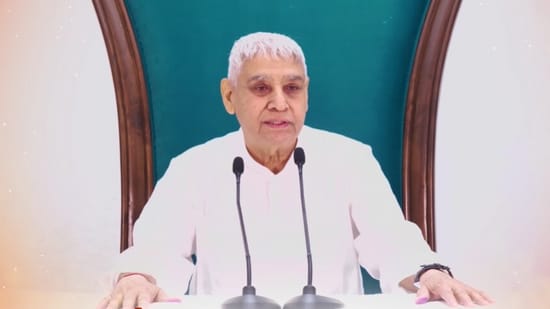
Who is Sant Rampal? 6 people died in siege when police went to arrest this 'godman'; 12 years on, he walks out of jail| India News
# Sant Rampal Granted Bail After 12-Year Term
**By Senior News Correspondent, National Desk | April 11, 2026**
Self-styled godman Sant Rampal walked out of a Haryana prison on Saturday evening, marking the end of a 12-year incarceration following the infamous 2014 Satlok Ashram siege. The Punjab and Haryana High Court granted him bail in a deeply contested sedition case, citing his advanced age of 75, deteriorating health, and the exceptionally slow pace of the ongoing trial. The 2014 standoff in Barwala, Hisar, which required a massive paramilitary intervention to execute a court-mandated arrest warrant, resulted in the tragic deaths of six individuals. Rampal’s release rekindles debates surrounding India’s complex judicial timelines and the enduring influence of regional spiritual leaders. [Source: Hindustan Times].
## The Legal Rationale Behind the Release
The decision to grant bail to Sant Rampal after over a decade behind bars underscores a fundamental constitutional principle in Indian jurisprudence: the right to a speedy trial under Article 21. Presiding over the bail hearing, the division bench of the Punjab and Haryana High Court noted that the trial for the sedition charges filed in 2014 had barely crossed the halfway mark, with hundreds of witnesses still left to be examined.
Rampal’s legal counsel successfully argued that keeping an undertrial prisoner incarcerated indefinitely, especially when the trial’s conclusion is nowhere in sight, constitutes a violation of fundamental rights. The court also took into consideration his age and a series of age-related ailments requiring sustained medical attention that prison facilities were allegedly ill-equipped to provide.
“Bail, not jail, is the underlying philosophy of our criminal justice system, though it is often tested in cases involving high-profile figures or serious charges like sedition,” explains Advocate Meera Singh, an independent legal analyst based in Chandigarh. “When a trial stretches for 12 years without a conviction on a specific charge, appellate courts are historically compelled to intervene to prevent pre-trial detention from mutating into punitive sentencing.”
The court, however, has imposed stringent conditions on Rampal’s release. He has been ordered to surrender his passport, refrain from addressing large public gatherings, and present himself to the local police station weekly to ensure compliance with the bail terms. [Source: Hindustan Times | Additional: Public judicial records and constitutional precedents].
## From Government Engineer to Cult Figure
To understand the magnitude of the 2014 siege and the significance of Rampal’s release, one must trace his unconventional rise. Born Rampal Dass in 1951 in a village in Haryana’s Sonipat district, he initially led a conventional life. After obtaining a diploma in engineering, he worked as a junior engineer in the Haryana Government’s Irrigation Department.
His trajectory shifted dramatically in the 1990s when he became a follower of Swami Ramdevanand, a seer of the Kabir Panth sect. In 1995, Rampal resigned from his government job to devote himself entirely to spiritual preaching, claiming to be the spiritual successor in the lineage of the 15th-century mystic poet Kabir.
In 1999, he established the Satlok Ashram in Karotha, Rohtak. His teachings sharply critiqued traditional Hindu rituals and text interpretations, specifically targeting the Arya Samaj, a prominent Hindu reform movement with a massive following in Haryana. This ideological clash was the genesis of his long-standing legal troubles. In 2006, violent clashes between his followers and Arya Samaj members led to one death, resulting in murder charges against Rampal and his eventual relocation to the larger Barwala ashram in Hisar.
## The Bloody 2014 Barwala Ashram Siege
The defining moment of Rampal’s legacy occurred in November 2014. After Rampal repeatedly ignored court summons related to the 2006 murder case, the Punjab and Haryana High Court issued non-bailable warrants and ordered his immediate arrest for contempt of court.
When law enforcement agencies arrived at the Satlok Ashram in Barwala, they were met with an unprecedented scenario. An estimated 15,000 followers had formed a massive human chain around the sprawling 12-acre complex. Authorities later discovered that many followers were essentially held hostage inside, used as human shields against the advancing police forces. The ashram had been fortified with stone-pelting machinery, acid bottles, and firearms.
The subsequent standoff, dubbed ‘Operation Rampal’, lasted for nearly two weeks. The state deployed over 40,000 police personnel, alongside paramilitary forces, to breach the fortress. Authorities were forced to cut off power and water supplies to flush out the inhabitants.
The siege culminated in a tragic loss of life. Six individuals—five women and one infant—died during the operation. Post-mortem reports later confirmed that the deaths were primarily due to suffocation, medical emergencies, and the chaotic stampede-like conditions inside the sealed ashram, rather than direct police action. On November 19, 2014, police finally breached the inner sanctum and arrested Rampal. [Source: Hindustan Times | Additional: Archival reports of the 2014 Haryana Police operation].
## The Sedition Charge and Judicial Delays
Following the siege, the state registered a slew of FIRs against Rampal and his key aides. The charges were severe: murder, attempt to murder, wrongful confinement, and most notably, sedition (waging war against the State) under the Indian Penal Code.
While Rampal was convicted and sentenced to life imprisonment in 2018 for two separate murder cases connected to the ashram violence (for which his appeals are still pending in higher courts), the sedition trial stalled. The sheer volume of evidence, which included thousands of pages of forensic reports, digital evidence of ashram fortifications, and testimonies from hundreds of police personnel and rescued followers, created an administrative bottleneck.
“The Indian judicial framework struggles under the weight of mega-trials,” notes Dr. Avinash Deshmukh, a sociologist studying the intersection of law and religious movements. “When an FIR names dozens of co-accused and lists over five hundred witnesses, the logistical reality is that trial dates are scattered across years. Add to this the disruptions caused by the global pandemic in 2020 and 2021, and a 12-year timeline, unfortunately, becomes the norm rather than the exception.”
The High Court’s recent bail order explicitly recognized this systemic failure, noting that the prosecution had failed to demonstrate that the trial would conclude in the foreseeable future, thus necessitating conditional bail for the primary accused.
## The Phenomenon of India’s ‘Godmen’
Sant Rampal’s saga is not an isolated incident but part of a broader socio-cultural phenomenon in India involving charismatic ‘godmen’ or spiritual gurus. Figures like Gurmeet Ram Rahim Singh and Asaram Bapu have similarly commanded millions of devoted followers before facing severe criminal convictions.
Understanding the deep-rooted loyalty these figures command requires looking beyond the sensational headlines. Often, these spiritual leaders step into the voids left by state mechanisms. Their ashrams provide free healthcare, subsidized education, de-addiction centers, and, most importantly, a sense of community and social equality.
For many marginalized communities, particularly those belonging to oppressed castes in Haryana, Punjab, and Rajasthan, joining a sect like the Kabir Panth under Rampal offered a sanctuary from the rigid caste hierarchies prevalent in mainstream society. Inside the ashram, followers dined together and engaged in egalitarian community service.
This psychological and social dependency explains why, even after 12 years of incarceration and serious criminal convictions, a substantial fraction of Rampal’s followers remain devoted. Throughout his imprisonment, underground networks continued to distribute his literature and conduct clandestine prayer meetings, demonstrating the resilience of cult-like followings against state intervention. [Source: Independent sociological research on Indian spiritual sects].
## Political Implications in Haryana
The release of Sant Rampal, even on bail, sends ripples through the political landscape of Haryana. Historically, ashrams with massive followings have functioned as powerful vote banks. Politicians across party lines have been known to seek the blessings of these gurus during election cycles, tacitly securing the bloc votes of their disciples.
While Rampal’s empire was physically dismantled in 2014, the ideological infrastructure persists. Security agencies in Haryana are currently on high alert. The state administration faces the delicate task of maintaining law and order, ensuring that Rampal’s release does not trigger retaliatory violence from rival sects like the Arya Samaj, nor allow his followers to disrupt public peace through massive celebratory gatherings.
Intelligence reports suggest that while the Satlok Ashram in Barwala remains sealed and in ruins, efforts might be made by his key lieutenants to consolidate the scattered follower base digitally or through smaller, localized congregations. The bail condition prohibiting him from addressing massive public rallies is a direct preemptive measure by the judiciary to prevent the resurgence of his militant stronghold.
## Conclusion: A Legal Precedent and Cautious Watch
As Sant Rampal adjusts to life outside the high-security walls of the central jail, his case stands as a multifaceted mirror reflecting the complexities of modern India. It highlights the tension between the constitutional mandate for speedy trials and the logistical nightmares of prosecuting mass-scale offenses.
The tragic events of 2014, where six innocent lives were lost in the crossfire of blind faith and state authority, remain a sobering reminder of the dangers posed when spiritual devotion morphs into militarized fanaticism.
Moving forward, the primary focus will be on the state’s ability to monitor compliance with the High Court’s strict bail conditions. Rampal remains a convicted felon in separate murder cases, and his temporary freedom in the sedition case does not absolve him of his broader legal liabilities. Whether he chooses a path of quiet retirement given his advanced age, or attempts to discreetly resurrect his spiritual empire from the shadows, remains to be seen. Law enforcement agencies, political observers, and civil society will be watching his next moves closely.





