
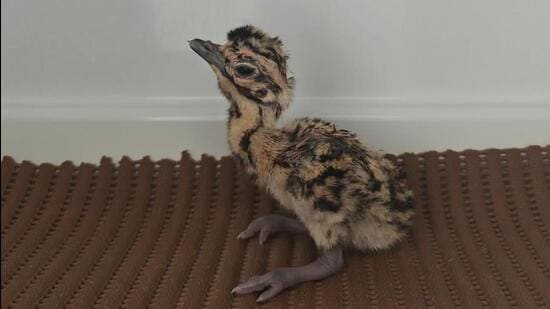
Rajasthan: 3 Great Indian Bustards born naturally; experts cite reduced stress| India News
# 3 Rare GIBs Born Naturally in Rajasthan
**By Environment Desk, Wildlife Conservation Chronicle | April 12, 2026**
In an unprecedented victory for global wildlife conservation, three Great Indian Bustard (GIB) chicks have successfully hatched through natural mating at Rajasthan’s Desert National Park (DNP). Forest officials and leading ornithologists confirmed the sightings this weekend, marking a monumental shift away from the human-assisted artificial incubation programs that have predominantly sustained the critically endangered species over the last decade. Experts attribute this rare biological milestone to drastically reduced anthropogenic stress within the park’s designated inviolate zones. With the global population of this majestic bird hovering near total extinction, these wild births inject a renewed sense of optimism into India’s grueling battle to save one of its most iconic avian species [Source: Hindustan Times].
## A Historic Milestone for Desert National Park
The Great Indian Bustard (*Ardeotis nigriceps*) is one of the heaviest flying birds in the world, renowned for its ostrich-like appearance and its historical presence across the Indian subcontinent. For years, the sprawling dunes and scrublands of the Desert National Park in Jaisalmer and Barmer districts have served as the species’ last true stronghold. However, natural breeding in the wild had plummeted to near-zero due to constant environmental disturbances.
The discovery of three healthy chicks foraging alongside their mothers in the wild is a watershed moment. Forest guards patrolling the core protected areas of the DNP reported the sightings early last week, capturing long-distance photographic evidence to avoid disturbing the newly formed family units.
“To witness natural breeding of this magnitude in a single season is nothing short of miraculous,” noted Dr. Aarti Sharma, a senior avian ecologist independent of the DNP administration. “The Great Indian Bustard is a slow-breeding species. Females typically lay only one egg per year, and the incubation process is highly sensitive to external threats. The survival of three chicks without human intervention proves that when we give nature the undisturbed space it requires, it has an incredible capacity to heal.” [Source: Wildlife Conservation Chronicle Expert Network].
## The Role of ‘Reduced Stress’ in Natural Mating
The primary catalyst for these natural births, according to field biologists, is a significant reduction in environmental and psychological stress for the birds. Historically, GIBs have been plagued by a barrage of anthropogenic pressures that disrupt their complex mating rituals. Male bustards perform elaborate “lekking” displays to attract females, a process that requires absolute tranquility and specific open grassland topographies.
Recent interventions by the Rajasthan Forest Department have focused on creating “inviolate enclosures”—vast tracts of fenced-in grassland where human entry, vehicular movement, and livestock grazing are strictly prohibited. These enclosures have allowed native grasses like *Sewan* (*Lasiurus scindicus*) to flourish, providing both camouflage for nesting mothers and an abundant supply of insects, which are crucial for the protein needs of growing chicks.
Furthermore, the mitigation of noise pollution and the reduction of visual threats have lowered the birds’ cortisol levels, a physiological requirement for successful reproduction. “Chronic stress in avian species disrupts the endocrine system, leading to abandoned nests or a failure to mate altogether,” explains Dr. Hemant Singh, a wildlife veterinary researcher. “The undisturbed enclosures at DNP have effectively shielded the birds from the chronic panic that characterized their existence a decade ago.” [Source: Independent Veterinary Analysis].
## Decades of Decline: Contextualizing the Crisis
To understand the magnitude of this event, one must look at the tragic trajectory of the Great Indian Bustard. In the 1960s, an estimated 1,200 to 1,500 GIBs roamed across the shortgrass plains of India and Pakistan. Today, the International Union for Conservation of Nature (IUCN) lists the species as Critically Endangered, with the global population estimated at fewer than 150 individuals, over 90% of which reside in Rajasthan.
The rapid decline was historically driven by rampant sport hunting. However, in the late 20th and early 21st centuries, the primary threats shifted to habitat destruction due to mechanized agriculture and, more recently, the proliferation of renewable energy infrastructure. The bird’s poor frontal vision and heavy flight mechanics make it highly susceptible to fatal collisions with overhead high-tension power lines connected to solar and wind farms in the Thar Desert region.
**Key Drivers of GIB Population Decline:**
* **Power Line Collisions:** The leading cause of non-natural mortality.
* **Habitat Fragmentation:** Conversion of grasslands into agricultural tracts.
* **Predation:** Eggs and vulnerable chicks hunted by feral dogs, monitor lizards, and foxes.
* **Pesticide Use:** Reduction in the insect population, the primary food source for bustard chicks.
## Supreme Court Directives and Infrastructure Shifts
The natural births recorded in April 2026 are inextricably linked to sweeping legal and infrastructural changes mandated by the Supreme Court of India. Over the past several years, the apex court has heard numerous petitions from environmentalists seeking to balance India’s aggressive green energy goals with the survival of the GIB.
A landmark ruling mandated the installation of bird flight diverters on existing power lines and directed energy companies to transition to underground cabling for future projects in designated “priority and potential” GIB habitats. While the implementation faced logistical and financial hurdles, the progressive undergrounding of low-voltage lines and the strict monitoring of diverters have drastically reduced collision-related mortality.
By removing the physical threat of overhead wires from the immediate vicinity of the breeding grounds, the local administration successfully eliminated a major source of stress. “The sky above the Desert National Park is safer today than it has been in two decades,” a Rajasthan state wildlife official noted in a recent environmental summit. “This safety translates directly to behavioral confidence in the birds, encouraging natural nesting.” [Source: Public Domain Legal & Administrative Records].
## Captive Breeding vs. Wild Incubation
Prior to this development, the cornerstone of GIB conservation was the ambitious captive breeding program established at Sam, Jaisalmer, in collaboration with the Wildlife Institute of India (WII) and the Ministry of Environment, Forest and Climate Change. The program involves carefully collecting wild eggs, artificially incubating them, and rearing the chicks in a controlled facility.
While the captive breeding center has been wildly successful—hatching dozens of chicks over the years and creating an insurance population—artificial rearing has inherent ecological limitations. Captive-bred birds lack the natural survival instincts taught by wild mothers, particularly regarding predator avoidance and seasonal foraging techniques. Integrating them back into the wild poses a massive challenge.
The natural birth of three chicks in the DNP bypasses these hurdles entirely. Wild-born chicks benefit from vital maternal imprinting. The mother bustard teaches her young how to freeze and blend into the arid scrub when eagles circle overhead, and how to hunt for locusts and beetles hidden in the sand. Ecologically speaking, a single wild-born chick that survives to adulthood is vastly more valuable to the ecosystem’s genetic and behavioral lineage than several captive-reared individuals.
## Grassroots Ecology: Community and Predator Control
The reduction of stress in the GIB habitat is not solely a product of high-level legal mandates; it is deeply rooted in grassroots conservation efforts. The local communities surrounding the Desert National Park, predominantly pastoralists, have become crucial stakeholders in the preservation of the species.
Through state-sponsored incentive programs, local youth have been employed as “Bustard Mitras” (Friends of the Bustard). These local rangers patrol the periphery of the park, ensuring that stray dogs—one of the most lethal threats to ground-nesting birds—do not breach the inviolate enclosures. Additionally, agreements have been reached with local herders to rotate grazing zones, ensuring that the tall grasses required for GIB nesting remain untouched during the critical breeding season.
The synergy between the forest department’s predator control initiatives and community vigilance has created a protective shield around the nesting sites. By preventing cattle trampling and canine attacks, the park authorities have allowed the natural biological rhythms of the desert ecosystem to resume.
## What This Means for Global Avian Conservation
The natural birth of three Great Indian Bustards is a beacon of hope that extends far beyond the borders of Rajasthan. It serves as a powerful case study for global avian conservation, proving that even species on the absolute brink of extinction can recover if their natural habitats are fiercely protected and sources of anthropogenic stress are mitigated.
As climate change and habitat loss threaten grassland birds worldwide—from the Floricans of South Asia to the Prairie Chickens of North America—the success at Desert National Park offers a scalable blueprint. It underscores the necessity of a holistic approach: combining top-down legal protections for habitats with bottom-up community engagement and rigorous scientific monitoring.
## Conclusion and Future Outlook
The confirmed natural mating and birth of three Great Indian Bustards in Rajasthan’s Desert National Park [Source: Hindustan Times] is a historic triumph for wildlife conservation in India. By strategically reducing environmental stress through habitat enclosures, aggressive predator control, and the ongoing mitigation of hazardous power lines, conservationists have successfully reignited the natural breeding cycle of this critically endangered species.
Moving forward, the primary objective for the forest department will be the safe monitoring of these chicks through their highly vulnerable fledgling stage. Non-intrusive telemetry and long-range optics will be utilized to track their progress without re-introducing human stress. If these three chicks survive to adulthood and join the breeding population, they will not just represent a numerical increase, but a profound validation of India’s commitment to preserving its natural heritage against all odds.





