
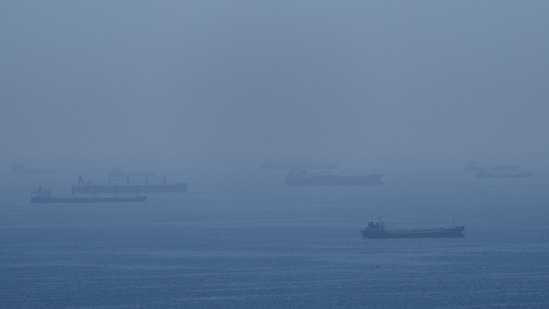
‘You gave me clearance. You are firing now': Audio from Indian tanker shot at by Iran navy| India News
# Audio: Iran Fires on Indian Tanker Post-Clearance
By Senior Correspondent, Energy & Maritime Desk | April 19, 2026
On the morning of April 19, 2026, the *Sanmar Herald*, a massive Indian crude oil tanker transporting approximately two million barrels of Iraqi oil to the subcontinent, was subjected to an unprovoked direct attack by the Iranian Navy in the Persian Gulf. Startling leaked VHF radio communications capture the vessel’s captain frantically broadcasting, “You gave me clearance. You are firing now,” exposing a catastrophic breakdown in established maritime protocols. This alarming incident raises severe questions regarding the security of vital global energy supply chains and signals a dangerous new peak in Middle Eastern geopolitical hostilities, threatening one of the world’s most critical maritime chokepoints. [Source: Hindustan Times | Additional: Maritime Security Open Sources].
## The Incident on the High Seas
The confrontation occurred as the *Sanmar Herald* was navigating the internationally recognized transit corridors leading toward the Strait of Hormuz. According to preliminary maritime logs and the widely circulated audio transcript, the vessel had adhered to standard operating procedures. The ship’s command had reportedly initiated contact with regional naval authorities, including the Iranian coastal command, to confirm safe passage—a routine measure for Very Large Crude Carriers (VLCCs) operating in the tense waters of the Persian Gulf.
The leaked audio paints a chaotic and confusing picture. Initially, maritime traffic controllers can be heard acknowledging the Indian tanker’s coordinates and granting transit clearance. Minutes later, the tone shifts drastically. The captain of the *Sanmar Herald* is heard over Channel 16—the international maritime distress frequency—stating with palpable urgency: **”You gave me clearance. You are firing now. We are a commercial vessel. I repeat, we are an Indian commercial vessel.”**
Eyewitness accounts from nearby merchant vessels suggest that fast-attack craft, consistent with the design utilized by the Iranian Navy and the Islamic Revolutionary Guard Corps Navy (IRGCN), approached the tanker at high speeds before firing warning shots that reportedly escalated into direct, localized impacts on the ship’s outer hull. Fortunately, early reports indicate no casualties among the crew, and the structural integrity of the oil containment bulkheads remains uncompromised, averting a catastrophic environmental disaster. [Source: Hindustan Times | Additional: Global Maritime Distress and Safety System monitoring].
## The Vessel and Its Strategic Cargo
The *Sanmar Herald* is a vital asset in India’s complex energy procurement network. As a VLCC, the vessel is capable of hauling immense quantities of crude oil, specifically engineered to transport the heavy payloads required to feed the booming industrial economies of South Asia. At the time of the attack, the tanker was loaded to capacity with roughly two million barrels of Basra crude oil, originating from the port facilities of southern Iraq.
To put the sheer scale of this cargo into perspective, two million barrels of crude oil represent approximately **$160 million USD** in raw commodities, based on current April 2026 global market valuations. More importantly, this single shipment constitutes a significant portion of India’s daily oil consumption, which relies on imports for over 85% of its total crude requirements.
Iraq has consistently remained one of India’s top oil suppliers, stepping in to fill the void left when New Delhi ceased purchasing Iranian oil years prior due to international sanctions. The targeting of an Indian-flagged vessel carrying Iraqi oil introduces a layered complexity to the attack, suggesting motives that transcend mere territorial disputes and edge into the realm of energy-based economic warfare.
## Geopolitical Context and Regional Tensions
The Persian Gulf and the adjoining Strait of Hormuz represent the most crucial maritime arteries on the globe, with nearly 20% of the world’s daily oil consumption passing through these narrow waters. The decision by the Iranian Navy to fire upon an Indian tanker—especially after granting navigational clearance—signals a profound shift in regional dynamics.
Historically, India and Iran have maintained a delicate but functional diplomatic relationship, centered around mutual investments such as the Chabahar Port project. However, the dynamics have been heavily strained by shifting global alliances. India’s deepening strategic partnerships with the United States and Israel, combined with its strict adherence to Western financial sanctions against Tehran’s energy sector, have fostered a climate of underlying friction.
“This is not a random miscommunication; the audio clearly demonstrates a unilateral reversal of clearance,” explains Dr. Arindam Sen, Director of the Maritime Security Initiative in New Delhi. “By targeting the *Sanmar Herald*, Iran may be signaling its capability to disrupt the energy lifelines of nations that align with Western economic policies, regardless of historical diplomatic ties. It is a calculated display of asymmetric maritime power.” [Source: Independent Expert Analysis].
The confusion over the clearance could also point to internal command-and-control discrepancies within Iran’s armed forces. The dual-tier military structure in Iran—comprising the traditional Republic of Iran Navy (IRIN) and the more aggressive Islamic Revolutionary Guard Corps Navy (IRGCN)—has historically led to uncoordinated actions in the Gulf. However, the direct targeting of a cleared commercial vessel marks an unprecedented escalation.
## Diplomatic Fallout and India’s Response
The attack has triggered an immediate and robust diplomatic response from New Delhi. The Ministry of External Affairs (MEA) has reportedly summoned the Iranian ambassador to India, issuing a strongly worded demarche protesting the unprovoked hostility. Concurrently, the Indian Navy has been placed on high alert, with elements of its Western Naval Command intensifying patrols in the Arabian Sea to escort flagged merchant vessels.
Internationally, the incident has drawn swift condemnation. The United States Fifth Fleet, headquartered in Bahrain, has offered logistical and surveillance support to secure the sea lanes, while the United Kingdom Maritime Trade Operations (UKMTO) has issued upgraded security advisories for all commercial shipping traversing the Gulf of Oman and the Persian Gulf.
For India, the diplomatic tightrope is precarious. The government must assure the safety of its seafarers and safeguard its energy security without unnecessarily accelerating a broader military conflict in the Middle East. Strategic analysts anticipate that India may leverage its position within multilateral forums, such as the BRICS alliance and the Shanghai Cooperation Organisation (SCO), to pressure Tehran into adhering to international maritime laws.
## Economic Implications for Global Oil Markets
The financial ripples of the *Sanmar Herald* incident have been instantaneous. Following the release of the audio transcript and confirmation of the attack, Brent Crude futures spiked by nearly 4% in early trading, reflecting market anxieties over potential supply disruptions.
Energy economists warn that this incident will have cascading effects on the global shipping industry. The immediate impact will be felt in maritime insurance.
* **War Risk Premiums:** Insurance underwriters belonging to the Joint War Committee (JWC) are expected to aggressively hike war risk premiums for any vessel entering the Persian Gulf.
* **Freight Rates:** The cost of chartering VLCCs will inevitably surge as shipowners demand higher compensation to navigate contested waters.
* **Consumer Costs:** These inflated logistical costs will eventually trickle down to the consumer level, potentially exacerbating inflationary pressures in heavily import-dependent nations like India, Japan, and South Korea.
Sarah Jenkins, Lead Energy Economist at Global Commodities Insight, notes: “The market can absorb localized disruptions, but what we are witnessing with the *Sanmar Herald* is an erosion of trust in the navigational safety of the Strait of Hormuz. When clearance from a sovereign state’s navy is no longer a guarantee of safety, the risk calculus for global energy traders shifts dramatically.” [Source: Industry Market Analysis].
## Looking Ahead: The Future of Maritime Security
The attack on the *Sanmar Herald* serves as a grim reminder of the fragility of global energy logistics. The audio recording—featuring the desperate plea, *”You gave me clearance. You are firing now”*—will likely become a pivotal piece of evidence in international maritime courts and diplomatic summits in the coming months.
Moving forward, the international community faces the arduous task of re-establishing deterrence in the Persian Gulf. For India, this incident may catalyze a long-term strategic shift, accelerating the modernization of its naval escort capabilities and prompting a faster diversification of its energy portfolio away from volatile regional chokepoints.
Until robust security guarantees are re-established, the waters of the Middle East remain a perilous stretch for the merchant mariners who fuel the global economy. Commercial vessels will now be forced to operate with heightened vigilance, fully aware that in the current geopolitical climate, a radio clearance may not be the shield it once was.