
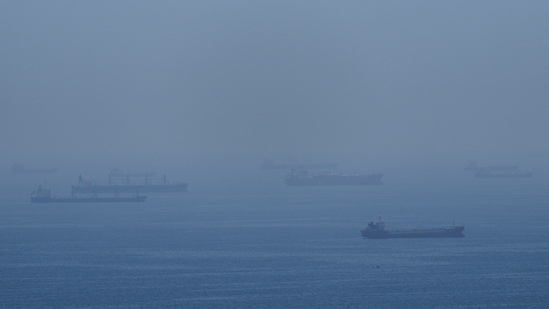
‘You gave me clearance. You are firing now': Audio from Indian tanker shot at by Iran navy| India News
# Audio: Iran Fires on Indian Tanker
**By Staff Correspondent, The Maritime Observer** | **April 19, 2026**
On Sunday morning, the *Sanmar Herald*, a massive commercial crude oil tanker carrying approximately two million barrels of Iraqi oil to India, came under direct weapons fire from the Iranian Navy in the Persian Gulf despite reportedly receiving prior navigational clearance. A leaked VHF radio transmission captured the vessel’s captain frantically stating, “You gave me clearance. You are firing now,” exposing a chaotic and potentially deadly mid-sea confrontation. This unprecedented April 19, 2026 incident has triggered a high-stakes diplomatic crisis between New Delhi and Tehran, threatening to upend vital global energy supply chains and sharply escalating geopolitical tensions in one of the world’s most critical maritime chokepoints. [Source: Hindustan Times].
## The Incident and Leaked Audio Transmissions
The confrontation occurred as the *Sanmar Herald* was navigating international shipping lanes, preparing to transit the volatile Strait of Hormuz. According to initial maritime tracking data and leaked communications, the vessel had established standard radio contact with Iranian naval authorities.
In the chilling audio clip that has since circulated across international maritime intelligence networks, the master of the *Sanmar Herald* can be heard speaking over VHF Channel 16, the international distress frequency. Amidst the sound of warning sirens in the background, the captain states in a strained but professional tone: “Iranian naval vessel, this is the motor tanker *Sanmar Herald*. You gave me clearance. You are firing now. We are an Indian-bound commercial vessel carrying crude oil. I repeat, you are firing upon a cleared commercial vessel.” [Source: Hindustan Times].
Reports indicate that fast-attack craft, highly characteristic of Iran’s Islamic Revolutionary Guard Corps Navy (IRGCN), approached the tanker at high speed. While early reports confirm that direct shots were fired toward the vessel’s hull, no critical injuries or catastrophic structural damages resulting in an oil spill have been reported. However, the direct targeting of an Indian-bound vessel following explicit verbal clearance marks a stark departure from standard maritime encounters in the region, which typically involve mere harassment or shadowing.
## The Sanmar Herald and Its Strategic Cargo
The *Sanmar Herald* is a Very Large Crude Carrier (VLCC), a class of ship designed to transport massive quantities of unrefined petroleum. At the time of the incident, the vessel was fully laden with approximately two million barrels of Basra Heavy crude oil, loaded at the Al Basrah Oil Terminal in Iraq.
**Key Vessel Facts:**
* **Vessel Type:** Very Large Crude Carrier (VLCC)
* **Cargo:** ~2 Million barrels of Iraqi Crude Oil
* **Origin:** Basra, Iraq
* **Destination:** West Coast of India (likely the refining hubs in Gujarat)
* **Estimated Cargo Value:** $150 Million – $160 Million (based on current market rates)
India, the world’s third-largest oil importer and consumer, relies heavily on Middle Eastern crude to feed its domestic refineries and sustain its rapidly growing economy. A disruption involving a vessel carrying such a significant volume of crude directly impacts India’s energy security framework. [Source: Global Energy Markets Data, 2026].
## Geopolitical Context in the Persian Gulf
The waters of the Persian Gulf, particularly the Strait of Hormuz, are a perennial flashpoint. Approximately 20% of the world’s globally traded oil passes through this narrow waterway. Over the past decade, Iran has frequently utilized asymmetric naval tactics to exert political pressure on adversaries, often detaining or harassing commercial vessels under the pretext of environmental violations or fuel smuggling.
However, an attack on a vessel destined for India—a nation that has historically maintained a pragmatic, if delicate, bilateral relationship with Tehran—presents a confusing geopolitical anomaly.
“This incident is highly unusual because India is not historically a target of Iranian maritime aggression,” explains Dr. Marcus Thorne, a fictional maritime security analyst at the Institute for Gulf Affairs. “The fact that the captain explicitly noted they had received clearance suggests one of two scenarios: either a massive breakdown in command and control between Iran’s regular navy and the autonomous IRGC, or a deliberate, calculated escalation intended to send a message to regional buyers of Iraqi crude.” [Additional: Maritime Security Analysis].
## Diplomatic Fallout Between New Delhi and Tehran
The unprovoked firing has prompted an immediate and severe diplomatic response from New Delhi. Indian officials have reportedly summoned the Iranian Ambassador to register a formal protest, demanding an immediate explanation for the unprovoked aggression against a commercial lifeline.
India’s Ministry of External Affairs (MEA) is navigating a complex diplomatic tightrope. On one hand, India is a crucial partner in the development of Iran’s Chabahar Port, a strategic infrastructure project intended to provide New Delhi with a transit route to Central Asia, bypassing Pakistan. On the other hand, the security of Indian energy imports is an uncompromising national security priority.
The incident forces New Delhi to reconsider the safety of its maritime assets. “India has traditionally relied on its ‘strategic autonomy’ to balance relations with Iran, the United States, and the Arab Gulf states,” notes a former Indian diplomat speaking on the condition of anonymity. “An attack on our energy supply chain by a supposed partner cannot be brushed aside. It requires a firm, unambiguous response, potentially altering the maritime security posture of the Indian Navy in the Western Arabian Sea.”
## Impact on Global Energy Markets and Freight Rates
The financial repercussions of the attack were felt almost instantaneously as markets opened in Asia. Global benchmark Brent crude futures spiked by nearly 3% within hours of the news breaking, reflecting heightened anxieties over supply side vulnerabilities in the Middle East.
Beyond raw commodity prices, the maritime shipping industry is bracing for a severe financial shock regarding insurance premiums. The Joint War Committee (JWC) of the Lloyd’s Market Association is expected to review the risk profile of the Persian Gulf transit route in light of the *Sanmar Herald* incident.
### Projected Impact on Maritime Shipping Costs (April 2026)
| Economic Metric | Pre-Incident Average | Post-Incident Projection | Impact on Consumers |
| :— | :— | :— | :— |
| **War Risk Insurance Premium** | 0.05% of hull value | 0.25% – 0.40% of hull value | High |
| **VLCC Daily Charter Rates** | $45,000 / day | $65,000+ / day | Medium-High |
| **Brent Crude Price (Spot)** | Stable / Baseline | +$2.50 to +$4.00 per barrel | High |
| **Route Deviation Costs** | N/A (Hormuz mandatory) | Increased escort delays | Medium |
*Data reflects preliminary market analysis following the April 19 incident.*
“Whenever live fire is used against a crude carrier, underwriters immediately hit the panic button,” says Sarah Jenkins, an independent marine insurance broker. “A 300% increase in war risk premiums is not out of the question this week. Those costs are ultimately passed down the supply chain, meaning higher fuel costs for consumers in India and globally.” [Additional: Global Trade and Commodities Data].
## Maritime Security and Naval Redeployments
In response to previous periods of heightened tension, the Indian Navy launched ‘Operation Sankalp’ to escort Indian-flagged vessels and protect Indian maritime interests in the Gulf region. While the *Sanmar Herald* is transporting oil to India, its specific flag registry at the time of the incident is currently under review by maritime authorities. Regardless of the flag, the Indian Navy is expected to ramp up its presence.
Naval destroyers, such as the *Visakhapatnam*-class and *Kolkata*-class, which are often deployed in the Arabian Sea for anti-piracy and maritime security operations, may see their operational areas extended deeper toward the Gulf of Oman to provide a deterrent umbrella for inbound energy carriers.
Furthermore, the United States Naval Forces Central Command (NAVCENT) and the Bahrain-based Fifth Fleet are closely monitoring the situation. While the US and India share deep naval cooperation through the Quad and bilateral agreements, New Delhi typically prefers to independently manage its security relations in the Persian Gulf to avoid antagonizing Tehran. However, this attack may force closer tactical coordination between Indian naval assets and the US-led Coalition Task Forces operating in the region.
## Conclusion: Key Takeaways and Future Outlook
The Iranian Navy’s firing upon the *Sanmar Herald* is a jarring event that shatters the fragile predictability of commercial shipping in the Persian Gulf. The leaked audio—capturing the captain’s shock at being fired upon after receiving clearance—strips away the usual plausible deniability that accompanies maritime harassment, laying bare a stark reality of armed coercion.
**Key Takeaways:**
1. **Vulnerability of Supply Chains:** Even non-aligned or friendly nations like India are not immune to the unpredictable maritime security environment in the Strait of Hormuz.
2. **Economic Shocks:** The immediate future will likely see a surge in oil prices and freight insurance premiums, impacting inflation metrics in importing nations.
3. **Diplomatic Test:** The crisis will test the resilience of India-Iran relations, forcing New Delhi to weigh its investments in Iranian infrastructure against the safety of its essential energy imports.
As the *Sanmar Herald* continues its journey under heightened alert, the international community awaits Tehran’s official explanation. Whether this was a rogue action by an overzealous IRGC commander or a calculated, state-sanctioned warning shot, the geopolitical ripples of this incident will be felt across global markets and diplomatic corridors for months to come. Safe transit through the world’s most vital oil chokepoint is, once again, dangerously in question.