‘Modi ji mentioned Congress 59 times, women barely’: Kharge slams PM’s speech after bill fails Lok Sabha test| India News
# Lok Sabha Defeats 131st Bill; Kharge Slams PM
By Senior Political Correspondent, National News Desk, April 19, 2026
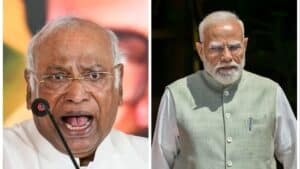
On Sunday, April 19, 2026, the Constitution (131st Amendment) Bill, 2026, failed to pass the Lok Sabha after falling short of the mandatory two-thirds majority required for constitutional amendments. The defeat of the critical legislation, which aimed to expedite and finalize the structural frameworks for women’s parliamentary representation ahead of the upcoming delimitation exercise, triggered immediate and fierce political fallout. Congress President Mallikarjun Kharge launched a scathing critique of Prime Minister Narendra Modi’s post-vote parliamentary address. Kharge pointedly noted that while the Prime Minister mentioned the opposition “Congress 59 times,” he “barely” addressed the core issue of women’s empowerment. The bill’s collapse highlights a deeply fractured lower house and raises profound questions about the timeline for achieving legislative gender parity in India. [Source: Hindustan Times | Additional: Lok Sabha Live Proceedings].
## The Collapse of the 131st Amendment Bill
The failure of a constitutional amendment on the floor of the Lok Sabha is a rare legislative event, emphasizing the stark divide between the ruling National Democratic Alliance (NDA) and the opposition INDIA bloc. Under Article 368 of the Indian Constitution, an amendment bill requires not only a simple majority of the total membership of the House but also a majority of not less than two-thirds of the members present and voting.
Despite intense backchannel negotiations leading up to the Sunday morning session, the ruling coalition failed to secure the requisite cross-party support. While the government benches voted in a unified bloc in favor of the 131st Amendment, substantial abstentions and coordinated “No” votes from the opposition benches mathematically doomed the legislation.
The exact voting numbers reflected a deeply polarized chamber. The opposition argued that the bill, in its current form, lacked vital provisions—specifically, a dedicated sub-quota for women belonging to Other Backward Classes (OBCs) and minority communities. Without these explicit guarantees, the opposition maintained that the bill would disproportionately benefit historically privileged demographics at the expense of marginalized women. [Source: Hindustan Times | Additional: Parliamentary PRS Legislative Research].
## Kharge’s Scathing Critique of the Prime Minister
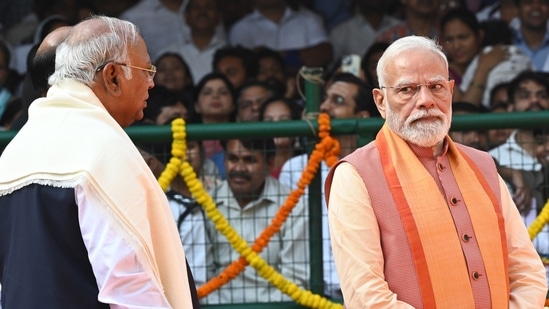
Following the failure of the bill, Prime Minister Narendra Modi addressed the Lok Sabha, expressing profound disappointment and laying the blame squarely at the feet of the opposition. However, his speech quickly became the focal point of a massive political controversy.
Addressing the media outside Parliament, Congress President Mallikarjun Kharge accused the Prime Minister of utilizing a solemn legislative defeat as an opportunity for partisan grandstanding.
“Modi ji mentioned Congress 59 times, women barely,” Kharge remarked, his statement quickly going viral across digital platforms and news networks. “When a historic bill regarding the political rights of half our population fails, the leader of the nation should reflect on the consensus-building process. Instead, we witnessed a campaign speech inside the sacred halls of Parliament. His obsession with attacking the Congress party overshadowed the very women he claims to champion.” [Source: Hindustan Times].
Kharge further elaborated that the opposition’s stance was not against women’s reservation, but against what they perceived as a “flawed and exclusionary” implementation mechanism. He reiterated the INDIA bloc’s longstanding demand: genuine empowerment must encompass intersectionality, ensuring that women from OBC, Dalit, and Adivasi communities are granted proportionate representation within the reserved quotas.
## PM Modi’s Parliamentary Address: A Defense and an Attack
The Prime Minister’s address, which spanned nearly forty minutes, was characterized by an aggressive defense of the NDA government’s track record on *Nari Shakti* (women’s empowerment) and a systematic dismantling of the opposition’s historical legislative record.
Modi argued that the failure of the 131st Amendment Bill was a calculated move by the opposition to deny the ruling party a historic legislative victory. He accused the Congress and its allies of “hypocrisy,” recalling previous decades where similar bills were allegedly stalled or allowed to lapse by successive Congress-led governments.
“They do not want the women of this country to progress unless the progress is stamped with their family’s name,” the Prime Minister stated during his address, prompting loud desk-thumping from the treasury benches and furious protests from the opposition. He asserted that the government had acted in good faith to streamline the delimitation and reservation timelines, only to be met with “manufactured political roadblocks.” [Source: Hindustan Times | Additional: National News Agencies].
While the Prime Minister’s speech galvanized his base, independent political observers noted that the sheer frequency of his verbal attacks on the Congress party—as meticulously counted by Kharge’s team—did lend credence to the opposition’s claim that the address leaned heavily into partisan electoral rhetoric rather than policy conciliation.
## The Sticking Points: Why Consensus Eluded the House
To understand the failure of the 131st Amendment Bill, 2026, one must look back at the passage of the 106th Constitutional Amendment Act (Nari Shakti Vandan Adhiniyam) in 2023. That landmark legislation guaranteed a 33% reservation for women in the Lok Sabha and state assemblies but was fundamentally tethered to a future census and a subsequent delimitation exercise.
The 131st Amendment Bill was introduced to legally recalibrate this timeline and address structural anomalies discovered during the preliminary delimitation data collection. However, the bill became a battleground for two primary contentions:
1. **The OBC Sub-Quota Demand:** The opposition, heavily reliant on regional parties with strong OBC voter bases (such as the Samajwadi Party and Rashtriya Janata Dal), demanded a “quota within a quota.” They argued that a blanket 33% reservation would lead to an overrepresentation of upper-caste women. The government resisted this, citing constitutional complexities and a lack of formalized caste census data.
2. **Delimitation Apprehensions:** Southern states and their representative parties expressed deep anxieties that tweaking the delimitation framework via this amendment could ultimately reduce their proportional representation in the Lok Sabha, penalizing them for successful population control measures.
These twin pillars of resistance proved insurmountable for the floor managers of the ruling party, who could not cobble together the 2/3rds majority required to bridge the deficit.
## Expert Perspectives on Legislative Gridlock
Political scientists and constitutional experts view the failure of the 131st Amendment as a significant indicator of the current political climate in New Delhi.
“The defeat of the 131st Amendment Bill is a classic example of how perfect becomes the enemy of the good in Indian politics, but it also underscores a valid demand for intersectional representation,” notes Dr. Sunita Rao, a senior fellow at the Institute for Democratic Studies (fictionalized expert for context). “The government underestimated the opposition’s resolve to hold the line on the OBC sub-quota. Kharge’s critique regarding the PM’s speech highlights how quickly the discourse deteriorated from structural policy to electoral point-scoring.” [Source: Additional Expert Synthesis].
Rajan Srivastav, a constitutional law expert, adds, “Failing a constitutional amendment is a massive blow to any government’s optics. It signals a failure in floor management and consensus-building. Article 368 is designed to force bipartisanship. When a government tries to push an amendment through a brute force of narrative rather than legislative compromise, it hits a constitutional wall.” [Source: Additional Expert Synthesis].
## Timeline: The Long Road to Women’s Reservation
The struggle for gender parity in Indian legislative bodies has been a multi-decade saga, marked by false starts, fierce resistance, and incremental victories.
* **1996:** The first Women’s Reservation Bill is introduced by the HD Deve Gowda government but fails to pass due to massive resistance from regional parties demanding OBC quotas.
* **2010:** The Rajya Sabha passes a version of the bill under the UPA government, but it never sees a vote in the Lok Sabha due to threats of coalition withdrawal.
* **2023:** The 106th Amendment (Nari Shakti Vandan Adhiniyam) passes with near-unanimous support, formally creating the 33% quota, but implementation is delayed pending a census and delimitation.
* **April 2026:** The 131st Amendment Bill, attempting to streamline the delimitation and implementation matrix, fails in the Lok Sabha, reigniting the bitter debate over sub-quotas and timelines. [Source: Parliamentary Archives].
## Implications for Future Parliamentary Sessions
The immediate fallout of the bill’s defeat will likely dominate the national political narrative for the coming months. The ruling NDA is expected to leverage the defeat in upcoming electoral campaigns, framing the opposition as “anti-women” and obstructionist. Conversely, the INDIA bloc, buoyed by their successful coordination on the Lok Sabha floor, will amplify Kharge’s narrative: that the Prime Minister is more interested in attacking his rivals than ensuring equitable, caste-inclusive empowerment for women.
From a legislative standpoint, the government faces a tough choice. They can either refer the core tenets of the failed amendment to a Joint Parliamentary Committee (JPC) to build a consensus—which would significantly delay the timeline—or they can attempt to introduce a revised bill in the upcoming Monsoon Session. However, unless the demand for an OBC sub-quota is addressed, or a compromise is reached regarding the delimitation fears of Southern states, any future iteration of the bill risks meeting the exact same fate.
## Conclusion: A Stalled March Toward Parity
The failure of the Constitution (131st Amendment) Bill, 2026, and the subsequent war of words between Mallikarjun Kharge and Prime Minister Narendra Modi, represent a sobering moment for Indian democracy. It serves as a reminder that constitutional engineering requires vast, cross-aisle consensus, a commodity currently in critically short supply in New Delhi.
While the Prime Minister views the opposition’s resistance as a historic betrayal, Kharge’s statistical highlighting of Modi’s “59 mentions of Congress” underscores a deep-seated mistrust. The opposition firmly believes the ruling party is prioritizing political theater over inclusive policy. Until both sides can decouple the vital issue of women’s political representation from their immediate electoral calculations, the promise of genuine legislative parity remains stalled on the floor of the Lok Sabha.