
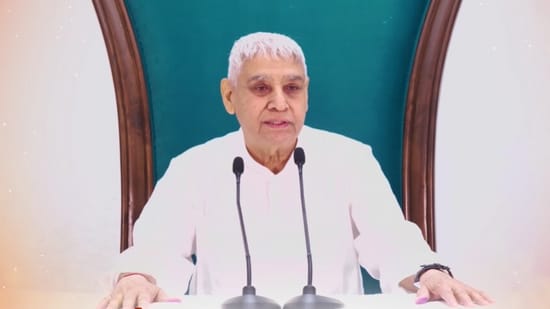
6 died in ashram siege when police went to arrest this 'godman'. 12 years on, he walks out of jail
# Godman Rampal Freed After 12 Yrs
**By Special Correspondent, The India News Desk | April 11, 2026**
On April 11, 2026, controversial self-styled godman Sant Rampal walked out of prison after twelve years behind bars. His release follows a crucial ruling by the Punjab and Haryana High Court, which granted him bail in a high-profile 2014 sedition case. The court cited Rampal’s advanced age, his prolonged incarceration, and the sluggish pace of the ongoing trial as primary reasons for the relief. Rampal’s 2014 arrest triggered a massive, violent standoff at his Satlok Ashram in Haryana, resulting in the tragic deaths of six individuals. Today, his release reopens old wounds and raises pressing questions about India’s complex judicial timelines.
## The High Court’s Bail Ruling and Legal Grounds
The release of the 75-year-old godman marks a significant, albeit controversial, legal milestone. Rampal was facing charges under various stringent sections of the Indian Penal Code, including Section 124A (sedition) and waging war against the state. These charges stemmed from the unprecedented defiance he and his followers displayed against the state machinery in 2014. [Source: Hindustan Times | Additional: Punjab & Haryana HC Public Records].
However, the Punjab and Haryana High Court’s recent deliberations heavily weighed the fundamental rights of the undertrial. The defense successfully argued that the sedition trial had moved at a glacial pace over the past decade, violating Rampal’s right to a speedy trial under Article 21 of the Indian Constitution.
“The jurisprudence of bail in India dictates that prolonged incarceration without a timely trial completion shifts the balance toward granting relief, particularly for elderly inmates,” explains **Rajesh Thakur, a senior constitutional advocate** based in Chandigarh. “At 75 years old, with over a decade already served in pretrial detention for this specific charge, the court determined that keeping him incarcerated while the trial drags on serves no further judicial purpose.”
The court imposed strict conditions on his bail, including restrictions on holding massive public gatherings, leaving the country, or making statements that could incite public unrest. Despite these caveats, his physical release from the Hisar Central Jail has sent shockwaves through the region.
## The 2014 Satlok Ashram Siege Remembered
To understand the gravity of Rampal’s release, one must look back at the dark events of November 2014. The Haryana Police, acting on non-bailable warrants issued by the High Court in a contempt of court case, marched to the Satlok Ashram in Barwala, Hisar, to arrest the godman.
What should have been a standard police procedure devolved into a two-week-long siege.
Rampal’s private militia, armed with crude bombs, acid pouches, and firearms, fortified the 12-acre ashram. More disturbingly, thousands of his followers—many of whom were later found to have been coerced or locked inside—formed a human shield around the perimeter.
The resulting clash was catastrophic. As police used water cannons and tear gas to breach the walls, the ensuing chaos led to the tragic deaths of five women and an 18-month-old infant. Autopsy reports at the time indicated that the victims primarily died from asphyxiation and trampling in the claustrophobic confines of the ashram, compounded by a lack of medical care. [Source: Hindustan Times Archive].
The state mobilized over 5,000 police and paramilitary personnel, spending an estimated ₹26 crore (approx. $3.1 million USD) on the operation. When Rampal was finally apprehended on November 19, 2014, authorities discovered a sprawling, lavish complex equipped with a private swimming pool, massage beds, and a personal hospital, starkly contrasting with the austere conditions of his devoted followers.
## Who is Sant Rampal?
Before he became a polarizing figure of cult-like devotion, Rampal Dass was a junior engineer. Born in 1951 in the Sonipat district of Haryana, he obtained a diploma in engineering and joined the Haryana Government’s irrigation department.
In the late 1990s, he grew increasingly involved in spiritual discourses, eventually resigning from his government job in 1995 to establish his own sect. Claiming to be a spiritual successor to the 15th-century mystic poet Kabir, Rampal built a massive following primarily drawn from marginalized communities in Haryana, Punjab, Rajasthan, and Uttar Pradesh.
His teachings strictly forbade idol worship, untouchability, adultery, and the consumption of alcohol and meat. However, his theological assertions—particularly his harsh critiques of core Hindu texts and the Arya Samaj movement—frequently sparked outrage.
**Key Timeline of Rampal’s Journey:**
* **1999:** Establishes the Satlok Ashram in Rohtak, Haryana.
* **2006:** A violent clash breaks out between his followers and Arya Samaj members, resulting in one death. Rampal is arrested for murder conspiracy but later released on bail.
* **2014:** Fails to appear in court for the 2006 case 43 times. The High Court orders his arrest, leading to the deadly Barwala siege and his subsequent incarceration.
* **2018:** Convicted by a Hisar court in two separate murder cases related to the 2014 siege and sentenced to life imprisonment.
* **2026:** Granted bail by the High Court in the sedition case, allowing his conditional release.
## Navigating the Legal Labyrinth: Life Sentences vs. Bail
A common point of public confusion surrounding Rampal’s 2026 release is his prior 2018 convictions. In October 2018, a special court in Hisar convicted him and several aides of murder, wrongful confinement, and criminal conspiracy regarding the deaths during the 2014 siege, handing down dual life sentences.
However, under the nuances of the Indian legal system, life sentences can be appealed, and convicts can be granted suspension of sentence, parole, or furlough pending higher court reviews. While the precise details of his concurrent life sentences are tied up in lengthy Supreme Court appeals, it was the outstanding sedition and state-waging war charges that had acted as a final, absolute barrier to any form of physical release. With the High Court now granting bail in this specific sedition matter, the legal locks keeping him in continuous, unbroken solitary confinement have been temporarily opened. [Source: Knowledge Base on Indian Penal Code and Supreme Court Procedures].
## The Societal Impact of ‘Godmen’ in India
Rampal’s trajectory is not an isolated phenomenon in India. The rise and fall of “godmen” like Gurmeet Ram Rahim Singh and Asaram Bapu reveal a deeper societal complex. Millions of citizens, often disillusioned by systemic inequality, bureaucratic apathy, and rigid caste structures, seek solace in these spiritual leaders.
“These godmen operate as parallel states,” notes **Dr. Meera Chandran, a sociologist specializing in religious movements.** “They provide free healthcare, subsidized food, dispute resolution, and most importantly, a sense of belonging and dignity to marginalized groups. When the state fails to provide basic social security, the ashram fills the void. This is why followers are willing to lay down their lives and form human shields. To them, defending the guru is defending their entire social safety net.”
This deep-rooted loyalty makes prosecuting such figures incredibly volatile. The state is not just arresting an individual; it is dismantling an entire micro-society, which inevitably leads to violent pushback.
## Political and Security Implications of His Release
The release of Sant Rampal presents an immediate law and order challenge for the Haryana government. Anticipating a mass congregation of his followers, who have remained fiercely loyal through social media networks and underground Satsang (prayer) groups over the last 12 years, the state has deployed Rapid Action Force (RAF) units around Hisar and Rohtak.
Furthermore, godmen in northern India historically command massive vote banks. Although Rampal’s official political influence was severely dented after 2014, his loyalists still number in the hundreds of thousands. With regional elections perpetually shaping state policies, the political establishment is walking a tightrope—ensuring strict law and order without overtly antagonizing a large bloc of voters.
Intelligence agencies are closely monitoring the digital footprint of the Satlok Ashram’s remaining infrastructure. Authorities have preemptively restricted internet access in certain sensitive districts to prevent flash mobs from gathering to celebrate his release.
## Conclusion and Future Outlook
The sight of Sant Rampal walking out of jail 12 years after a siege that captured global headlines is a stark reminder of the complexities of the Indian justice system. The Punjab and Haryana High Court’s decision underscores a fundamental democratic principle: the right to a speedy trial and the presumption of innocence in ongoing cases, regardless of the accused’s notoriety or advanced age.
However, for the families of the six individuals who lost their lives in the stifling confines of the Satlok Ashram in 2014, the legal relief granted to the godman may feel like a deeply frustrating turn of events.
Moving forward, the state’s prosecution team is expected to file a Special Leave Petition (SLP) in the Supreme Court to challenge this bail order. Until then, Sant Rampal remains conditionally free—a quiet, aging man legally bound to peace, but a figure whose mere presence continues to echo the violent history and powerful socio-political undercurrents of India’s godman phenomenon.





