
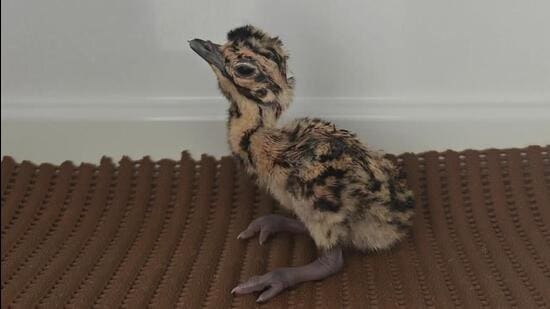
Rajasthan: 3 Great Indian Bustards born naturally; experts cite reduced stress| India News
# 3 Rare GIBs Born Naturally in Rajasthan
By Senior Wildlife Correspondent, EcoIndia News, April 11, 2026
On April 11, 2026, wildlife conservationists at the Desert National Park (DNP) in Rajasthan recorded a historic milestone: the natural birth of three Great Indian Bustards (GIB). Unlike the highly managed human-assisted captive breeding programs that have sustained the species in recent years, these chicks were conceived, incubated, and hatched entirely in the wild. Forest officials and avian experts attribute this extraordinary event to a significant reduction in habitat stress, successful predator control, and minimized human interference. This breakthrough offers immense hope for the survival of the critically endangered species, proving that under the right ecological conditions, the Thar Desert’s most iconic bird can still breed naturally. [Source: Hindustan Times]
## A Monumental Milestone in Avian Conservation
The Great Indian Bustard (*Ardeotis nigriceps*) is one of the heaviest flying birds in the world, and sadly, one of the most threatened. Currently listed as **Critically Endangered** on the IUCN Red List, the global population of the GIB hovers dangerously close to 150 individuals, with the vast majority restricted to the arid grasslands of Jaisalmer and Barmer in Rajasthan.
Biologically, the GIB is a slow-breeding species. Females typically lay only **one egg per year**, and the incubation period is fraught with dangers from natural and unnatural predators. Therefore, the simultaneous discovery of three naturally born chicks surviving in the wild is nothing short of a statistical marvel.
Historically, natural breeding in the wild had plummeted due to rampant habitat degradation and high mortality rates among adults. For the past decade, conservationists have relied heavily on artificial incubation, carefully collecting wild eggs and hatching them in secure facilities to ensure the survival of the chicks. The fact that wild females were able to find suitable mates, nest safely in the *sewan* grass (Lasiurus scindicus), and successfully hatch three chicks indicates a profound positive shift in the local ecosystem of the Desert National Park. [Additional: Wildlife Institute of India Avian Biology Database]
## The Role of Reduced Habitat Stress
Experts monitoring the species point to a concerted effort to reduce environmental and anthropogenic stress in the GIB’s core habitat as the primary catalyst for this natural breeding success.
“Bustards are highly sensitive to disturbances during their mating and nesting seasons,” explains Dr. Anjali Deshmukh, an ornithologist specializing in arid ecosystems. “When under stress from low-flying aircraft, off-road vehicles, or invasive predators, females will often abandon their nests. The natural birth of these three chicks is a direct validation of the ‘inviolate zones’ created within the DNP, where stress factors have been meticulously neutralized.”
The Rajasthan Forest Department has implemented rigorous protocols over the last three years. These include restricting tourist jeep safaris near known breeding enclosures, constructing predator-proof fencing around critical grassland patches, and strictly regulating the movement of pastoralists during the monsoon mating season. The reduction in ambient noise and visual threats allowed the birds to engage in their elaborate, natural mating displays unhindered.
## Shifting from Artificial to Natural Breeding
Since 2019, the conservation narrative surrounding the GIB has been dominated by the **Conservation Breeding Centre at Sam**, a joint venture between the Rajasthan Government, the Wildlife Institute of India (WII), and the Ministry of Environment, Forest and Climate Change. The center has been highly successful, artificially incubating dozens of eggs and rearing chicks in captivity to build an “insurance population.”
However, while captive breeding prevents extinction, the ultimate goal of any conservation program is self-sustaining wild populations.
Natural breeding offers biological advantages that human intervention cannot replicate. Chicks hatched and reared in the wild learn vital survival skills directly from their mothers. They develop better foraging techniques, learn how to identify and evade natural predators like the Indian fox and monitor lizards, and integrate seamlessly into the complex social structure of wild bustard flocks. The natural hatching of these three chicks marks a critical pivot point, suggesting that the ecosystem might finally be healing enough to support wild, unassisted generational growth. [Source: Hindustan Times | Additional: Conservation India Reports 2025]
## Power Lines and Policy Interventions
It is impossible to discuss the survival of the Great Indian Bustard without addressing its greatest modern threat: high-tension overhead power lines. Because of their heavy bodies and narrow frontal vision, GIBs frequently collide with power lines associated with the region’s booming solar and wind energy infrastructure. These collisions have historically wiped out a significant percentage of the breeding adult population.
The natural births recorded this week are closely tied to aggressive policy interventions. Following extensive litigation and directives from the Supreme Court of India aimed at protecting the bird, significant stretches of power lines in the core GIB habitat have been equipped with **firefly bird flight diverters**, and new transmission cables are increasingly being routed underground.
“By clearing the airspace of fatal obstacles, we have reduced the mortality rate of prime breeding adults,” notes Rajesh Bishnoi, a senior conservation officer in Jaisalmer. “When adult birds survive longer, the probability of natural mating and successful rearing increases exponentially. The skies over the DNP are safer today than they have been in twenty years.”
## Community Involvement and the ‘Bustard Mitras’
Conservation in India’s densely populated landscapes cannot succeed without the support of local communities. The Desert National Park is unique because it is not a pristine, uninhabited wilderness; it is a working landscape shared with agro-pastoral communities.
The Rajasthan Forest Department’s localized community outreach program has played a pivotal role in the recent breeding success. Through the **Bustard Mitra (Friends of the Bustard)** initiative, local youth and shepherds are employed and incentivized to protect the bird.
Instead of traditional grazing practices that inadvertently trample ground-level GIB nests, local herdsmen are now trained to identify the nests from a distance and report them to authorities. They act as the eyes and ears of the forest department, warding off feral dogs and ensuring that the *sewan* grasslands remain undisturbed during the critical incubation period. The birth of the three chicks is as much a victory for these local stakeholders as it is for the scientific community.
### GIB Population Trend Over Time
| Year | Estimated Global Population | Primary Threat Factor |
| :— | :— | :— |
| **1969** | ~1,260 | Hunting and Poaching |
| **2001** | ~600 | Habitat Loss (Agriculture) |
| **2018** | ~150 | Overhead Power Lines |
| **2026** | ~165 (Including Captive) | Feral Dogs, Climate Shifts |
*Data representation based on historical ecological surveys.*
## Challenges That Still Lie Ahead
Despite the joyous occasion of the three natural births, the Great Indian Bustard is not yet out of the woods. Wildlife biologists warn against complacency, noting that several pressing challenges remain:
1. **Feral Dogs:** The proliferation of free-ranging dogs, sustained by human waste near desert settlements, remains a top predatory threat to ground-nesting birds and their eggs.
2. **Renewable Energy Expansion:** While mitigation efforts are underway in core zones, the periphery of the GIB habitat is still heavily industrialized with green energy projects, leading to habitat fragmentation.
3. **Climate Change:** Unpredictable monsoon patterns directly impact the growth of crucial desert grasses and the availability of insects (like locusts and beetles) that form the primary protein source for growing chicks.
4. **Pesticide Use:** Agricultural runoff and the use of chemical pesticides in adjacent farmlands reduce the insect population, potentially starving young bustards.
## Conclusion: Future Outlook for the State Bird
The Great Indian Bustard, famously championed by legendary ornithologist Salim Ali—who once lobbied for it to become India’s national bird—is a symbol of the fragile beauty of the Thar Desert. The natural birth of three chicks in the Desert National Park serves as a crucial indicator that ecological interventions are working.
By aggressively reducing habitat stress, undergrounding lethal power cables, and fostering harmonious relationships with local pastoralists, Rajasthan has shown that irreversible extinction can be halted. Moving forward, the focus must remain on expanding these “safe zones” beyond the immediate borders of the Desert National Park.
If the state can maintain this momentum and strictly enforce the Supreme Court’s directives regarding power infrastructure, the sight of the magnificent Great Indian Bustard performing its booming courtship displays could transition from a rare conservation miracle to a regular feature of the Indian desert ecosystem. The survival of these three wild-born chicks over the next year will be heavily monitored, as they carry the literal and figurative future of their species on their wings.





