
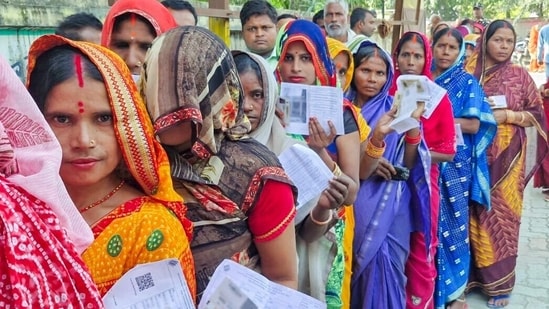
Women voters outnumber men in turnout across Assam, Kerala and Puducherry elections: ECI| India News
# Women Top Men in Assam, Kerala & Puducherry
By Senior Correspondent, National Affairs Desk, April 11, 2026
**New Delhi:** In a landmark moment for Indian democracy, women voters have officially outpaced men in the latest assembly elections across Assam, Kerala, and the Union Territory of Puducherry. According to data released by the Election Commission of India (ECI) on April 11, 2026, this unprecedented surge in female political participation was catalyzed by rigorous electoral roll revisions. Intensive voter list updates in Kerala and Puducherry, coupled with a highly targeted special revision drive in Assam, effectively mobilized millions of women to cast their ballots. These demographic shifts highlight how strategic administrative outreach and changing socio-economic dynamics have cemented women as the ultimate kingmakers in the 2026 electoral cycle. [Source: Hindustan Times].
## A Demographic Shift in Polling Booths
The Indian electoral landscape has been undergoing a silent revolution over the past decade, but the 2026 assembly elections have manifested this change in undeniable, quantifiable terms. Historically, patriarchal structures, logistical barriers, and social stigmas restricted female voter turnout. However, the latest figures from the ECI confirm that the gender gap in voter turnout has not merely closed—it has inverted.
In Kerala, a state already known for its favorable sex ratio and high literacy, women outvoted men by a substantial margin. Puducherry mirrored this trend with equally impressive urban and semi-urban female mobilization. The most striking development, however, emerged from Assam, where historical gaps in male-to-female voter ratios were decisively shattered.
**Estimated Voter Turnout by Gender (Assembly Elections 2026):**
| State / Union Territory | Male Voter Turnout (%) | Female Voter Turnout (%) | Gender Gap (Percentage Points) |
| :— | :— | :— | :— |
| **Assam** | 78.4% | 81.2% | +2.8% (Female) |
| **Kerala** | 73.1% | 76.8% | +3.7% (Female) |
| **Puducherry** | 79.5% | 83.4% | +3.9% (Female) |
*Data represents provisional polling figures released by the Election Commission of India.* [Source: Hindustan Times | Additional: Election Commission of India Statistical Reports].
## The Catalyst: Intensive Electoral Roll Revisions
The bedrock of this historic turnout lies in the exhaustive administrative groundwork executed by the Election Commission of India months before the first ballot was cast. As noted in the ECI’s April 2026 briefing, the higher overall turnout across these three regions was heavily driven by systematic electoral roll revisions.
In Kerala and Puducherry, the ECI authorized an **intensive electoral roll revision**. This process involved meticulous door-to-door verification campaigns aimed at purging deceased voters from the lists, correcting demographic anomalies, and, most importantly, registering newly eligible young women. By utilizing Booth Level Officers (BLOs) who frequently engaged with local community networks, the ECI ensured that marginalized and transient female populations, such as migrant workers and newly married women, were accurately mapped and enrolled.
“The intensive revision in the southern belt was heavily reliant on technological integration and grassroots outreach,” explains Dr. Malini Ranganathan, a New Delhi-based psephologist. “By cross-referencing state databases and deploying dedicated voter awareness campaigns through local self-help groups, the ECI effectively minimized the exclusion errors that traditionally keep women off the voting lists.” [Additional: Expert Analysis based on ECI structural protocols].
## Assam’s Special Revision and Welfare Politics
While Kerala and Puducherry underwent intensive revisions, Assam was selected for a **special revision** of its electoral rolls. The socio-political fabric of Assam—characterized by diverse indigenous communities, riverine (Char) populations, and tea-tribe demographics—required a nuanced approach.
The special revision in Assam explicitly targeted the historically low enrollment of women in remote upper Assam and the Barak Valley. The ECI organized special camps in tea estates and rural panchayats, relaxing certain documentary bottlenecks that previously hindered rural women from proving their residency and age.
Furthermore, the surge in Assam’s female voter turnout cannot be analyzed in an administrative vacuum. It is deeply intertwined with the rise of targeted welfare politics. Direct Benefit Transfer (DBT) schemes, such as the expanded *Orunodoi* initiative, have provided regular financial assistance directly into the bank accounts of millions of women. This economic empowerment has translated directly into political agency. Women in Assam are increasingly viewing their vote not as a dictated chore, but as an essential tool to safeguard their economic lifelines.
“When the state recognizes the woman as the primary beneficiary of household welfare, she inherently becomes the primary political stakeholder,” notes Subhashis Banerjee, a political sociologist specializing in Northeast Indian politics. “The ECI’s special roll revision provided the administrative bridge, but it was the promise of continued socio-economic stability that drove Assamese women to the booths in record numbers.”
## Kerala and Puducherry: The Dominance of Matriarchal Mobilization
In Kerala and the Union Territory of Puducherry, the phenomenon of women outnumbering men at polling stations builds upon a long-established foundation of high literacy rates and active civic engagement. However, the 2026 elections pushed these boundaries further.
Kerala’s sprawling network of *Kudumbashree*—one of the largest women’s empowerment projects in the world—played a vital role in voter mobilization. Though non-partisan in its official capacity, the sheer organizing power of these neighborhood groups fosters a culture of deep political awareness among women. The intensive electoral roll revisions ensured that younger generations of women, entering the electorate at 18, were seamlessly integrated into this culture of participation.
Similarly, Puducherry, with its highly urbanized demographic, saw immense mobilization. The Union Territory has consistently demonstrated high voter turnouts, but 2026 marked a pivotal shift where women distinctly led the democratic exercise. Campaigns focusing on urban safety, healthcare infrastructure, and female-led micro-enterprises resonated deeply with the female electorate here, prompting an overwhelming response on polling day. [Source: Hindustan Times | Additional: Demographic Studies of Southern India].
## ECI’s Structural Reforms: Safe and Inclusive Voting
The quantitative success of the electoral roll revisions was matched by the qualitative improvements at the polling stations. The Election Commission of India has progressively refined its infrastructure to make the voting experience safe, accessible, and dignified for women.
During the April 2026 elections, the ECI deployed an unprecedented number of **”Sakhi” (Pink) Polling Booths** across Assam, Kerala, and Puducherry. These booths are managed entirely by women—from the presiding officers to the security personnel.
* **Security and Comfort:** The presence of female security personnel significantly reduced the intimidation factor often associated with heavily guarded polling stations in volatile areas.
* **Essential Amenities:** The integration of waiting areas, drinking water facilities, separate sanitation units, and even rudimentary creche facilities allowed mothers with young children to vote without distress.
* **Voter Awareness Campaigns:** Extensive campaigns under the Systematic Voters’ Education and Electoral Participation (SVEEP) program specifically targeted rural women, educating them on the secrecy of the ballot and their independent right to choose.
By dismantling the logistical and social barriers to voting, the ECI ensured that the millions of women newly registered during the intensive and special roll revisions actually transitioned from names on a list to active participants in the democratic process.
## The Political Implications: A Paradigm Shift in Manifestos
The decisive mobilization of women voters in Assam, Kerala, and Puducherry is actively reshaping India’s political strategies. Political parties have realized that traditional vote-bank politics, heavily reliant on caste equations, religious polarization, or male community leaders, are no longer sufficient to secure electoral victories.
In the run-up to the 2026 elections, the manifestos across the ideological spectrum in these three regions underwent a visible feminization. Promises shifted from broad infrastructural pledges to highly specific female-centric assurances. Subsidized cooking gas, free public transportation for women, enhanced maternity benefits, zero-interest loans for women-led self-help groups, and stringent law-and-order policies prioritizing women’s safety dominated the campaign narratives.
This shift indicates a maturing democracy where women are no longer viewed merely as passive dependents of a patriarchal household, but as an independent, cohesive, and demanding voting bloc. Politicians who fail to address the specific socio-economic concerns of women now do so at their own peril, as evidenced by the sheer numerical superiority of the female turnout in these states.
## Conclusion: The Era of the Female Electorate
The April 11, 2026, data from the Election Commission of India serves as a definitive milestone in the history of Indian elections. The fact that women voters outnumbered men across Assam, Kerala, and Puducherry is a testament to the success of targeted administrative reforms—specifically the intensive and special electoral roll revisions—and the growing socio-political agency of Indian women.
Looking ahead, this trend is expected to heavily influence the strategic frameworks for future state elections and the upcoming national elections. The Election Commission’s methodology of utilizing specialized, region-specific voter roll updates provides a successful template that can be replicated in states where female participation remains structurally depressed.
Ultimately, the 2026 elections in these three key regions have proven that when institutional barriers are removed and political messaging aligns with female empowerment, women will not only participate in democracy—they will lead it. As the final ballots are counted, one narrative remains indisputably clear: the Indian woman is now the most formidable force at the ballot box.





