
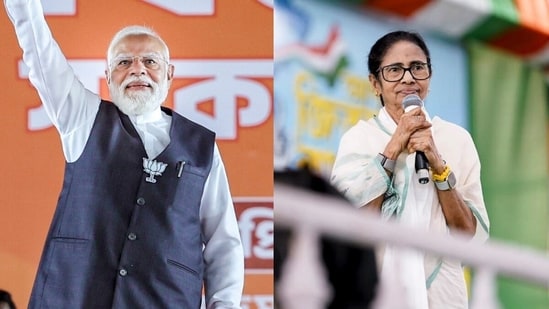
Elections 2026 LIVE: Modi to address 3 rallies in Bengal; TMC says BJP wants to 'erase India's diversity'| India News
# Modi Rallies in Bengal Amid TMC UCC Backlash
By Staff Reporter, Political Election Desk, April 11, 2026
Prime Minister Narendra Modi is scheduled to address three high-octane election rallies in poll-bound West Bengal this Saturday, April 11, 2026, aiming to galvanize Bharatiya Janata Party (BJP) supporters ahead of the crucial assembly elections. Simultaneously, the political climate has intensified as the ruling Trinamool Congress (TMC) fiercely criticized the BJP’s renewed push to implement the Uniform Civil Code (UCC) in the state. TMC leaders argue the proposed legal framework seeks to “erase India’s diversity.” As both political heavyweights lock horns over ideological and developmental narratives, West Bengal emerges once again as the epicenter of India’s most fiercely contested electoral battles. [Source: Hindustan Times].
## The Prime Minister’s Triple Rally Blitz
As the 2026 West Bengal Assembly elections approach their critical voting phases, the BJP is heavily relying on the personal charisma and mass appeal of Prime Minister Narendra Modi. On Saturday, the Prime Minister is slated to address three massive public gatherings strategically located across diverse geopolitical regions of the state: North Bengal, the industrial belt of Asansol, and the critical South 24 Parganas district.
The BJP’s campaign in West Bengal has been characterized by a dual-pronged strategy: highlighting the developmental achievements of the BJP-led National Democratic Alliance (NDA) government at the center, while simultaneously launching scathing attacks on the incumbent TMC government over allegations of systemic corruption, political violence, and administrative inefficiency.
**Key focal points of the BJP’s 2026 campaign include:**
* **Economic Rejuvenation:** Promises of rapid industrialization and job creation to counter local unemployment.
* **Anti-Corruption Planks:** Highlighting past central agency investigations into state-level recruitment and distribution schemes.
* **Infrastructure Development:** Showcasing central investments in railways, highways, and digital infrastructure across the eastern corridor.
During these rallies, PM Modi is expected to reiterate his pitch for a “Double Engine Sarkar”—a term utilized by the BJP to argue that having the same party in power at both the state and central levels accelerates economic development and ensures the seamless delivery of central welfare schemes directly to the beneficiaries. [Source: Hindustan Times | Additional: Public Campaign Archives].
## The Uniform Civil Code Debate Resurfaces
While the BJP focuses on national integration and infrastructure, the ideological battlelines have been sharply drawn over the issue of the Uniform Civil Code (UCC). The UCC proposes to replace personal laws based on the scriptures and customs of various religious communities with a common set of laws governing every citizen in matters of marriage, divorce, inheritance, and adoption.
The TMC has launched a blistering offensive against the BJP’s manifesto promise to introduce the UCC in West Bengal if voted to power. Responding to the BJP’s assertions, the TMC leadership stated that the push for a UCC is a thinly veiled attempt to homogenize the nation and marginalize minority communities.
“The BJP wants to erase India’s diversity and impose a monolithic structure that ignores the rich cultural, religious, and tribal tapestries of West Bengal and the nation,” a senior TMC spokesperson remarked during a press briefing in Kolkata on Friday. [Source: Hindustan Times].
For the TMC, opposing the UCC is not merely a legal stance but a core component of its political identity, which heavily emphasizes secularism, regional pride, and the protection of sub-national distinctiveness. Chief Minister Mamata Banerjee has historically framed her party as a bulwark against what she describes as the BJP’s attempts to erode India’s federal structure and pluralistic ethos.
## Competing Visions and Electoral Narratives
The clash over the UCC underscores the broader competing visions the two major parties are offering to the electorate in 2026.
The BJP argues that the UCC is a necessary step toward genuine secularism and gender justice. Proponents of the code within the party assert that fragmented personal laws often disproportionately disadvantage women in matters of inheritance and divorce. By establishing the UCC, the BJP claims it is fulfilling a long-standing constitutional directive aimed at fostering national unity and ensuring equal rights for all citizens, regardless of religious affiliation.
Conversely, the TMC’s narrative is deeply rooted in the concept of “Bangaliana” (Bengali cultural identity) and robust welfare economics. The state government has invested heavily in direct benefit transfer (DBT) programs, most notably the *Lakshmir Bhandar* scheme, which provides monthly financial assistance to women, and *Kanyashree*, aimed at supporting the education of young girls. The TMC argues that genuine empowerment comes through targeted socio-economic upliftment rather than the imposition of uniform social laws that disrespect localized traditions.
## Expert Perspectives on Electoral Impact
Political analysts closely monitoring the West Bengal landscape suggest that the introduction of the UCC into the campaign discourse is a calculated risk by both sides, designed to consolidate their respective voter bases.
“The BJP is utilizing the UCC to solidify its traditional voter base and project a resolute vision of national uniformity, aiming to appeal to voters who prioritize national integration and internal security,” notes Dr. Arup Chattopadhyay, a senior political scientist at the Center for Regional Electoral Studies in Kolkata. “On the other hand, the TMC leverages the exact same issue to consolidate its support among minorities and liberal voters who are protective of India’s secular fabric and regional autonomy.”
Experts also point out that while ideological issues like the UCC generate significant media attention and rally the core bases, the ultimate decision for the median voter may hinge on bread-and-butter issues.
“Elections in West Bengal are deeply granular,” explains Dr. Sunita Sen, a socio-political researcher. “While the UCC debate creates a macro-narrative, grassroots voting behavior is historically driven by local leadership accessibility, inflation, unemployment, and the effective delivery of state welfare schemes.” [Additional: Political Science Academic Consensus].
## Demographic Calculus and Voter Shifts
Understanding the electoral math of West Bengal requires a close look at its complex demographics, which both the TMC and BJP are actively courting through their policy propositions.
**Crucial Demographic Blocs in West Bengal:**
1. **Minority Voters:** Constituting approximately 27% to 30% of the state’s population, minority communities have traditionally been a strong support base for the TMC. The BJP’s push for the UCC is viewed by political strategists as a factor that could further consolidate this bloc behind the ruling state party.
2. **Women Voters:** Often considered a silent but decisive force, women voters are being aggressively wooed by both sides. The TMC leans on the success of its flagship *Lakshmir Bhandar* program, while the BJP pitches the UCC as a tool for female empowerment and equal rights in domestic matters.
3. **Scheduled Castes (SC) and Scheduled Tribes (ST):** Communities such as the Matuas in South Bengal and various tribal groups in the Junglemahal region have oscillated between the two parties in recent election cycles. The BJP’s implementation of the Citizenship Amendment Act (CAA) rules earlier in the decade was aimed at securing the Matua vote, while the TMC has worked diligently to reclaim tribal support through specific regional welfare boards.
## Historical Context of the BJP-TMC Rivalry
The current electoral showdown is the latest chapter in a fierce rivalry that has defined West Bengal politics for nearly a decade. In the 2021 Assembly elections, despite a massive, resource-heavy campaign by the BJP, the TMC secured a resounding victory, winning 215 out of 292 contested seats. The BJP, however, established itself as the principal opposition, decimating the traditional Left Front and Congress alliances in the state.
Since 2021, the political landscape has continued to evolve. The BJP has sought to capitalize on anti-incumbency sentiments, arguing that the TMC has reached a point of political stagnation after 15 years in power. They frequently highlight administrative bottlenecks and legal controversies surrounding local TMC leaders to build a narrative for necessary change.
Meanwhile, the TMC has systematically attempted to insulate itself from national anti-incumbency trends by maintaining a hyper-local focus. By framing the BJP as a party driven by “outsiders” who do not understand the cultural nuances of Bengal, the TMC aims to transform the election into a referendum on Bengali identity versus national imposition.
## Conclusion and Future Outlook
As Prime Minister Narendra Modi takes the stage across West Bengal this Saturday, the stakes could not be higher for the 2026 Assembly elections. The BJP is determined to breach one of the most resilient regional fortresses in Indian politics, utilizing a combination of the Prime Minister’s popularity, developmental promises, and ideological commitments like the Uniform Civil Code.
Conversely, the Trinamool Congress remains equally determined to defend its turf. By positioning itself as the ultimate guardian of India’s diversity and Bengal’s unique cultural heritage, the TMC hopes to render the BJP’s nationalistic appeals ineffective at the grassroots level.
With multiple phases of voting looming on the horizon, the electorate of West Bengal faces a stark choice between two vastly different political paradigms. Whether voters prioritize the BJP’s promise of uniformity and centralized development or the TMC’s pledge to protect diversity and expand localized welfare will ultimately determine the political destiny of the state for the next five years.





