
Women’s quota being used as political tool before delimitation, says Tamil Nadu CM Stalin| India News
# Stalin: Quota A Ploy Before Delimitation
**By Special Correspondent, National News Desk, April 11, 2026**
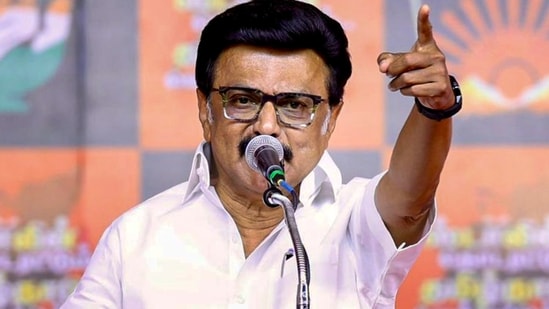
**Chennai, April 11, 2026:** Tamil Nadu Chief Minister M.K. Stalin has reignited a fierce national debate by alleging that the delayed implementation of the women’s reservation quota is being weaponized as a “political tool” to force through a controversial nationwide constituency delimitation exercise. Speaking at a political rally on Saturday, the DMK president demanded the immediate rollout of the 33% legislative reservation for women, explicitly rejecting the central government’s stance that boundaries must be redrawn first. “The women’s reservation must be implemented immediately without showing delimitation as a reason,” Stalin stated, highlighting growing anxieties among southern states regarding their future political representation. [Source: Hindustan Times]
## The Intertwined Issues: Reservation and Redrawing Boundaries
To understand the gravity of Chief Minister Stalin’s remarks, one must look back at the historic passage of the Nari Shakti Vandan Adhiniyam (Women’s Reservation Act) in late 2023. The landmark legislation amended the Constitution to reserve one-third of all seats in the Lok Sabha (the lower house of Parliament) and state legislative assemblies for women. However, the legislation came with a significant constitutional caveat: the quota would only come into effect after a new national census is published and a subsequent delimitation exercise is conducted.
Delimitation is the process of fixing limits or boundaries of territorial constituencies in a country to represent changes in population. Under Article 82 of the Indian Constitution, the allocation of seats in the Lok Sabha to the states is based on their respective populations.
Stalin’s recent assertions tap into a deep-seated suspicion among opposition parties, particularly in southern India, that the delay in implementing the women’s quota is artificial. By legally binding the empowerment of women in parliament to the redrawing of electoral maps, regional leaders argue that the central government is holding a widely supported social justice initiative hostage to achieve a separate, highly contentious political objective. [Additional: Parliamentary Records on Nari Shakti Vandan Adhiniyam]
## The Demographic Dilemma and Southern Anxieties
The core of Tamil Nadu’s grievance—and the reason delimitation is viewed with such intense apprehension in the south—lies in India’s uneven demographic growth over the last fifty years.
During the 1970s, the federal government urged states to implement rigorous family planning and population control measures. Southern states like Tamil Nadu, Kerala, Andhra Pradesh, and Karnataka executed these programs with high efficacy, leading to stabilized fertility rates and advanced socio-economic indicators. Conversely, several populous northern states, including Uttar Pradesh and Bihar, continued to experience rapid population growth.
To prevent southern states from being politically penalized for successfully following national population control directives, the 42nd Amendment Act of 1976 froze the number of Lok Sabha seats allocated to each state based on the 1971 census. This freeze was later extended to 2026 by the 84th Amendment Act in 2001.
With the 2026 deadline now arrived, the prospect of lifting the freeze looms large. If parliamentary seats are reapportioned strictly according to current population data, northern states will see a massive increase in their political clout in the Lok Sabha, while southern states could see their relative influence drastically diminish. [Additional: Demographic Data and Constitutional History]
“Chief Minister Stalin is vocalizing a collective southern dread,” explains Dr. Karthik Murugan, a Chennai-based political analyst specializing in federal relations. “By tying the universally applauded women’s reservation to the deeply polarizing delimitation process, the ruling party at the center has created a scenario where opposing the current timeline of delimitation can be spun as opposing women’s empowerment. It is a complex political chess move.”
## Dissecting Stalin’s “Political Tool” Claim
During his address, Stalin did not mince words regarding the central government’s motives. He suggested that the linkage between the two distinct processes is unnecessary and serves only to manipulate electoral outcomes.
The DMK’s argument rests on the premise that reserving 33% of existing seats for women does not strictly require a prior national census or a full overhaul of constituency boundaries. The party argues that a simple rotational system within the current 543 Lok Sabha constituencies could have been implemented immediately ahead of upcoming election cycles, empowering women without triggering the demographic timebomb of delimitation.
By insisting that boundaries must be redrawn first, Stalin claims the central government is using the moral shield of the women’s quota to push through a delimitation exercise that will inherently favor the ruling party’s strongholds in the Hindi heartland. [Source: Hindustan Times]
## The Central Government’s Constitutional Standpoint
In contrast to the DMK’s claims, proponents of the central government’s timeline argue that decoupling women’s reservation from delimitation is constitutionally fraught and administratively chaotic.
Legal experts aligned with the central view point out that simply assigning a 33% quota randomly to existing constituencies could lead to immense legal challenges regarding fairness and representation. Delimitation, they argue, provides a rational, data-backed, and objective foundation for reserving constituencies for women, similar to how seats are currently reserved for Scheduled Castes (SC) and Scheduled Tribes (ST).
Furthermore, representatives from the central government have historically maintained that lifting the 1971 freeze on delimitation is a democratic imperative. “The core principle of ‘one person, one vote’ is compromised if a Member of Parliament in Uttar Pradesh represents 3 million citizens, while an MP in Tamil Nadu represents only 1.5 million,” notes a senior constitutional lawyer based in New Delhi. From this perspective, the delimitation exercise is not a political tool, but an overdue correction of democratic representation, and tying the women’s quota to it ensures a comprehensive modernization of India’s electoral map. [Additional: Public Statements on Delimitation by Central Authorities]
## Implications for Federalism
The standoff over this issue has profound implications for the federal structure of the Indian state. The tension highlighted by Chief Minister Stalin is not merely a dispute over an electoral timeline; it is a fundamental clash over power-sharing between the Union and the States.
If delimitation proceeds based on recent population metrics, Tamil Nadu, alongside Kerala, Karnataka, and Andhra Pradesh, risks losing crucial bargaining power in national policymaking. The financial implications are equally stark, as political representation often correlates with the allocation of federal funds and resources.
To mitigate this, several political thinkers have proposed middle-ground solutions. These include increasing the total number of seats in the Lok Sabha significantly so that no state loses its *absolute* number of current MPs, even if the *proportion* of representation changes. The newly inaugurated Parliament building in New Delhi, designed with a significantly larger seating capacity for the Lok Sabha, physically accommodates such a possibility. However, this does not entirely assuage southern fears of being outvoted by a growing northern bloc.
## The Road Ahead: 2026 and Beyond
As the calendar advances through 2026, the rhetoric surrounding both the women’s reservation and delimitation is expected to intensify. Stalin’s strategy of framing the delay in women’s empowerment as a deliberate, cynical ploy serves to mobilize both female voters and regional loyalists against the central government’s agenda.
Key factors that will shape this ongoing narrative include:
* **The Status of the Census:** The decadal census, originally scheduled for 2021 and delayed due to the COVID-19 pandemic, is the necessary first step before any delimitation can occur.
* **Judicial Interventions:** It is highly likely that any formal move to initiate delimitation will face rigorous challenges in the Supreme Court, with southern states petitioning to protect their federal rights.
* **Consensus Building:** Whether the central government will attempt to build a cross-party consensus or push forward unilaterally will determine the temperature of center-state relations in the coming years.
## Conclusion
Tamil Nadu Chief Minister M.K. Stalin’s demand for the immediate implementation of the women’s reservation quota—divorced from the delimitation process—strikes at the heart of modern India’s most complex constitutional challenges. His assertion that the quota is being used as a “political tool” reflects deep-rooted anxieties about demographic penalization and the shifting balance of power between India’s North and South.
While the central government maintains that a systematic, data-driven approach is essential for fair democratic representation, regional leaders like Stalin view the current trajectory as an existential threat to their political voice. As the debate moves from political rallies to parliamentary debates and potential legal battles, the resolution of this conflict will redefine the contours of Indian democracy, federalism, and legislative equality for decades to come.





