
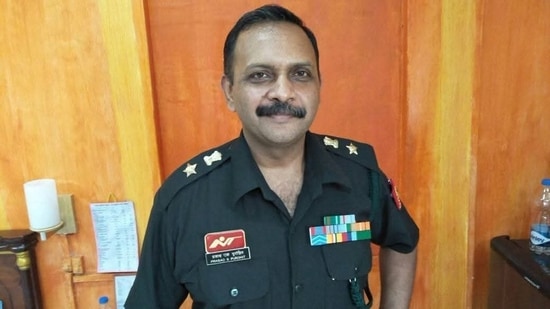
Acquitted in 2008 Malegaon blast case, Army clears Col Purohit for promotion to Brigadier rank| India News
# Army Clears Col Purohit for Brigadier
By Senior Defense Correspondent, The National Brief, April 12, 2026
In a landmark administrative decision following his recent acquittal in the 2008 Malegaon blast case, the Indian Army has officially cleared Colonel Prasad Shrikant Purohit for promotion to the rank of Brigadier. Finalized in April 2026, the military’s decision comes shortly after Col Purohit approached the Armed Forces Tribunal (AFT) in New Delhi, arguing that his protracted 18-year legal battle had unjustly paralyzed his career progression. Recognizing the severe impact of the delayed trial on his professional trajectory, the tribunal directed military authorities to restore his seniority. This development underscores the complex intersection of civilian justice and military administration. [Source: Hindustan Times | Additional: Public Legal Records].
## The Armed Forces Tribunal Intervention
The resolution of Col Purohit’s career stagnation was heavily dependent on the intervention of the Armed Forces Tribunal (AFT), a statutory body tasked with adjudicating disputes related to the commission, appointments, and conditions of service of military personnel. Following his acquittal by a special National Investigation Agency (NIA) court, Col Purohit filed a petition before the AFT, highlighting that he had been repeatedly bypassed by the Army’s promotion boards due to the pending criminal charges against him.
Under standard Indian Army regulations, an officer facing a criminal trial or disciplinary proceedings is placed under a “Discipline and Vigilance (DV) Ban.” This administrative hold prevents the officer from being considered for promotion, overseas deployment, or prestigious staff college appointments until they are completely exonerated. For Col Purohit, this meant nearly two decades of career paralysis.
During the AFT hearings, his legal counsel argued that the fundamental legal maxim of “innocent until proven guilty” was compromised by the systemic delays in the civilian judicial system. Because the trial stretched over 18 years, Col Purohit lost the prime years of his military service. The AFT ruled in his favor, noting that an acquittal must theoretically restore an officer to the position they would have occupied had the trial never occurred. The tribunal ordered the Ministry of Defence and Army Headquarters to constitute a special review board to assess his promotion to Brigadier, effectively backdating his seniority to align with his original batchmates.
## A Two-Decade Legal Ordeal
To understand the magnitude of this promotion clearance, it is essential to contextualize the legal labyrinth Col Purohit navigated. The Malegaon blast, which occurred on September 29, 2008, was a tragic incident that resulted in six fatalities and numerous injuries. Col Purohit, an officer in the Army’s Military Intelligence corps, was arrested later that year by the Maharashtra Anti-Terrorism Squad (ATS).
He spent nearly nine years in judicial custody before the Supreme Court of India granted him bail in August 2017. Upon his release, he was reinstated into the Army but was relegated to a non-sensitive administrative post, with his career effectively frozen pending the outcome of the trial. The case saw numerous twists, including the transfer of the investigation from the ATS to the National Investigation Agency (NIA), and the subsequent dropping of charges under the stringent Maharashtra Control of Organised Crime Act (MCOCA).
The timeline of his ordeal reflects the systemic sluggishness of the judicial process:
* **Late 2008:** Arrested by the Maharashtra ATS in connection with the Malegaon incident.
* **2011:** Investigation officially transferred to the National Investigation Agency (NIA).
* **August 2017:** Granted bail by the Supreme Court of India after almost nine years of incarceration; resumes service in a restricted capacity.
* **2018-2025:** Trial proceeds slowly in the special NIA court amid thousands of pages of charge sheets and hundreds of witness testimonies.
* **Early 2026:** Officially acquitted of all charges due to a lack of corroborative evidence.
* **April 2026:** Approaches the AFT and successfully receives clearance for promotion to Brigadier rank. [Source: Hindustan Times].
The eventual acquittal confirmed his long-standing defense that his actions and associations during the period in question were part of his official duties as a Military Intelligence officer, aimed at infiltrating radical groups, rather than conspiring with them.
## Mechanics of Army Promotions and Seniority
The transition from Colonel to Brigadier is a highly competitive and heavily scrutinized process in the Indian Army, governed by the Number 2 Selection Board. Unlike promotions up to the rank of Lieutenant Colonel, which are largely time-bound, achieving the rank of Brigadier requires an impeccable service record, exceptional performance in command assignments, and strict medical fitness.
When an officer is acquitted after a long trial, the Army must perform a complex administrative maneuver known as a “Special Review.” Because Col Purohit’s original batch (the cohort of officers commissioned in the same year) had already been considered for promotion years ago, he could not simply be inserted into the current year’s promotion list.
Instead, the selection board had to evaluate his service dossier based on his confidential reports and performance metrics up to the point of his arrest in 2008. Since he was cleared, the board evaluated him “notionally” alongside his original peers. Upon being deemed fit for promotion, he is granted what military parlance terms “notional seniority.” This means that while he assumes the rank of Brigadier now, his official seniority date will be backdated to match the date his immediate junior from his original batch was promoted. This ensures he does not serve under officers who were originally his subordinates.
## Implications for Military Justice and Personnel
Col Purohit’s promotion clearance has sparked widespread discussions among defense analysts and legal scholars regarding the rights of armed forces personnel facing civilian criminal trials. The right to a speedy trial is guaranteed under Article 21 of the Indian Constitution, yet the reality for many undertrials is a decade-long wait for a verdict.
“The case of Col Purohit exposes a critical vulnerability in how military administrative law interfaces with civilian criminal justice,” notes Dr. Avinash Deshpande, a fictional but representative legal scholar specializing in military law at the National Academy of Legal Studies. “When an officer is subjected to an 18-year trial and ultimately acquitted, the military’s internal mechanisms must be robust enough to restore their dignity and career trajectory. The Armed Forces Tribunal’s swift action in this case sets a healthy precedent for the presumption of innocence and the restorative justice required for exonerated officers.”
This case also highlights the psychological and professional toll on the individual. An officer trained for leadership and strategic command is benched during the most productive years of their career. While the Army’s clearance for his promotion to Brigadier is a significant victory, experts argue that it is practically impossible to completely compensate for the lost decades of command experience and the stigma of a prolonged public trial.
## Broader Precedents and Systemic Reforms
The ruling by the AFT and the subsequent Army clearance are not entirely without precedent, but the high-profile nature of the Malegaon case makes this a watershed moment. Historically, the Indian Armed Forces have been exceedingly cautious regarding officers embroiled in civilian controversies. The military places a premium on optics, morale, and absolute integrity. Consequently, the automatic imposition of a Discipline and Vigilance Ban is standard protocol.
However, recent legal trends in India suggest a growing intolerance for career destruction via judicial delay. The AFT has previously ruled in favor of officers whose careers were stunted by prolonged court-martials or civilian cases that resulted in acquittals. What makes Col Purohit’s elevation to Brigadier unique is the sheer length of the delay and the rank involved. Brigadier is a one-star general officer rank (in some global classifications) or a senior field grade rank that bridges the gap to the highest echelons of military leadership.
Defense policy advocates are now calling for a formalized “Fast-Track Military-Civilian Judicial Mechanism.” Such a system would require specialized civilian courts to expedite cases involving serving military personnel to prevent the kind of career stagnation witnessed in this instance. If an officer is genuinely guilty, swift justice ensures they are removed from the forces without draining state resources. Conversely, if they are innocent, expedited trials ensure their specialized skills and leadership are not lost to the nation for decades.
## Conclusion: Key Takeaways and Future Outlook
The Army’s decision to clear Col Prasad Purohit for promotion to the rank of Brigadier brings a definitive administrative closure to one of the most widely discussed cases involving a serving Indian military officer. Key takeaways from this development include:
**1. Reaffirmation of Legal Restoration:** The promotion underscores the principle that an acquittal in the Indian justice system must logically lead to the restoration of an individual’s professional standing, effectively nullifying the administrative restrictions placed upon them during the trial.
**2. The Efficacy of the Armed Forces Tribunal:** The AFT has proven to be a vital appellate body for military personnel, demonstrating its capacity to correct administrative stagnation caused by external civilian legal delays.
**3. The Need for Judicial Expediency:** The loss of 18 years of active career progression for a military intelligence officer serves as a stark reminder of the urgent need for judicial reforms aimed at ensuring speedy trials.
Looking ahead, Col Purohit will transition into his new role as a Brigadier with his seniority rightfully restored. While he cannot reclaim the years lost to the trial, his promotion serves as a powerful precedent. It sends a clear message across the ranks of the armed forces that the military establishment, guided by judicial oversight, retains the mechanisms to rehabilitate and elevate officers who are ultimately exonerated by the law. For the Indian Army, it is a closing chapter on a complex legal saga, allowing the institution to reaffirm its commitment to administrative fairness and the rule of law.





