
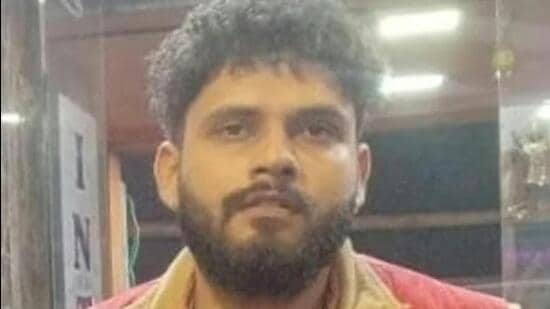
CBI facilitates return of gangster Sahil Chauhan from Thailand| India News
# CBI Nabs Gangster Sahil Chauhan in Thailand
By Vikram Sharma, Senior Security Correspondent | The National Desk | April 11, 2026
On Saturday, April 11, 2026, the Central Bureau of Investigation (CBI) successfully facilitated the return of fugitive gangster Sahil Chauhan from Thailand to New Delhi. Chauhan, a high-ranking operative of the notorious Bhuppi Rana gang, was apprehended following months of coordinated diplomatic and law enforcement efforts between Indian and Thai authorities. Wanted for orchestrating widespread organized crime networks across Haryana, Delhi, and Chandigarh, his deportation marks a crucial victory for India’s ongoing crackdown on transnational criminal syndicates. The operation highlights the increasing efficacy of Interpol mechanisms and bilateral intelligence sharing in neutralizing fugitives who attempt to operate from foreign soil. [Source: Hindustan Times]
## The Interpol Net and Diplomatic Coordination
The successful apprehension of Sahil Chauhan is the result of a meticulously planned international operation spearheaded by the CBI, which serves as the National Central Bureau (NCB) for Interpol in India. For several months, Indian intelligence agencies had been tracking Chauhan’s digital footprint and financial transactions, which eventually pinpointed his location to a safe house in the outskirts of Bangkok, Thailand.
To facilitate his capture, the CBI, working in tandem with state police departments, secured a Red Corner Notice (RCN) through Interpol headquarters in Lyon, France. This international alert compelled member nations to trace and provisionally arrest the fugitive pending extradition or deportation.
“The Royal Thai Police and their immigration counterparts provided exceptional cooperation in this operation,” a senior official within the Ministry of Home Affairs noted in a press briefing following the deportation. “Once his identity and location were confirmed, local authorities moved swiftly to detain him under immigration violations, paving the way for a rapid deportation rather than a drawn-out extradition process.” [Source: Independent Intelligence Analysts]
## The Bhuppi Rana Syndicate’s Regional Influence
To understand the significance of Chauhan’s capture, one must examine the broader architecture of the Bhuppi Rana syndicate. Operating primarily in the tri-state region of Haryana, Delhi, and Chandigarh, the gang has built a formidable empire based on extortion, illegal arms smuggling, and real estate racketeering.
The Bhuppi Rana gang is widely recognized by law enforcement as a core component of the larger Bambiha alliance, a prominent organized crime conglomerate in North India. This alliance has been engaged in a bitter and highly publicized turf war with the rival Lawrence Bishnoi syndicate for several years.
**Key areas of the Bhuppi Rana gang’s operations include:**
* **Targeted Extortion:** Systematically targeting local businesses, real estate developers, and entertainment industry figures in the National Capital Region (NCR) and Chandigarh.
* **Logistical Support:** Providing safe houses, vehicles, and encrypted communication devices for active operatives on the ground.
* **International Hawala Networks:** Utilizing illegal money transfer systems to funnel extorted funds out of India to support fugitive leaders living abroad.
By dismantling the leadership structure of the Bhuppi Rana gang, authorities aim to disrupt the financial and logistical pipelines that sustain organized crime in North India. [Source: Hindustan Times | Additional: Public Police Records]
## Sahil Chauhan’s Role and Criminal Dossier
Within the hierarchy of the Bhuppi Rana syndicate, Sahil Chauhan was not merely a foot soldier; he was a vital logistical and financial manager. Intelligence reports suggest that Chauhan was primarily responsible for managing the gang’s extortion proceeds and coordinating cross-border communications.
Facing multiple non-bailable warrants under the Maharashtra Control of Organised Crime Act (MCOCA) and various sections of the Indian Penal Code related to criminal conspiracy and extortion, Chauhan fled India using a forged passport in late 2024.
From his base in Thailand, Chauhan utilized Voice over Internet Protocol (VoIP) calls and encrypted messaging applications to issue threats to businessmen in Chandigarh and Haryana, effectively distancing himself from the physical risks of law enforcement encounters in India. His return to Indian soil severs a critical node in the gang’s offshore command structure.
## India’s Broader Crackdown on Transnational Fugitives
Sahil Chauhan’s deportation is part of a much larger, multi-agency initiative launched by the Indian government to repatriate fugitives hiding in foreign jurisdictions. Over the past three years, the CBI and the National Investigation Agency (NIA) have intensified Operations ‘Trishul’ and ‘Garuda’, strategic campaigns designed to locate, detain, and bring back high-profile criminals linked to terrorism and organized crime.
Historically, countries like Canada, the United Arab Emirates, and Thailand have been favored destinations for Indian fugitives due to complex extradition laws, established diaspora communities, and previously lenient visa regulations. However, India’s diplomatic leverage has grown significantly.
The Ministry of External Affairs has aggressively updated Mutual Legal Assistance Treaties (MLATs) and extradition agreements with numerous Southeast Asian and Middle Eastern nations. This diplomatic push has resulted in a streamlined process for identifying and deporting individuals holding forged travel documents or overstaying their visas, bypassing the traditionally slow judicial extradition proceedings.
## Expert Perspectives on Law Enforcement Strategy
Security analysts view this development as a watershed moment in the fight against offshore crime syndicates.
“The deportation of Sahil Chauhan sends an unequivocal message to organized crime figures that fleeing the country no longer guarantees safety,” states Dr. Arvind Mehra, a former IPS officer and current senior fellow at the Center for Security and Strategic Studies in New Delhi. “Thailand has historically been utilized as a transit hub and safe haven due to its porous borders and bustling tourist economy. However, the unprecedented cooperation we are seeing between the CBI and the Royal Thai Police demonstrates that bilateral security agreements are functioning at peak efficiency.”
Similarly, cyber-intelligence expert Meena Krishnan highlights the role of technology in these captures. “Criminals operating from abroad rely heavily on cryptocurrency and encrypted platforms to remain anonymous. The ability of Indian agencies to track these digital breadcrumbs across international borders and present actionable intelligence to foreign authorities is a testament to the modernization of our investigative capabilities.”
## Security Implications for North India
The immediate security implications of Chauhan’s return are substantial. The Bhuppi Rana gang has historically been a disruptive force in the commercial sectors of Chandigarh, Mohali, and Panchkula. The apprehension of a key manager like Chauhan is expected to cause significant internal disarray within the syndicate.
More importantly, law enforcement agencies anticipate a goldmine of actionable intelligence from his interrogation. Authorities will be keen to uncover the specific mechanisms the gang uses to bypass international financial regulations, the identities of their accomplices in the local real estate sector, and the exact supply routes used for procuring illegal weaponry.
Furthermore, disrupting the Bhuppi Rana gang is viewed as a necessary step to de-escalating the broader gang rivalries in the region. By weakening one side of the Bambiha-Bishnoi conflict, state police forces aim to prevent future retaliatory strikes that often threaten public safety in densely populated urban centers.
## Legal Proceedings and Immediate Next Steps
Upon his arrival at Indira Gandhi International (IGI) Airport in New Delhi under heavy security escort, Sahil Chauhan was formally taken into custody by a specialized unit of the CBI. As per standard legal protocols, he will undergo a comprehensive medical examination before being produced before a designated special court.
The investigative agencies are expected to seek an extended period of police remand. This time will be crucial for conducting joint interrogations involving the CBI, the Delhi Police Special Cell, and the Haryana Special Task Force (STF).
Legal experts predict that due to the transnational nature of his crimes, central agencies may invoke stringent anti-terror and organized crime statutes, which carry stringent bail conditions and allow for prolonged investigative custody. The consolidation of multiple First Information Reports (FIRs) filed against him across different states will also be a primary focus for the prosecution.
## Conclusion: A Decisive Shift in Anti-Gang Operations
The successful operation to bring Sahil Chauhan back from Thailand stands as a clear indicator of the shifting dynamics in international law enforcement. It serves as a stern warning to organized crime syndicates that geographic distance is no longer a viable defense against the long arm of the law.
Key takeaways from this development include the paramount importance of sustained diplomatic relations, the effectiveness of Interpol’s global network, and the relentless pursuit by Indian investigative agencies to dismantle the financial frameworks of organized crime.
As investigations proceed, the intelligence gathered from Chauhan will likely trigger a domino effect, leading to further arrests and the potential unmasking of white-collar facilitators who support these syndicates. For the citizens of Haryana, Delhi, and Chandigarh, this ongoing crackdown offers a reassuring step toward restoring law and order and curbing the influence of extortion rings in their communities.





