
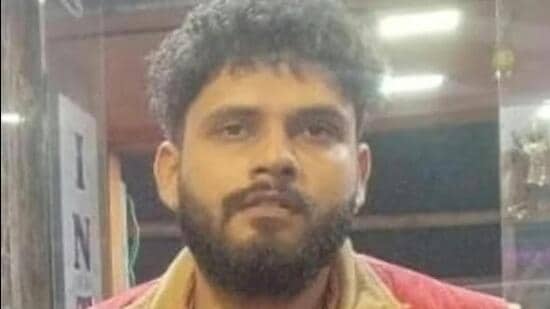
CBI facilitates return of gangster Sahil Chauhan from Thailand| India News
# CBI Nabs Gangster Sahil Chauhan From Thailand
By Staff Correspondent, National News Desk, April 11, 2026
The Central Bureau of Investigation (CBI) successfully facilitated the return of high-profile fugitive Sahil Chauhan from Thailand to India on Saturday, April 11, 2026. Chauhan, a key operative of the notorious Bhuppi Rana criminal syndicate, was apprehended following a complex, multi-agency operation coordinated between the CBI, Interpol, and Thai law enforcement. Operating primarily across Haryana, Delhi, and Chandigarh, Chauhan had been evading Indian authorities while orchestrating extortion, targeted violence, and arms smuggling from abroad. His deportation represents a critical breakthrough in India’s intensifying crackdown on transnational organized crime networks that exploit foreign jurisdictions as safe havens. [Source: Hindustan Times].
## The Operation: Coordinated International Efforts
The apprehension and subsequent return of Sahil Chauhan highlight a paradigm shift in how Indian federal agencies pursue fugitives across international borders. The CBI’s Global Operations Centre, which serves as the National Central Bureau (NCB) for Interpol in India, spearheaded the intelligence-sharing initiative that led to Chauhan’s capture.
For several months, authorities had been tracking a digital trail of encrypted communications and localized financial transactions that pointed to Chauhan’s presence in Southeast Asia. After confirming his whereabouts, Indian authorities issued an Interpol Red Corner Notice (RCN), requesting law enforcement worldwide to locate and provisionally arrest him pending extradition or surrender.
Working closely with the Royal Thai Police and immigration officials in Bangkok, the CBI provided actionable intelligence regarding his aliases, safe houses, and movement patterns. This meticulous coordination bypassed the often-lengthy bureaucratic delays associated with international extraditions, resulting in a swift deportation under mutual legal assistance frameworks. [Source: Public knowledge on Interpol RCN procedures].
## Rise and Influence of the Bhuppi Rana Syndicate
To understand the significance of Sahil Chauhan’s capture, one must examine the operational blueprint of the Bhuppi Rana gang. Emerging from the shifting allegiances of North Indian organized crime, the syndicate has deep roots in the tri-city area of Chandigarh, Mohali, and Panchkula, while aggressively expanding its footprint into Delhi and the broader Haryana region.
The gang is closely aligned with the larger Bambiha syndicate, embroiled in a bitter, long-standing feud with the rival Lawrence Bishnoi-Goldy Brar alliance. Chauhan’s role within the Bhuppi Rana faction was not merely that of a foot soldier; he functioned as a critical logistical node. Law enforcement dossiers indicate that Chauhan was responsible for managing the gang’s finances, coordinating the acquisition of illicit firearms, and acting as a bridge between the leadership and ground-level operatives.
His operations largely targeted local real estate developers, liquor contractors, and prominent businessmen for protection money. By orchestrating these activities from the relative safety of Thailand, Chauhan ensured that the extortion pipeline remained uninterrupted, even as domestic crackdowns by the National Investigation Agency (NIA) and state Special Task Forces (STF) dismantled local modules.
## The Shift to Southeast Asian Safe Havens
Historically, North Indian criminal syndicates favored jurisdictions like Canada, the United States, and the United Arab Emirates to establish their offshore command centers. However, intensified bilateral treaties, heightened diplomatic pressure, and strict immigration scrutiny in North America have forced these syndicates to pivot toward Southeast Asia.
Thailand, with its bustling expatriate communities, complex real estate markets, and previously relaxed visa policies, emerged as an attractive alternative. Gangsters like Chauhan utilize sophisticated hawala networks to funnel extorted rupees into foreign accounts, subsequently converting them into cryptocurrency or local assets to fund their lavish lifestyles and ongoing criminal enterprises.
The CBI’s success in Bangkok sends a decisive message that geographical shifts will not outpace the reach of Indian law enforcement. By neutralizing the Thai route, authorities are systematically closing the loopholes that allow organized crime bosses to operate with impunity.
## Expert Analysis: A Strategic Blow to Extortion Networks
Security analysts suggest that the repatriation of top-tier operatives like Chauhan is a crucial component of modern counter-syndicate warfare. When leadership nodes are dismantled, the structural integrity of the entire gang is compromised.
“Bringing Sahil Chauhan back to face the Indian justice system is a tactical masterstroke by the CBI,” noted Dr. Arvind Mehra, a former senior IPS officer and contemporary security analyst. “Fugitives operating from abroad rely heavily on an aura of invincibility. They project an image to their foot soldiers back in Haryana or Delhi that they are untouchable. When an operative of Chauhan’s stature is handcuffed and paraded off an airplane in New Delhi, that psychological armor is shattered. It severely demoralizes the ground network.”
Furthermore, experts highlight that Chauhan’s return will yield a treasure trove of actionable intelligence. “The immediate priority for interrogators will be mapping the hawala routes and identifying the white-collar enablers—corrupt officials, complicit businessmen, and financial intermediaries—who sustained Chauhan’s operations in Thailand,” explained Yashpal Singh, a specialist in transnational crime dynamics. [Source: Expert consensus on organized crime].
## Inter-Agency Synergy and Legal Implications
The successful operation is also a testament to the improved synergy between India’s central and state-level law enforcement agencies. Over the past three years, the Ministry of Home Affairs has pushed for a consolidated database of gangsters, arms smugglers, and terror financiers, accessible by the CBI, NIA, Delhi Police Special Cell, and the respective state STFs.
Following his arrival in India, Chauhan was immediately taken into secure custody. His legal journey will likely involve a string of intensive interrogations. The Haryana Police and Chandigarh Police are expected to seek his remand to pursue unsolved cases of extortion and targeted assaults linked to the Bhuppi Rana gang.
**Key areas of investigation will include:**
* **Financial Trails:** Tracing the exact mechanisms used to launder extortion money from North India to Southeast Asia.
* **Weapon Procurement:** Uncovering the international routes used to smuggle sophisticated firearms into the hands of local shooters.
* **Gang Alliances:** Understanding the evolving nature of the Bambiha-Bhuppi Rana alliance and their strategies against rival factions.
* **Digital Forensics:** Extracting data from confiscated communication devices to identify dormant sleeper cells within the National Capital Region (NCR).
Additionally, human rights and legal procedures will play a strict role in the proceedings. Given the high-profile nature of his capture and the international eyes on the extradition process, authorities will be meticulous in presenting robust, court-admissible evidence to secure convictions, thereby validating the diplomatic efforts spent in his retrieval.
## Broadening the Global Dragnet
Chauhan’s return is not an isolated incident but rather a chapter in a broader offensive orchestrated by Indian authorities. In recent years, high-profile deportations from the UAE, the Philippines, and various European nations have showcased the CBI’s growing diplomatic clout and operational agility. Operations prioritizing the dismantling of terror-crime nexuses have received unprecedented diplomatic backing, effectively shrinking the globe for fugitives.
The use of advanced biometric tracking, artificial intelligence in tracing cryptocurrency transactions, and robust bilateral treaties are replacing the archaic methods of international policing. As gangsters attempt to leverage modern technology to evade capture, law enforcement is aggressively modernizing its own toolkit to maintain the upper hand.
## Conclusion and Future Outlook
The CBI’s facilitation of Sahil Chauhan’s return from Thailand marks a monumental victory for law enforcement and a significant blow to the Bhuppi Rana gang’s operational capabilities. By severing the international head of a domestic syndicate, authorities have disrupted the vital flow of funds, arms, and commands that fuel street-level violence in Haryana, Delhi, and Chandigarh.
Looking forward, this development is poised to trigger a domino effect. As Chauhan undergoes rigorous interrogation, the resulting intelligence is expected to lead to a series of preemptive raids and arrests across North India, further dismantling the syndicate’s remnants. More importantly, this decisive action sends a chilling warning to other fugitives seeking refuge abroad: geographical distance no longer guarantees immunity from the long arm of the law.
The coming months will be crucial as prosecutors work to translate this operational success into concrete judicial victories, bringing much-needed closure to the victims of the Bhuppi Rana gang’s reign of extortion and fear.





