
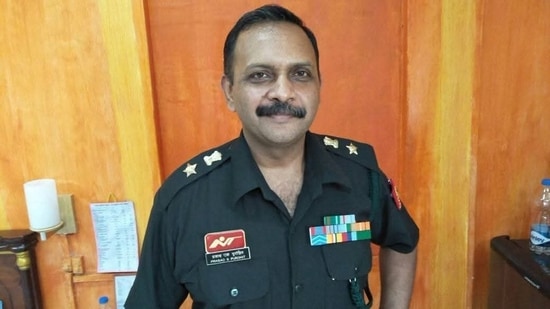
Acquitted in 2008 Malegaon blast case, Army clears Col Purohit for promotion to Brigadier rank| India News
# Col Purohit Cleared for Brigadier Rank
**By Staff Correspondent, Defence & Law Desk** | **April 11, 2026**
In a landmark administrative decision following his recent acquittal in the high-profile 2008 Malegaon blast case, the Indian Army has officially cleared Colonel Prasad Shrikant Purohit for promotion to the rank of Brigadier. The promotion comes after Col Purohit successfully petitioned the Armed Forces Tribunal (AFT), arguing that the exhaustive, nearly two-decade-long legal ordeal had unjustly paralyzed his career progression. This development marks the closure of one of the most polarizing chapters in India’s military-legal history, restoring the seniority of an intelligence officer who spent nine years incarcerated while steadfastly maintaining he was operating deep undercover on authorized military duty. [Source: Hindustan Times | Additional: Armed Forces Tribunal Records].
## The Armed Forces Tribunal Intervention
Col Purohit’s path to the rank of Brigadier was paved by a decisive intervention from the Armed Forces Tribunal (AFT). Following his formal acquittal by the special National Investigation Agency (NIA) court, the officer approached the tribunal to seek immediate redressal for the professional stagnation he endured while the trial was pending.
In the Indian armed forces, officers facing active criminal trials or disciplinary proceedings have their promotion results kept in a “Sealed Cover.” If the officer is completely exonerated, the cover is opened, and they are granted their promotions retrospectively, complete with seniority and arrears of pay. However, due to the unprecedented duration of the Malegaon trial, Col Purohit had missed multiple crucial promotion boards, transitioning from his prime operational years into administrative limbo.
The AFT, recognizing the fundamental right to career progression unhindered by unproven allegations, directed the Army Headquarters to conduct a Special Review. “The tribunal’s ruling essentially reaffirmed the principle that an officer cannot be professionally penalized for the systemic delays of the civilian judicial process,” notes military law expert and former Judge Advocate General (JAG) officer, Major General R.S. Thakur (Retd). “Once acquitted, the military’s administrative machinery must restore the officer to the position he would have naturally held had the trial never occurred.” [Source: Hindustan Times | Additional: Military Law Archives].
## Rebuilding a Stalled Military Career
The leap from Colonel to Brigadier is a critical bottleneck in the Indian Army, governed by the highly competitive Number 2 Selection Board. Promotion is not merely based on tenure but on a rigorous evaluation of Annual Confidential Reports (ACRs), operational commands, and specialized courses.
For Col Purohit, the challenge was unique. Arrested in 2008 as a serving Lieutenant Colonel, his service record was abruptly frozen. Upon his release on bail by the Supreme Court in August 2017, he was reinstated into service but assigned non-sensitive administrative roles, largely within the Southern Command. His transition to Colonel came later via a delayed board, but the looming trial prevented his elevation to a star-rank officer.
With the AFT’s directive now enforced, the Army Headquarters evaluated his pre-2008 operational records, which were exceptionally strong due to his specialized counter-terrorism work in Jammu and Kashmir and Maharashtra, alongside his post-2017 administrative evaluations. By clearing him for the rank of Brigadier, the Army has signaled its commitment to institutional fairness, ensuring that his seniority aligns with his original 1994 commissioning batch.
## The 2008 Malegaon Blast Case Revisited
To understand the magnitude of this promotion, one must contextualize the legal labyrinth Col Purohit navigated. On September 29, 2008, an explosive device fitted on a motorcycle detonated in the communally sensitive textile town of Malegaon, Maharashtra. The blast claimed six lives and left over 100 people injured.
The initial investigation, led by the Maharashtra Anti-Terrorism Squad (ATS) under the late Hemant Karkare, concluded that the blast was the handiwork of a right-wing extremist group called Abhinav Bharat. In November 2008, the ATS arrested Col Purohit—the first serving Indian Army officer to be arrested on terror charges. The ATS accused him of supplying RDX explosives, procuring weapons, and providing ideological and financial support to the group.
### Key Milestones in the 18-Year Saga:
* **September 2008:** Malegaon blast occurs.
* **November 2008:** ATS arrests Col Purohit; Army initiates a Court of Inquiry.
* **April 2011:** The National Investigation Agency (NIA) takes over the case from ATS.
* **May 2016:** NIA files a supplementary chargesheet, dropping the draconian Maharashtra Control of Organised Crime Act (MCOCA) against Purohit.
* **August 2017:** Supreme Court grants bail, citing the prolonged incarceration and contradictions in the investigation.
* **Early 2026:** Final acquittal by the Special NIA Court due to lack of conclusive evidence.
## The Intelligence Dilemma: Mole or Mastermind?
Throughout his 18-year legal battle, Col Purohit maintained a singular defense: he was acting as a deep-cover mole for the Military Intelligence (MI) Directorate. He argued that his association with Abhinav Bharat was an authorized intelligence-gathering operation, meant to monitor radical elements, and that he had continuously briefed his superiors about the group’s activities.
This defense struck at the heart of how intelligence agencies operate in the gray zones of national security. During the trial, his legal team presented internal military documents and communications showing that he had generated actionable intelligence regarding the very individuals he was later accused of conspiring with.
“The Purohit case exposed a critical vulnerability in how military intelligence operatives are protected—or left unprotected—when civilian law enforcement agencies intervene,” explains Senior Advocate Vikram Desai, who has extensively studied national security law. “An intelligence operative’s job is to infiltrate, mimic, and embed within a target organization. To a civilian police force looking in from the outside, an embedded operative looks exactly like a co-conspirator.” [Source: Hindustan Times | Additional: National Security Analysis 2026].
## Evidentiary Failures and Final Acquittal
Col Purohit’s ultimate acquittal earlier this year was largely driven by the structural collapse of the prosecution’s evidentiary narrative. The transition of the investigation from the ATS to the NIA in 2011 revealed significant investigative contradictions.
The most damning blow to the prosecution was the rate of hostile witnesses. Over the course of the marathon trial, dozens of prosecution witnesses walked back their statements, often claiming they had been coerced or tortured by the ATS into naming Col Purohit and other co-accused. Furthermore, the NIA’s supplementary chargesheet itself raised doubts about the integrity of the evidence, particularly concerning the alleged recovery of RDX from the homes of the accused, suggesting procedural lapses and potential planting of evidence.
The special court concluded that the prosecution failed to prove the conspiracy charges against Col Purohit beyond a reasonable doubt, validating the Supreme Court’s earlier observation during his 2017 bail hearing that “there are variations in the chargesheets filed by ATS and NIA.”
## Broader Implications for Covert Operations
The elevation of Col Purohit to Brigadier post-acquittal is not just a personal vindication; it has profound systemic implications for the Indian Army’s Military Intelligence network. For years, the arrest of a serving officer had cast a chilling effect over ground-level intelligence gathering. Operatives were increasingly hesitant to embed deeply into radical organizations without explicit, documented legal cover—a requirement that inherently compromises covert fieldcraft.
Following the conclusion of this case, defense analysts anticipate that the Ministry of Defence (MoD) and the Ministry of Home Affairs (MHA) will accelerate the development of a formalized “de-confliction protocol.” This would ensure that when civilian counter-terrorism units like the NIA or state ATS branches intercept a suspect, there is a secure, classified back-channel to verify if the individual is an active state asset before public arrests are made.
## Precedents for Military Justice and Human Rights
The Armed Forces Tribunal’s swift action to restore Col Purohit’s career progression also sets a vital precedent for the intersection of military justice and human rights. It establishes that an officer subjected to a prolonged trial resulting in acquittal must be made whole. The Army’s willingness to comply with the AFT and promote a controversial figure underscores the institution’s reliance on final judicial outcomes over public perception or media narratives.
While the promotion is a victory for Purohit, it also highlights the systemic lethargy of the Indian judicial system. Nine years in pretrial detention and an 18-year overall trial period reflect a severe strain on the right to a speedy trial under Article 21 of the Indian Constitution.
## Looking Ahead
As Col Prasad Shrikant Purohit prepares to pin on the stars of a Brigadier, his new posting remains a subject of administrative deliberation. Whether he will be assigned to a command role or placed in an advisory capacity at Army Headquarters will depend on the Military Secretary’s branch. However, his reinstatement to senior rank serves as a definitive close to a deeply politicized saga.
His journey from a decorated military intelligence officer to terror accused, and finally to a vindicated senior commander, will undoubtedly be studied in military law and intelligence academies for decades. It stands as a stark reminder of the immense risks borne by those operating in the shadows of national security, and the crucial, if sometimes painfully slow, corrective mechanisms of military and civilian justice. [Source: Hindustan Times | Additional: Legal & Defence Analysis].





