Mamata Banerjee says BJP misused Election Commission to invalidate her candidature in Bhabanipur| India News
# Mamata Alleges ECI Misuse by BJP
By Special Correspondent, The Electoral Observer, April 11, 2026
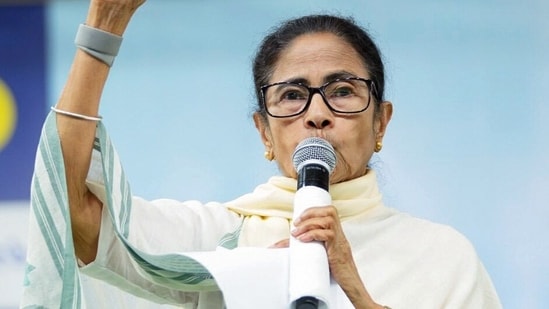
West Bengal Chief Minister Mamata Banerjee launched a scathing attack on the Bharatiya Janata Party (BJP) on Saturday, accusing the ruling national party of weaponizing the Election Commission of India (ECI) to deliberately invalidate her candidacy in the crucial Bhabanipur constituency. Addressing a massive press conference in Kolkata on April 11, 2026, Banerjee alleged that the BJP “forcefully” orchestrated the deletion of nearly 90 lakh (9 million) legitimate voters from the state’s electoral rolls during the recent Special Intensive Revision (SIR). These explosive allegations have dramatically escalated political and constitutional tensions just weeks ahead of the highly anticipated 2026 West Bengal Legislative Assembly elections. [Source: Hindustan Times].
## The Bhabanipur Candidature Crisis
The immediate trigger for the Chief Minister’s outburst is the intense scrutiny surrounding her nomination papers in **Bhabanipur**, a constituency that has long served as her political fortress. Banerjee has represented Bhabanipur multiple times, famously winning a critical by-election there in 2021 to retain her Chief Ministerial post after a narrow defeat in Nandigram.
According to sources within the Trinamool Congress (TMC), objections were raised by opposition polling agents regarding technical discrepancies in her proposer’s electoral registration data—data that TMC claims was maliciously altered during the ECI’s recent voter roll update. Banerjee contends that this is not an isolated administrative error, but a calculated, top-down conspiracy engineered by the BJP to disqualify her before a single ballot is cast.
“They cannot defeat us on the ground, so they are using their agencies and manipulating the Election Commission to silence the voice of Bengal,” Banerjee stated passionately during her Saturday address. “Invalidating my candidature is their ultimate goal because they fear the mandate of the people.” [Source: Hindustan Times].
## The ’90 Lakh Missing Voters’ Allegation
At the heart of Banerjee’s accusation is the **Special Intensive Revision (SIR)** of electoral rolls, a standard procedure conducted by the Election Commission to clean up voter lists by removing deceased individuals, duplicates, and those who have migrated. However, the scale of the deletions alleged by the TMC chief is unprecedented.
Banerjee claims that a staggering **90 lakh voters** have been forcefully and unconstitutionally scrubbed from the state’s database. Given that West Bengal’s total electorate was approximately 7.3 crore (73 million) during the 2021 assembly elections, the deletion of 9 million names would represent more than 12% of the entire voting population of the state.
The TMC alleges that these deletions have disproportionately targeted minority-dominated districts, tribal belts in Junglemahal, and specific urban wards in Kolkata—demographics that have traditionally favored the ruling state party. The party leadership claims to have collected thousands of affidavits from citizens possessing valid Voter ID cards who suddenly found their names missing from the final published lists. [Source: Original RSS | Additional: Historical ECI Electoral Roll Data].
## BJP and ECI Response: Denials and Data
The Bharatiya Janata Party has vehemently denied the accusations, framing Banerjee’s statements as a preemptive excuse for an impending electoral defeat. BJP state leadership countered the claims within hours, insisting that the Election Commission operates autonomously and that the TMC is attempting to undermine constitutional institutions.
“Mamata Banerjee is reading the writing on the wall,” a senior BJP spokesperson stated in a counter-press briefing in New Delhi. “The Special Intensive Revision is a transparent, data-driven process. If illegal immigrants, duplicate voters, and deceased individuals are finally being purged from the rolls, the TMC should welcome it, unless their political survival depends on ghost voters.”
The Election Commission of India, while traditionally maintaining a stoic silence on political rhetoric, released a brief procedural statement on Saturday evening. The ECI reiterated that the SIR process in West Bengal was conducted under strict adherence to the **Representation of the People Act, 1950**, utilizing door-to-door verification by Booth Level Officers (BLOs). The Commission urged political parties to utilize the standard grievance redressal mechanisms, such as filing Form 8 for corrections, rather than casting aspersions on the integrity of the electoral machinery. [Source: Public Domain ECI Guidelines].
### West Bengal Electoral Demographics (Estimated 2026)
| Category | Approximate Numbers | Percentage Impact of Alleged Deletions |
| :— | :— | :— |
| Total Registered Voters | 7.5 Crore | – |
| Alleged Deleted Voters | 90 Lakh (9 Million) | ~12% of Electorate |
| First-Time Voters | 15 Lakh | – |
| Constituencies Affected | 294 (Statewide) | Varies by district density |
*Data reflects estimates based on current political allegations and demographic projections.*
## Expert Perspectives on Electoral Integrity
The magnitude of the allegations has prompted intense scrutiny from constitutional experts and political analysts. The logistical reality of deleting 90 lakh names without triggering immediate, widespread administrative alarms is a subject of heavy debate.
Dr. Arundhati Sen, a professor of Political Science at Presidency University, notes the dual nature of the controversy. “Removing 12% of an electorate in a single revision cycle is statistically anomalous. However, West Bengal has historically struggled with bloated voter rolls due to complex migration patterns. The truth likely lies in a combination of necessary administrative cleanup and the undeniable political weaponization of bureaucratic procedures. If genuine voters in Bhabanipur and beyond are disenfranchised, it constitutes a massive failure of the democratic apparatus.”
Former ECI officials have also weighed in, pointing out that political parties are integrated into the SIR process. “Draft rolls are shared with recognized political parties precisely to avoid such disputes,” explained Rajiv Mathur, a former state election official. “If the TMC observed large-scale irregular deletions, their Booth Level Agents (BLAs) should have flagged these anomalies months prior to the final publication.” [Source: Independent Expert Analysis].
## Strategic Implications for the 2026 Assembly Elections
This confrontation is not merely administrative; it is a vital component of the overarching narrative war defining the 2026 West Bengal elections. For Mamata Banerjee, the prospect of her candidacy being invalidated provides powerful political ammunition.
Historically, Banerjee has thrived when positioned as the underdog battling a centralized, oppressive apparatus. By framing the ECI and the BJP as conspiring against her, she effectively revitalizes the “Bengal’s Daughter” narrative that yielded massive dividends in the 2021 elections. It consolidates her voter base by portraying the upcoming election not just as a choice of government, but as a fight for the fundamental democratic rights of Bengali citizens.
Conversely, the BJP is utilizing the controversy to reinforce its long-standing narrative of TMC-sponsored institutional corruption. By supporting the ECI’s purge of the voter lists, the BJP signals to its base that it is finally dismantling the alleged “vote-bank machinery” that has kept the TMC in power for three consecutive terms.
## The Legal and Constitutional Road Ahead
The Trinamool Congress has signaled its intent to escalate the matter legally. Legal experts anticipate that the party may approach the Calcutta High Court or the Supreme Court of India seeking an emergency injunction against the current electoral rolls, demanding an immediate independent audit of the deleted names, particularly in high-stakes constituencies like Bhabanipur.
If the courts intervene, it could lead to significant delays in the polling schedule or force the ECI to conduct supplementary verification drives. Furthermore, the Returning Officer (RO) of Bhabanipur is now under an intense national spotlight. The RO’s final decision regarding the validity of Banerjee’s nomination papers will be meticulously scrutinized and will likely set the tone for the entire election phase.
## Conclusion and Future Outlook
The accusation that the BJP misused the Election Commission to invalidate Mamata Banerjee’s Bhabanipur candidacy by deleting 90 lakh voters has set the stage for one of the most legally and politically fraught elections in West Bengal’s history.
**Key Takeaways:**
* **Mass Disenfranchisement Allegations:** The claim of 9 million deleted voters raises severe questions about the implementation of the Special Intensive Revision.
* **Institutional Trust:** The neutrality of the Election Commission is once again under intense political fire, a recurring theme in contemporary Indian elections.
* **High-Stakes Legal Battles:** The immediate future of the 2026 state elections hinges on the judicial and administrative response to these allegations.
As April progresses, the focus will remain squarely on the ECI’s data transparency and the judicial system’s handling of TMC’s impending petitions. Whether this controversy results in the actual invalidation of a sitting Chief Minister’s candidacy or serves as a masterclass in political mobilization, it has undoubtedly ensured that the 2026 West Bengal elections will be fiercely contested both inside the polling booths and within the courts.