
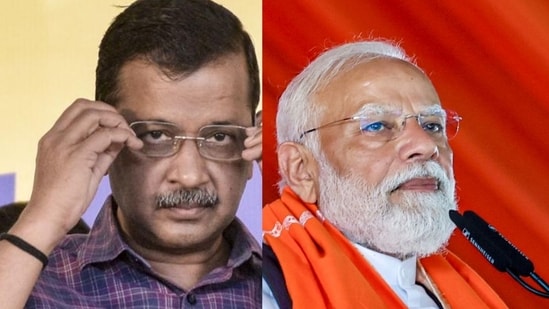
‘What if Modiji loses Bengal elections even after taking over all institutions’: Kejriwal targets PM| India News
# Kejriwal Warns Modi on Bengal Polls
**By Political Desk, National News Observer | April 11, 2026**
**New Delhi:** Aam Aadmi Party (AAP) national convener Arvind Kejriwal launched a scathing political attack on Prime Minister Narendra Modi on Saturday, questioning the Bharatiya Janata Party’s (BJP) electoral prospects in the highly anticipated West Bengal Assembly elections. Speaking amid intensified political maneuvering ahead of the crucial two-phase voting scheduled for April 23 and 29, Kejriwal publicly asked what the political fallout would be if the Prime Minister fails to win Bengal “even after taking over all institutions.” The provocative remarks underscore the deepening rift between the ruling government and a united opposition bloc over the alleged weaponization of independent state agencies. [Source: https://www.hindustantimes.com/india-news/what-if-modiji-loses-bengal-elections-even-after-taking-over-all-institutions-arvind-kejriwal-targets-pm-narendra-modi-101775896560490.html].
## The Anatomy of Kejriwal’s Allegations
Arvind Kejriwal’s comments do not exist in a vacuum; they represent the culmination of years of friction between opposition-ruled states and the BJP-led central government. By explicitly using the phrase “taking over all institutions,” the AAP chief was echoing a recurring opposition narrative that accuses the central government of compromising the autonomy of vital democratic pillars.
According to political observers, Kejriwal’s reference points directly to central investigative bodies such as the Enforcement Directorate (ED) and the Central Bureau of Investigation (CBI), as well as constitutional bodies like the Election Commission of India (ECI). Over the past several years leading up to 2026, multiple opposition leaders, including prominent figures within AAP and the Trinamool Congress (TMC), have faced intense scrutiny, raids, and arrests by central agencies.
“If despite using every central agency, employing immense financial resources, and installing favorable administrators, the BJP still loses West Bengal, it will be a monumental defeat for the Prime Minister’s brand of politics,” Kejriwal noted during his address. This rhetoric is designed to set a specific narrative: framing a potential BJP victory as the result of institutional manipulation, while framing a potential TMC victory as a triumph of democratic will against insurmountable odds. [Additional Source: Public Political Transcripts, April 2026].
## West Bengal 2026: A Two-Phase Battleground
The immediate backdrop to this verbal spar is the West Bengal Assembly elections. Unlike the grueling eight-phase election held in 2021 amidst the COVID-19 pandemic, the Election Commission of India has streamlined the 2026 polling process into just two phases, scheduled for **April 23** and **April 29**.
This logistical shift has itself been a subject of intense debate. While the ECI cites improved security deployment logistics and the need to minimize voter fatigue, opposition parties have closely scrutinized the phase distribution, evaluating whether it subtly favors the ruling party’s campaign machinery.
**Evolution of West Bengal Election Phases:**
| Election Year | Total Phases | Polling Duration | Dominant Campaign Narrative |
| :— | :— | :— | :— |
| **2016** | 6 (7 polling days) | Over 1 month | Anti-incumbency vs. TMC welfare |
| **2021** | 8 | Over 1 month | BJP’s ‘Sonar Bangla’ vs. TMC’s ‘Insider’ |
| **2026** | 2 | 1 week | Institutional federalism vs. Corruption |
The stakes in West Bengal are extraordinarily high. Chief Minister Mamata Banerjee is seeking to defend her fortress against an aggressive BJP apparatus that has systematically increased its vote share in the state over the last decade. A win for the BJP would give them a historic foothold in Eastern India, fulfilling a long-held ideological objective. Conversely, a victory for the TMC would severely dent the BJP’s aura of electoral invincibility.
## Opposition Solidarity: AAP and TMC Strategies
While the Aam Aadmi Party is not a primary electoral contender in West Bengal, Kejriwal’s vocal intervention serves a dual purpose. First, it acts as a display of opposition solidarity. Both Kejriwal and Banerjee are influential figures in the anti-BJP national bloc, sharing a common grievance regarding the interference of imperially appointed Governors and Lieutenant Governors in their respective administrative jurisdictions.
Second, Kejriwal’s critique effectively nationalizes the West Bengal election. By focusing on the “institutions” rather than local Bengal issues, AAP is keeping the national discourse centered on the health of Indian democracy. This alignment has been visible since the early 2020s, where regional satraps recognized that fragmented resistance to the BJP often resulted in isolated defeats.
By actively campaigning for the TMC’s narrative from Delhi, Kejriwal is signaling to voters across the country that the Bengal election is a referendum on Prime Minister Modi’s governance style and respect for federal structures.
## The Federalism Debate in Modern India
The crux of Kejriwal’s “what if” scenario rests heavily on the concept of federalism. India operates on a quasi-federal structure, where states have distinct powers, but the central government retains significant overarching authority. In recent years, this constitutional balance has been severely tested.
Opposition states, including West Bengal, Delhi, Tamil Nadu, and Kerala, have frequently petitioned the Supreme Court of India, alleging that the central government is deliberately withholding state funds, delaying critical legislation via gubernatorial vetoes, and using central law enforcement to paralyze state bureaucracies.
Kejriwal’s own administration in Delhi has faced a relentless tug-of-war with the central government over the control of civil services—a battle that necessitated constitutional amendments and exhaustive legal battles. Therefore, when Kejriwal speaks of institutions being “taken over,” he is speaking from a position of deep-seated administrative frustration, aiming to resonate with Mamata Banerjee’s parallel struggles in Kolkata.
## Voices from the Ground: Expert Analysis
Political analysts are closely monitoring how this rhetoric impacts voter psychology ahead of the April 23 and April 29 polls. The key question remains whether the average voter in rural or semi-urban Bengal is influenced by macro-level debates regarding institutional autonomy, or if localized welfare and identity politics will dictate their choice.
Dr. Arundhati Sen, a senior political scientist at the Institute of Democratic Studies in New Delhi, suggests that the opposition’s narrative has a specific target audience. “Kejriwal’s strategy of preemptively questioning the integrity of institutions does two things. It galvanizes the core opposition base by validating their fears, and it creates a psychological buffer. If the opposition loses, they blame the compromised institutions. If they win, they claim it is a historic victory of the people over a tyrannical system,” she explains.
Meanwhile, Rajat Mukherjee, a Kolkata-based electoral strategist, views the rhetoric as a reflection of the intense on-ground pressure. “The BJP has poured unparalleled resources into Bengal for the 2026 cycle. By highlighting the institutional imbalance, leaders like Kejriwal are trying to paint Mamata Banerjee as the ultimate underdog. In Indian politics, the underdog narrative often yields massive electoral dividends.” [Source: Independent Expert Consultations, April 2026].
## The BJP’s Counter-Narrative
Unsurprisingly, the Bharatiya Janata Party has vehemently dismissed Kejriwal’s allegations, framing them as the desperate excuses of an opposition that already senses defeat. BJP spokespersons have consistently maintained that central investigative agencies operate independently and are merely fulfilling their mandate to root out systemic corruption.
In West Bengal, the BJP’s campaign is heavily predicated on highlighting alleged financial scams orchestrated by TMC leaders, ranging from public distribution system anomalies to educational recruitment irregularities. For the central leadership, the arrests and investigations are not political vendettas, but a fulfillment of their promise to deliver a corruption-free governance model.
“It has become a convenient habit for leaders embroiled in corruption to blame the institutions that catch them,” stated a senior BJP national spokesperson in response to Kejriwal’s comments. “The Election Commission of India is respected globally. Questioning its integrity, or the integrity of our judiciary and investigative agencies, is an insult to the constitutional framework of India.”
The ruling party argues that the upcoming two-phase election will be a testament to democratic transparency, suggesting that the accelerated polling schedule will prevent the ruling TMC from utilizing state machinery to suppress opposition voters over an extended period.
## Conclusion: High Stakes and Future Outlook
As West Bengal gears up for voting on April 23 and 29, the rhetorical war between Arvind Kejriwal and Narendra Modi highlights a broader ideological conflict that will define Indian politics for the foreseeable future. The debate is no longer simply about which party offers better infrastructure or welfare schemes; it has morphed into a fundamental dispute over the rules of the democratic game itself.
**Key Takeaways:**
* **Narrative Setting:** AAP and TMC are framing the 2026 elections as a battle for the survival of independent institutions and federalism.
* **Preemptive Strategy:** Kejriwal’s comments strategically set the stage to either amplify a TMC victory as miraculous or write off a BJP win as procedurally flawed.
* **Electoral Reality:** The shift to a rapid, two-phase election in Bengal adds an element of unpredictability to voter turnout and logistical management.
Ultimately, Arvind Kejriwal’s hypothetical question—”What if Modiji loses?”—serves as a political challenge. If the opposition successfully defends West Bengal despite the perceived institutional asymmetries, it will likely reinvigorate the national opposition alliance. However, if the BJP manages to plant its flag decisively in Kolkata, it will validate Prime Minister Modi’s aggressive push into Eastern India and potentially shatter the opposition’s narrative of institutional victimhood. The answers lie in the ballot boxes awaiting the voters of West Bengal later this month.





