
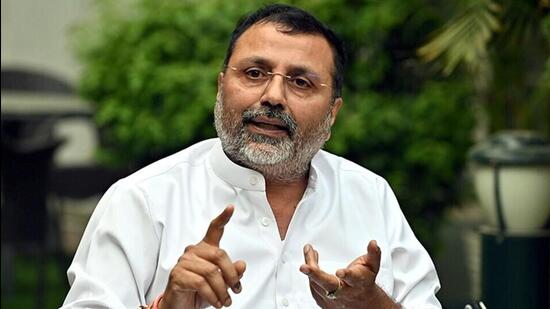
Parl panel suggests X ‘Community Notes’ may be treated as publishing activity: Chairperson| India News
# India Panel Eyes X Notes As Publisher Content
By Staff Reporter, Policy & Tech Desk | April 11, 2026
On Saturday, a pivotal Parliamentary Standing Committee in New Delhi strongly urged the Ministry of Electronics and Information Technology (MeitY) to classify X’s (formerly Twitter) “Community Notes” feature as an active publishing activity rather than a neutral, crowdsourced intermediary tool. The committee’s Chairperson argued that by algorithmically surfacing contextual facts and effectively moderating user posts, the platform is engaging in editorial oversight. Furthermore, the panel has proposed implementing a “publisher tax model” to regulate this activity. The move has immediately sparked intense debate among digital rights experts, who warn that stripping X of its safe harbor protections could severely impact free speech, online fact-checking, and the broader digital ecosystem in India. [Source: Hindustan Times].
## The Parliamentary Directive and MeitY’s Mandate
The latest directive from the Parliamentary panel marks a significant escalation in the Indian government’s ongoing effort to regulate massive global tech platforms. For years, social media giants operating in India have relied on their status as intermediaries to avoid liability for the content their users post. However, the introduction and aggressive expansion of X’s Community Notes feature—a system designed to let contributors collaboratively add context to potentially misleading posts—has blurred the lines between platform and publisher.
According to the committee’s Chairperson, when X’s proprietary algorithms select, rank, and prominently display specific Community Notes alongside original tweets, the platform is actively curating content. This algorithmic curation is fundamentally indistinguishable from editorial selection. The panel has formally urged MeitY to draft new guidelines under the prevailing Digital India legislative framework to reclassify this specific platform behavior as a “publishing activity.”
By urging MeitY to act, the panel is signaling a shift toward absolute accountability. If MeitY adopts this recommendation, X would no longer be viewed merely as a digital bulletin board. Instead, it would be treated as the editor-in-chief of the context it provides, bearing full legal responsibility for the claims made within those Community Notes.
## Decoding the ‘Community Notes’ Dilemma
To understand the parliamentary panel’s concerns, one must examine how Community Notes functions. Introduced globally as a decentralized alternative to top-down corporate fact-checking, the system relies on an open-source algorithm. Users vote on whether a note is “helpful” or “unhelpful,” and the algorithm requires cross-partisan consensus before a note is publicly displayed.
X has long maintained that because the notes are written and voted on by users, the platform itself is not acting as an arbiter of truth. However, Indian lawmakers argue otherwise.
**Key arguments presented by the panel include:**
* **Algorithmic Endorsement:** The platform dictates the visibility of the note. By attaching a high-contrast label to a post, X is effectively endorsing the crowdsourced fact-check.
* **Narrative Control:** Despite the open-source nature of the algorithm, X ultimately sets the parameters for what constitutes a “helpful” rating, thereby shaping the narrative.
* **Monetization of Curation:** X monetizes the engagement generated by controversial posts and the subsequent Community Notes through ad placements, functioning economically like a traditional media publisher.
The panel argues that delegating editorial responsibilities to an algorithm and a crowd of users does not absolve the platform of its fundamental role in publishing and distributing that content across Indian digital infrastructure.
## The Threat to ‘Safe Harbor’ Protections
At the core of this legislative debate is Section 79 of the Information Technology Act (and its subsequent modern iterations under the 2026 digital compliance frameworks), which provides “safe harbor” to internet intermediaries. Safe harbor ensures that a platform cannot be sued for defamation, copyright infringement, or other legal violations committed by its users, provided the platform acts promptly to remove unlawful content when notified by authorities.
If MeitY classifies Community Notes as a publishing activity, X would lose this vital legal shield for any post featuring a note.
| Feature Comparison | Intermediary Status (Current) | Publisher Status (Proposed) |
| :— | :— | :— |
| **Legal Liability** | Immune from user-generated content lawsuits. | Fully liable for defamation, misinformation, or legal breaches in published notes. |
| **Content Moderation** | Reactive (takes down content upon government or court order). | Proactive (must legally vet fact-checks before displaying them). |
| **Tax Implications** | Standard corporate and digital services taxes. | Subject to proposed “publisher tax” and potential news-sharing levies. |
| **Operational Impact** | Low friction, automated, crowdsourced. | High friction, requires localized legal review and editorial oversight. |
Legal analysts note that without safe harbor, X would face an avalanche of litigation in India. Every politician, corporation, or public figure fact-checked by a Community Note could potentially sue X for defamation, treating the platform exactly as they would a traditional newspaper. [Source: Independent Legal Analysis / Public Policy Forums].
## The Proposed ‘Publisher Tax Model’
Perhaps the most economically disruptive suggestion from the Parliamentary panel is the implementation of a “publisher tax model.” This concept borrows heavily from media bargaining codes seen in Australia and Canada, but applies them uniquely to crowdsourced context.
The committee’s rationale is twofold. First, Community Notes frequently summarize, link to, and scrape data from traditional Indian news publishers to debunk claims. The panel suggests that X is extracting value from domestic journalistic efforts without fairly compensating the original publishers. Second, by acting as a digital publisher, X should be subjected to the same taxation and regulatory scrutiny as registered digital news entities operating within India’s borders.
Under this proposed model, X could be required to pay a specialized tax or contribute to a centralized fund that supports Indian digital news media. Alternatively, the platform might be forced to negotiate individual licensing agreements with Indian media outlets whenever their articles are used as citations within Community Notes.
## Freedom of Speech Under Siege? Expert Opinions
The panel’s recommendations have sent shockwaves through India’s digital rights community. Experts warn that enforcing publisher liability on crowdsourced fact-checking will have an immediate chilling effect on free speech.
“Treating a transparent, user-driven consensus tool as a traditional publishing activity is a fundamental mischaracterization of modern technology,” says Dr. Meera Sanyal, a constitutional lawyer and digital rights advocate based in New Delhi. “If X is held legally liable for every Community Note, their only logical business decision will be to disable the feature entirely in India. This strips Indian users of one of the most effective tools against viral misinformation.”
Other policy analysts share this concern, noting that the threat of litigation will lead to aggressive self-censorship.
“The beauty of Community Notes is its speed in debunking fake news,” notes Rohan Kulkarni, a senior tech policy researcher. “If X must legally vet every note to avoid defamation suits, the friction introduced will render the tool useless. Furthermore, this opens the door for political actors to weaponize the legal system, suing the platform to suppress legitimate, community-driven fact-checks that contradict their narratives.” [Source: Industry Expert Analysis].
Critics also argue that the proposal creates an uneven playing field. While traditional media houses possess the editorial resources to defend their publications in court, expecting a social media platform to legally defend millions of micro-fact-checks generated by anonymous users is practically impossible.
## Global Context: A Fractured Regulatory Landscape
India is not the first country to grapple with the regulatory classification of new algorithmic tools, but the Parliamentary panel’s approach is distinctly aggressive.
In the European Union, the Digital Services Act (DSA) mandates transparency and systemic risk mitigation for very large online platforms (VLOPs), but it deliberately stops short of classifying algorithmic curation of crowdsourced notes as traditional publishing. Instead, the EU focuses on the systemic risks of the algorithm itself, keeping safe harbor largely intact for user-generated content.
In the United States, Section 230 of the Communications Decency Act continues to protect platforms from being treated as publishers, explicitly encouraging platforms to moderate content and provide context without fear of liability.
India’s potential divergence from these global norms could fragment the operational reality of global platforms. If India pushes forward with the publisher classification and tax model, X may have to build a highly localized, heavily censored version of its platform exclusively for the Indian market, setting a precedent that other developing tech markets might rapidly adopt.
## Conclusion and Future Outlook
The Parliamentary Standing Committee’s recommendation to MeitY represents a critical juncture in India’s tech policy landscape. By suggesting that X’s Community Notes equate to publishing activity, Indian lawmakers are challenging the fundamental architecture of Web 2.0 and the intermediary liability protections that built the modern internet.
**Key Takeaways:**
1. **Redefining Curation:** Algorithmic curation of crowdsourced fact-checks may soon be legally indistinguishable from traditional editorial publishing in India.
2. **Economic Repercussions:** The proposed publisher tax model could force social platforms to compensate traditional media for citations used in community fact-checking.
3. **Chilling Effect:** Digital rights experts overwhelmingly agree that removing safe harbor will likely force X to disable Community Notes in India, ironically making the platform more susceptible to unchecked misinformation.
As MeitY reviews the panel’s recommendations over the coming months, the global tech industry will be watching closely. The final decision will not only dictate the future operational capacity of X in one of its largest global markets, but it will also establish a landmark legal precedent regarding who owns the truth—and the liability for that truth—in the algorithmic age.





