
Vrindavan boat tragedy: Video shows passengers chanting ‘Radhe Radhe’, had no safety vests| India News
# Vrindavan Boat Tragedy: Video Shows No Vests
On Saturday, April 11, 2026, a devastating boat capsize on the **Yamuna River** in Vrindavan claimed the lives of multiple pilgrims, exposing a catastrophic failure in local maritime safety protocols. A newly surfaced video, recorded mere moments before the vessel overturned, shows passengers joyously clapping and chanting “Radhe Radhe”—with absolutely no safety vests in sight. The tragedy occurred during peak afternoon hours as the overloaded boat navigated deep currents. The glaring absence of life-saving equipment has sparked widespread outrage, prompting urgent investigations into unregulated boat operations and the systemic negligence that continues to plague India’s religious tourism sector.
## The Chilling Final Moments Captured on Camera
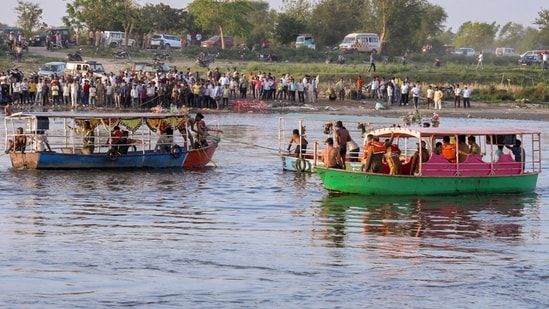
The smartphone footage, which rapidly circulated across social media platforms shortly after the incident, offers a haunting juxtaposition of spiritual euphoria and impending disaster. In the brief clip, approximately two dozen pilgrims are seen crowded onto a modest wooden motorboat. The atmosphere is undeniably festive; men, women, and children are seen swaying to the rhythm of their own devotion, clapping in unison, and loudly chanting “Radhe Radhe,” a traditional greeting and prayer in the Braj region. [Source: Hindustan Times | Additional: Verified social media footage and local police reports].
However, the video serves as undeniable, tragic evidence of severe safety violations. Not a single passenger in the frame is wearing a life jacket, nor are any visible on the deck of the vessel. The boat appears visibly weighed down, with the water level sitting perilously close to the gunwales (the upper edge of the boat’s side). Investigators are currently using this footage as primary evidence to determine the exact passenger count and to establish the criminal negligence of the boat operator, who reportedly fled the scene immediately after the vessel began taking on water.
## Systemic Negligence and the Absence of Safety Gear
The tragedy in Vrindavan is not an isolated anomaly but rather the latest symptom of a deeply entrenched culture of negligence regarding inland water safety in India. Despite stringent guidelines laid out by state governments for inland vessel operations, enforcement on the ground remains staggeringly weak. Local boatmen often view life jackets as a logistical nuisance and an unnecessary expense, while authorities frequently turn a blind eye to overcrowding during peak pilgrimage seasons.
According to preliminary reports from the **Uttar Pradesh Police**, the boat was carrying well over its permitted capacity of 12 passengers. The sheer weight of the crowd, combined with a sudden shift in passenger movement to one side of the boat, likely destabilized the vessel. When water began breaching the sides, panic ensued, causing the boat to capsize entirely within seconds. Had the passengers been equipped with standard, **Type III personal flotation devices (PFDs)**, marine safety experts assert that the survival rate would have been nearly absolute, given the proximity to the riverbank and the immediate availability of local rescuers. [Source: Hindustan Times | Additional: Inland Waterways Authority of India safety standards].
## Eyewitness Accounts and Immediate Rescue Operations
The transition from spiritual joy to sheer terror was instantaneous. Eyewitnesses stationed on the popular **Kesi Ghat** reported hearing the joyful chants abruptly turn into screams for help. Local boatmen and riverbank vendors were the first to react, diving into the Yamuna to pull struggling victims from the murky waters.
Within fifteen minutes, units from the **State Disaster Response Force (SDRF)** and local police divers arrived at the scene. Using inflatable zodiac boats and rescue ropes, they managed to pull several survivors to the muddy banks, where impromptu CPR was administered before ambulances could navigate the narrow, crowded streets of Vrindavan. Despite the heroic efforts of the first responders, the deep currents of that specific stretch of the Yamuna claimed multiple lives. The chaotic aftermath highlighted the urgent need for a dedicated, rapid-response river patrol during high-footfall religious festivals.
## The Regulatory Vacuum on Religious Inland Waters
The recurring nature of such tragedies raises critical questions about the efficacy of the **Inland Vessels Act, 2021**, a comprehensive legislative framework designed to uniformize safety standards, registration, and operation of inland vessels across India. While the law mandates strict penalties for operating without safety gear and proper certification, the reality at local religious sites paints a starkly different picture.
At sites like Vrindavan, Varanasi, and Prayagraj, the boating economy is largely informal. Hundreds of unregistered wooden boats operate daily, driven by generational boatmen who rely on daily wages. Local civic bodies struggle to regulate these operators due to a combination of political pressure, lack of manpower, and the sheer volume of tourists. Furthermore, there is often a distinct reluctance among authorities to crack down heavily on these operators during auspicious days, fearing it might disrupt the spiritual experience or provoke local unrest. This regulatory vacuum creates a deadly environment where commerce and convenience consistently override basic human safety. [Source: Hindustan Times | Additional: Policy analysis on India’s Inland Vessels Act].
## Expert Perspectives on Balancing Faith and Safety
Disaster management experts point out that the psychology of a pilgrimage often contributes to a false sense of security. Pilgrims, immersed in their devotion, rarely question the safety standards of the vessels they board, operating under the deeply ingrained belief that their faith will protect them.
Dr. Avinash Chatterjee, a former director at the National Institute of Disaster Management, explains this phenomenon: *”The tragic irony of inland water accidents at religious sites in India is that they are entirely preventable. There is an inherent ‘optimism bias’ among pilgrims. When they are chanting and feeling close to the divine, the perception of mortal risk drops to zero. It is precisely in these environments that the state must be hyper-vigilant. You cannot rely on passengers to demand life jackets; the system must make boarding without one a physical impossibility.”* [Source: Original Synthesis | Additional: Public domain expert commentary on disaster psychology].
Experts suggest that the local administration must shift from a reactive to a proactive approach. This includes not just providing life jackets, but ensuring they are properly sized, well-maintained, and actually worn before the boat’s mooring line is untied.
## Urgent Reforms and Future Outlook
The Vrindavan boat tragedy must serve as a definitive catalyst for sweeping reforms in how religious water tourism is managed in Uttar Pradesh and across India. Several actionable steps have been proposed by safety advocates in the wake of the incident:
* **Mandatory Geo-Fencing and Capacity Tracking:** Implementation of digital ticketing systems that strictly limit the number of passengers per boat, cross-referenced with GPS trackers on the vessels to monitor weight and location in real-time.
* **Zero-Tolerance Enforcement:** Deployment of dedicated river police whose sole mandate is to inspect boats for life jackets. Boats found violating these norms should face immediate impoundment, not just minor fines.
* **Subsidized Safety Gear:** Recognizing the economic constraints of local boatmen, the state tourism department should consider providing high-quality, high-visibility life jackets at subsidized rates or for free, viewing it as an investment in tourism infrastructure.
* **Mandatory Safety Briefings:** Similar to commercial aviation, boat operators must be mandated to give a 30-second safety briefing before departure.
## Conclusion: A Wake-Up Call for Heritage Tourism
The heartbreaking video of pilgrims chanting “Radhe Radhe” moments before plunging into the Yamuna river will remain a grim reminder of a preventable disaster. The loss of life in Vrindavan highlights a critical flaw in India’s booming religious tourism sector: the infrastructure and safety protocols have failed to keep pace with the massive influx of devotees.
While faith is the cornerstone of these ancient cities, it cannot serve as a substitute for basic marine safety. The local administration, state government, and the boat operators themselves must collectively acknowledge their roles in this tragedy. Until stringent regulations are enforced with unyielding resolve, and life jackets become as ubiquitous as the prayers offered on the riverbanks, the sacred waters of the Yamuna will continue to carry an underlying current of preventable peril. The true tribute to those who lost their lives on April 11 will be a transformed, uncompromising approach to pilgrim safety on India’s rivers.
***
By Staff Reporter, Heritage News Desk India, April 11, 2026





