
Cong terms Modi's foreign policy ‘Vishwaguru's huglomacy’ as Pakistan plays US-Iran peacemaker| India News
# Cong Mocks Modi ‘Huglomacy’ Amid Pak Mediation
By Special Diplomatic Correspondent, New Delhi, April 11, 2026
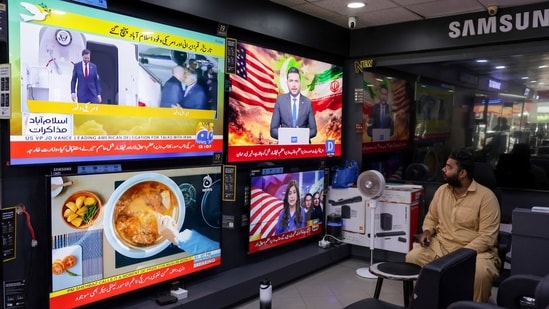
The Indian National Congress launched a blistering attack on Prime Minister Narendra Modi’s foreign policy on Saturday, branding it as ineffective “huglomacy” following reports that Pakistan is actively mediating secret peace talks between the United States and Iran. Addressing a press conference in New Delhi, Congress Communications General Secretary Jairam Ramesh questioned the tangible strategic returns of PM Modi’s highly publicized personal rapport with US President Donald Trump. As Islamabad steps into a crucial geopolitical role as a peacemaker between Washington and Tehran, the opposition party is demanding accountability regarding India’s ostensibly marginalized position in shifting Middle Eastern and South Asian diplomatic dynamics.
## The Anatomy of the Congress Critique
The crux of the opposition’s argument centers on the growing disparity between the ruling Bharatiya Janata Party’s (BJP) domestic foreign policy narrative and the unfolding geopolitical realities in the region. For years, the Modi administration has projected an image of India as a “Vishwaguru” (teacher of the world), heavily emphasizing the Prime Minister’s personal chemistry with global leaders—a tactic often characterized by public embraces and grand diaspora events.
[Source: Hindustan Times | Additional: Political Desk Analysis]
“We must ask the self-declared Vishwaguru what his highly televised ‘huglomacy’ has actually achieved for India’s strategic interests,” Jairam Ramesh stated rhetorically during the Saturday briefing. “If the personal rapport with President Trump was as foolproof as the government claims, why is the United States turning to Pakistan to mediate one of its most critical geopolitical disputes with Iran?”
The Congress leader’s remarks highlight a growing domestic anxiety that India’s personalized diplomatic style might be yielding diminishing returns, particularly when traditional power politics dictate alliances. Ramesh further demanded a white paper on the specific strategic benefits India has accrued from the US-India partnership over the past two years, specifically concerning the containment of cross-border terrorism and the safeguarding of India’s energy and maritime interests in the Persian Gulf.
## Pakistan’s Unlikely Diplomatic Coup
To understand the political friction in New Delhi, one must analyze the geopolitical maneuver that triggered it. Since early 2026, tensions between the Trump administration and Iran have reached a precarious plateau. Seeking a backdoor channel to avoid outright conflict and stabilize energy markets, Washington reportedly activated diplomatic links through Islamabad.
Pakistan, sharing a porous and historically complex 900-kilometer border with Iran, and possessing a long-standing, albeit turbulent, military-to-military relationship with the United States, emerged as a logical, if surprising, intermediary. Islamabad’s diplomatic corps successfully facilitated a series of unannounced meetings in Islamabad between lower-level US State Department officials and Iranian diplomats.
“Pakistan has historically leveraged its geography to remain relevant to American strategic interests,” notes Dr. Meenakshi Iyer, a Senior Fellow of Middle Eastern Studies at a prominent New Delhi think tank. “Just as they facilitated the secret US opening to China in 1971, Islamabad is now presenting itself as the indispensable bridge to Tehran. For a transactional US administration, utility often trumps shared democratic values, which is exactly what the Congress party is pointing out.”
This development is a massive boon for Pakistan’s administration, which has been grappling with severe economic crises and seeking international validation. By playing peacemaker, Islamabad hopes to secure vital economic relief, unfreeze stalled US military aid, and reposition itself as a crucial stabilizing force in the Islamic world.
## The Strategic Cost for New Delhi
The central fear driving the Congress party’s narrative—and echoing quietly within India’s strategic community—is the potential re-hyphenation of India and Pakistan in Washington’s strategic calculus. Over the past decade, Indian diplomacy successfully de-hyphenated the relationship, ensuring that the US viewed India as an independent, rising global power and a vital counterweight in the Indo-Pacific, separate from the security concerns of Pakistan.
However, if Pakistan proves instrumental in delivering a diplomatic victory for the Trump administration regarding Iran, Washington’s reliance on Islamabad will inevitably deepen. This could lead to a softening of the US stance on Pakistan-sponsored cross-border terrorism, a primary concern for India.
Congress spokespersons have highlighted this exact vulnerability. The opposition asserts that PM Modi’s extensive investments in optics and personal relations with the US leadership have failed to prevent a scenario where a historically hostile neighbor gains immense leverage over India’s most critical strategic partner.
[Source: Hindustan Times | Additional: Geopolitical Strategic Assessment 2026]
## The Chabahar Conundrum and Iran Ties
The situation is further complicated by India’s own strategic investments in Iran, most notably the Chabahar Port. Developed with Indian capital, Chabahar was envisioned as India’s gateway to Afghanistan and Central Asia, bypassing Pakistan entirely. It was a cornerstone of India’s Middle Eastern strategy, designed to build a robust economic corridor and counter Chinese influence at the nearby Gwadar port in Pakistan.
If Pakistan successfully mediates between the US and Iran, it not only boosts its standing in Washington but also significantly improves its relationship with Tehran. An Iran that owes diplomatic favors to Pakistan could gradually cool its strategic embrace of India.
Former Indian diplomat Ambassador Tariq Mansoor explains the dilemma: “India’s foreign policy has relied heavily on multi-alignment—keeping good ties with the US, Israel, and Iran simultaneously. But Pakistan’s intervention disrupts this balance. If Islamabad becomes Tehran’s preferred conduit to the West, India’s leverage in Iran, including the operational scope of the Chabahar port, could be severely marginalized. This is the ‘strategic return’ deficit the opposition is targeting.”
## Style Versus Substance: The ‘Vishwaguru’ Debate
The Congress party’s use of the term “Vishwaguru” is highly deliberate. The BJP has heavily promoted the narrative that under PM Modi, India has reclaimed its civilizational role as a leader and teacher to the world. This narrative is meant to instill domestic pride and project strength abroad.
By contrasting the “Vishwaguru” title with the term “huglomacy,” Jairam Ramesh is attempting to dismantle the aura of invincibility surrounding the Prime Minister’s foreign policy. The opposition is arguing that grand events and warm personal embraces do not substitute for hard-nosed institutional diplomacy.
**Key Points Raised by the Opposition:**
* **Optics vs. Outcomes:** Does highly publicized personal diplomacy yield actual geopolitical advantages?
* **US Reliability:** Is the US an entirely reliable partner if it immediately pivots to Pakistan for regional problem-solving?
* **Regional Marginalization:** Has India’s focus on the broader Indo-Pacific led to a loss of influence in its immediate Western neighborhood?
* **Foreign Policy as Domestic Politics:** Accusations that the government uses foreign relations primarily for domestic electoral gains rather than national security.
The government, for its part, has yet to issue an official rebuttal to the Congress party’s Saturday press conference. However, BJP insiders frequently defend the administration’s record by pointing to India’s soaring foreign direct investment, robust alliances in the Indo-Pacific through the Quad, and New Delhi’s successful navigation of the complex Russia-Ukraine dynamics over the past few years.
## Broader Geopolitical Implications
The unfolding US-Iran-Pakistan triangle serves as a stark reminder of the fluid nature of global alliances. For the United States, utilizing Pakistan is a matter of pragmatic necessity. The US State Department recognizes Islamabad’s unique positioning and historical willingness to serve as a geopolitical broker for the right price.
For Iran, engaging through Pakistan allows Tehran to maintain a level of plausible deniability and avoid the optics of direct capitulation to the West, while still pursuing much-needed sanctions relief to rescue its battered economy.
For India, the scenario necessitates a rapid recalibration. South Block must recognize that personal rapport with foreign leaders, while beneficial for setting a positive tone, cannot entirely override the geopolitical imperatives of superpowers. New Delhi will need to deploy robust, quiet institutional diplomacy to ensure that Washington’s transactional engagement with Islamabad does not come at the cost of India’s core security interests.
## Conclusion and Future Outlook
The Congress party’s sharp critique of PM Modi’s “huglomacy” in the wake of Pakistan’s mediating role between the US and Iran underscores a critical juncture in Indian foreign policy. As Jairam Ramesh’s remarks highlight, the opposition is increasingly willing to scrutinize the gap between the government’s lofty “Vishwaguru” rhetoric and the complex, often unforgiving realities of international relations.
Moving forward into late 2026, the success or failure of Pakistan’s mediation efforts will have profound implications for South Asia. If Islamabad succeeds in brokering a meaningful de-escalation between Washington and Tehran, India will face a newly emboldened neighbor enjoying renewed American patronage.
To counter this, India must move beyond personalized diplomacy. Enhancing strategic deliveries, accelerating the operationalization of regional projects like the Chabahar port, and reinforcing its indispensable value to the US beyond the Indo-Pacific theatre will be essential. Ultimately, true global leadership—the essence of a Vishwaguru—is defined not by the warmth of a diplomatic embrace, but by the resilience and foresight of a nation’s strategic architecture.





