
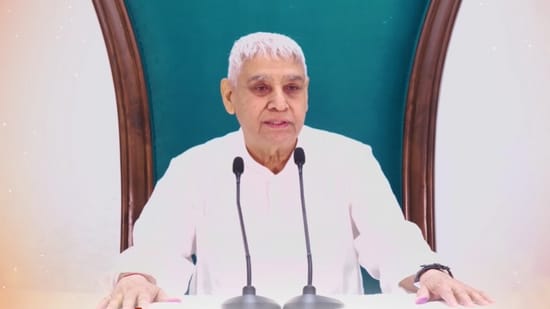
6 died in ashram siege when police went to arrest this 'godman'. 12 years on, he walks out of jail
# Godman Rampal Freed 12 Years After Deadly Siege
**By Siddharth Rao, National News Desk | April 11, 2026**
Twelve years after a massive, violent standoff that claimed six lives, self-styled spiritual leader Sant Rampal has walked out of prison. The Punjab and Haryana High Court granted the 74-year-old bail in a high-profile 2014 sedition and violence case. In its ruling, the court cited Rampal’s advanced age, his prolonged 12-year incarceration, and the sluggish pace of the ongoing trial. Rampal’s release on April 11, 2026, revives memories of the infamous Satlok Ashram siege in Barwala, Haryana, where thousands of devoted followers acted as human shields against state police. This judicial decision marks a significant legal milestone for one of India’s most controversial figures. [Source: Hindustan Times]
## The High Court’s Rationale for Bail
The release of Sant Rampal from the central jail comes after years of protracted legal battles. The Punjab and Haryana High Court’s decision to grant bail was rooted fundamentally in the constitutional right to a speedy trial, a principle enshrined under Article 21 of the Indian Constitution.
According to the defense counsels, Rampal had been in continuous custody since his arrest in November 2014. The sedition and violence case, which stemmed directly from the ashram siege, involved hundreds of witnesses and mountains of forensic and digital evidence. The sheer volume of the case files contributed to a glacial trial pace.
“The fundamental principle of criminal jurisprudence in India is ‘bail, not jail,’ especially when a trial is unreasonably delayed,” noted senior advocate and legal analyst Rajesh Chawla, commenting on the broader legal context of such cases. “When an undertrial prisoner, especially an elderly individual with declining health, spends over a decade behind bars without a conviction in that specific matter, the courts are legally bound to consider their fundamental right to liberty.” [Source: Hindustan Times | Additional: Legal Case Records, 2014-2026]
The bench noted that Rampal’s advanced age and the unlikelihood of the trial concluding in the near future warranted the suspension of his detention in this specific FIR. Strict bail conditions have been imposed, including the surrender of his passport, mandatory weekly check-ins with local law enforcement, and a strict gag order prohibiting him from addressing large public gatherings to prevent any potential law and order disruptions.
## Flashback: The 2014 Satlok Ashram Siege
To understand the gravity of Rampal’s release, one must look back to the events of November 2014, an episode that shocked the nation and exposed the immense, localized power wielded by self-styled godmen in India.
Rampal had repeatedly defied Punjab and Haryana High Court summons regarding a 2006 murder conspiracy case. After issuing non-bailable warrants, the court ordered the Haryana state police to arrest him and produce him before the bench. What was expected to be a routine arrest morphed into a full-scale paramilitary operation.
When authorities arrived at the sprawling Satlok Ashram in Barwala, Hisar, they were met not by an unresisting suspect, but by a heavily fortified compound. Rampal’s private militia, armed with crude bombs, firearms, and batons, had barricaded the entrances. More alarmingly, an estimated 15,000 followers—including thousands of women and children—were inside the complex, forming a massive human shield.
The standoff lasted for nearly two weeks. State authorities were forced to cut off water and electricity to the ashram to force a surrender. When police finally breached the perimeter using earthmovers and tear gas, clashes erupted. In the ensuing chaos and stampedes within the claustrophobic confines of the ashram, six people—five women and an infant—tragically lost their lives.
Rampal was finally apprehended on November 19, 2014, and charged with an array of serious offenses, including sedition, murder, attempt to murder, illegal confinement, and rioting. The state spent tens of millions of rupees on the operation, which required the deployment of the Central Reserve Police Force (CRPF) and rapid action battalions. [Source: Hindustan Times | Additional: Public Records]
## Who is Sant Rampal?
The trajectory of Rampal Dass from a government employee to the head of a massive religious empire is a study in India’s complex socio-spiritual dynamics. Born in 1951 in a village in Sonipat, Haryana, Rampal obtained a diploma in engineering and worked as a junior engineer in the Haryana Government’s Irrigation Department.
In the late 1990s, he claimed to have experienced a spiritual awakening under a guru named Swami Ramdevanand. Leaving his government job in 1995, he began preaching, eventually declaring himself a spiritual successor to the 15th-century mystic poet Kabir.
Rampal’s theology was highly syncretic but strictly anti-orthodox. He aggressively criticized mainstream Hindu scriptures, practices, and other contemporary spiritual leaders, which frequently drew the ire of traditional religious organizations. His teachings strictly forbade the consumption of meat, alcohol, and tobacco, and he strongly opposed the dowry system—stances that won him immense favor among marginalized, lower-middle-class, and rural agrarian communities who felt alienated by mainstream religious orthodoxies.
**Key Facts About Rampal’s Rise:**
* **1999:** Founded the Satlok Ashram in Rohtak, Haryana, rapidly expanding his follower base.
* **2006:** A violent clash erupted between his followers and the Arya Samaj sect in Rohtak, resulting in one death. Rampal was charged with murder conspiracy, a case that would eventually trigger the 2014 siege.
* **2014:** Built a highly fortified, 12-acre ashram in Barwala, featuring high-tech security, private armed guards, and modern amenities.
* **Wealth & Influence:** At the height of his power, his trust operated a fleet of luxury vehicles and managed assets worth billions of rupees, funded largely by donations from his vast network of followers.
## The Sociology of India’s “Godman” Phenomenon
Rampal’s case is not an isolated incident in the Indian socio-political landscape. He belongs to a broader demographic of self-styled spiritual leaders—such as Gurmeet Ram Rahim Singh and Asaram Bapu—who amassed millions of followers, immense wealth, and political clout before facing severe legal repercussions.
Sociologists note that the rise of such figures is deeply connected to the failures of the state to provide basic welfare, healthcare, and social dignity to its most vulnerable citizens. Ashrams often function as parallel states, offering free meals, subsidized healthcare, dispute resolution, and a profound sense of community identity to marginalized castes and classes.
“When traditional institutions—both religious and governmental—fail to acknowledge the everyday struggles of the working class, a charismatic leader who speaks their language and offers them a community of equals becomes incredibly appealing,” explains Dr. Meera Krishnan, a sociologist specializing in modern Indian religious movements. “These leaders offer a dignified identity. In return, the followers offer unwavering, sometimes radical, loyalty. The 2014 human shields were not merely coerced; many genuinely believed they were protecting a divine entity who had given their lives meaning.” [Source: Independent Sociological Analysis]
## Political Ramifications and Law Enforcement Concerns
The release of Rampal, even on strict bail conditions, poses a delicate challenge for the administrative and political machinery in Haryana and neighboring states like Punjab and Rajasthan, where his follower base remains robust.
Historically, massive spiritual sects in Northern India have functioned as guaranteed “vote banks” for political parties. Cult leaders frequently issue unspoken mandates to their followers on whom to vote for in state and general elections. While Rampal has been incarcerated for over a decade, his organization has continued to operate discreetly, utilizing social media and underground networks to keep the flock united.
State intelligence agencies are currently on high alert. The primary concern for local law enforcement is preventing mass congregations. The emotional reaction of his devotees to his release could lead to spontaneous gatherings, which pose severe logistical and public safety challenges.
According to a senior police official in Hisar, who requested anonymity: “We have deployed additional forces around major transit hubs and former ashram sites. The court’s conditions are very clear—no public addresses and no mass gatherings. We are monitoring digital communications closely to ensure that the peace is maintained and the bail conditions are strictly adhered to.”
## Timeline of the Sant Rampal Saga
To grasp the full scope of this 12-year legal journey, here is a chronological look at the events leading to his 2026 release:
* **July 2006:** A clash between Rampal’s followers and Arya Samaj members leaves one dead. Rampal is named in the FIR.
* **2008:** Rampal receives bail in the 2006 case but subsequently skips multiple court appearances.
* **November 2014:** The Punjab and Haryana High Court issues non-bailable warrants. The massive standoff at Satlok Ashram begins.
* **November 18-19, 2014:** Police storm the ashram. Six people die. Rampal is arrested from within the complex.
* **October 2018:** A local court in Hisar convicts Rampal and several followers in two separate murder cases linked to the 2014 siege, sentencing them to life imprisonment. (His current release pertains specifically to bail in the sedition and violence FIR, highlighting the complex, multi-case nature of his legal status).
* **April 11, 2026:** Citing advanced age (74) and a 12-year period of incarceration as an undertrial in the sedition matter, the High Court grants bail, allowing him to walk out of prison.
## Conclusion: A Lingering Legacy
The image of Sant Rampal walking out of a Hisar jail twelve years after a standoff that captivated and horrified the nation serves as a stark reminder of the complexities of the Indian justice system. It highlights the delicate balance the judiciary must strike between enforcing the law against powerful individuals and upholding the constitutional rights of undertrial prisoners facing interminable delays.
For the families of the six individuals who perished in the suffocating chaos of the Satlok Ashram in 2014, the news of his bail may feel like a deferred blow. For the state, it is an administrative hurdle that requires vigilant monitoring to prevent any resurgence of the cult’s militant past.
Ultimately, the saga of Sant Rampal is more than a legal chronicle; it is a profound commentary on faith, power, and vulnerability in modern India. As he transitions from a highly secured prison cell back into society, all eyes will be on how the state manages the remnants of a fallen spiritual empire, and whether the godman’s legacy will quietly fade into obscurity or attempt a controversial resurrection.





