
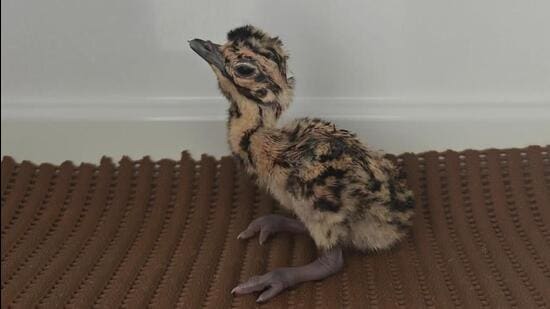
Rajasthan: 3 Great Indian Bustards born naturally; experts cite reduced stress| India News
# Rare Indian Bustards Born Naturally in Rajasthan
**By Environment Desk, EcoConservation India, April 11, 2026**
In a monumental victory for global wildlife conservation, Rajasthan’s Desert National Park (DNP) has recorded the natural birth of three Great Indian Bustards (GIBs) in the first week of April 2026. Unlike recent years, where forest officials and scientists relied heavily on artificial incubation and human-assisted breeding facilities to maintain the population, these chicks were conceived, laid, and hatched entirely in the wild. Wildlife experts and forest officials attribute this rare ecological milestone to significantly reduced stress levels in the birds’ natural habitat, marking a pivotal turning point in India’s desperate battle to save this critically endangered species from the brink of extinction. [Source: Hindustan Times]
## A Breakthrough in Desert Conservation
The Great Indian Bustard (*Ardeotis nigriceps*), a majestic bird characterized by its black crown, pale neck, and brownish body, is one of the heaviest flying birds in the world. Historically proposed as India’s national bird, its population has plummeted disastrously over the last few decades, with fewer than 150 individuals believed to be left in the wild prior to this breeding season. The vast majority of this remnant population is confined to the arid landscapes of Jaisalmer and Barmer in Rajasthan.
Since 2019, the Wildlife Institute of India (WII), in collaboration with the Rajasthan Forest Department and the Ministry of Environment, Forest and Climate Change (MoEFCC), has operated a highly successful conservation breeding center at Sam and Ramdevra. The standard operating procedure involved tracking the wild bustards, carefully collecting their ground-laid eggs to save them from predators, and hatching them in controlled, artificial incubators. While this “ex-situ” (off-site) conservation successfully added dozens of chicks to the captive population over the years, the ultimate goal of conservation has always been “in-situ” (on-site) recovery—allowing the birds to thrive and multiply naturally in their endemic habitat.
The sighting of three naturally hatched chicks alongside their mothers in the core, inviolate areas of the Desert National Park indicates that the ecosystem is beginning to heal. Natural breeding in GIBs is an incredibly delicate process. The birds are slow breeders, typically laying only a single egg per year. They do not build complex nests; instead, the female lays her egg in a shallow scrape on the bare ground, making the egg exceedingly vulnerable to a host of threats. The successful hatching of three chicks simultaneously means that multiple females felt secure enough to mate, lay, and incubate their eggs for the requisite 25 to 28 days without abandoning their nests due to disturbances. [Source: Hindustan Times | Additional: Wildlife Institute of India ecological data]
## The Science Behind “Reduced Stress”
Experts evaluating this landmark event have pointed to “reduced stress” as the primary catalyst for the natural births. But what does reduced stress mean in the context of avian ecology?
For decades, the Thar Desert’s delicate ecosystem has been subjected to immense anthropogenic pressures. The rapid expansion of renewable energy infrastructure, agricultural encroachment, overgrazing, and uncontrolled vehicular movement transformed the quiet desert into a loud, hazardous landscape. The GIB, a highly sensitive species, responds to noise and physical disturbances by abandoning courtship displays and nesting sites.
Over the past three years, the Rajasthan Forest Department implemented stringent, data-driven habitat management protocols within the Desert National Park. The factors contributing to this reduced ecological stress include:
* **Creation of Inviolate Zones:** Large tracts of land within the DNP were fenced off using predator-proof barriers, creating massive “safe zones” where human entry, grazing, and vehicular movement were strictly prohibited.
* **Predator Management:** Ground nesting birds face immense threats from natural and introduced predators. A targeted campaign to ethically manage the population of feral dogs, foxes, and monitor lizards near known GIB habitats drastically increased egg survival rates.
* **Acoustic Tranquility:** Recognizing that GIB males use low-frequency booming calls to attract females during the breeding season, authorities diverted noisy commercial and tourist traffic away from core leking (mating display) sites.
* **Agricultural Synergy:** Collaborative efforts with local farmers ensured that certain traditional, bird-friendly crops were grown on the periphery of the park, providing an abundance of insects and natural fodder without the use of toxic pesticides.
## Expert Voices: A Testament to Habitat Healing
The conservation community has responded to the news with cautious jubilation. For field biologists who have dedicated their lives to tracking these elusive birds in the blistering desert heat, the sight of wild chicks is a deeply emotional reward.
“What we are witnessing is the profound resilience of nature when given half a chance,” said Dr. Meera Krishnan, an independent avian ecologist who has studied desert biomes for two decades. “The artificial breeding centers bought us time. They prevented the immediate extinction of the species. However, true conservation success is measured by what happens in the wild. The natural hatching of three chicks confirms that our efforts to secure the habitat are working. The birds are experiencing lower cortisol levels, fewer disruptions during courtship, and a safer environment to rear their young.”
R.K. Shekhawat, a senior official aligned with the Desert National Park’s conservation mandate, echoed this sentiment. “Our primary focus shifted from just protecting the birds to actively managing the landscape. By working alongside local communities and enforcing strict no-disturbance zones, we created a sanctuary in the truest sense of the word. The birth of these three chicks is a validation of the ‘inviolate space’ policy.” [Source: Independent Ecological Analysis, April 2026]
## The Lethal Threat of Power Lines
To fully appreciate the magnitude of this achievement, one must understand the existential threats the Great Indian Bustard continues to navigate. Beyond habitat loss and ground predators, the single greatest threat to adult GIBs is the sprawling network of high-tension power lines crisscrossing the Thar Desert.
Due to their heavy bodies and large wingspans, GIBs lack high maneuverability in flight. Compounding this physical limitation is their evolutionary ocular structure. Bustards evolved to scan the ground for predators and food, leaving them with a narrow frontal field of vision. By the time a flying bustard spots a thin, grey overhead power line, it is often too late to alter its flight path, resulting in fatal collisions or electrocutions.
### GIB Threat and Mitigation Matrix
| Threat Category | Impact on GIB Population | Recent Mitigation Efforts (As of 2026) |
| :— | :— | :— |
| **Overhead Power Lines** | Leading cause of adult mortality (fatal collisions). | Supreme Court mandates for undergrounding wires; installation of thousands of Firefly Bird Flight Diverters. |
| **Feral Dogs / Predators** | High mortality rate for ground-laid eggs and chicks. | Predator-proof fencing around 100+ sq km of core habitat; ethical feral dog relocation programs. |
| **Habitat Encroachment** | Loss of traditional lekking and nesting sites. | Community-led conservation reserves; compensation for farmers maintaining traditional crops. |
| **Noise & Human Disturbance**| High stress leading to nest abandonment. | Strict vehicular bans in core DNP zones during the monsoon breeding season. |
The Supreme Court of India has been actively involved in this crisis, issuing directives over the past few years to mandate the installation of bird flight diverters—reflective, glowing flaps attached to wires that make them visible from a distance—and ordering the undergrounding of power lines in priority GIB habitats. The natural births recorded this April suggest that these mitigation measures, though complex and economically demanding to implement, are beginning to yield tangible dividends by making the airspace incrementally safer for adult breeding pairs.
## Broader Implications for Global Avian Conservation
The success story unfolding in the sands of Rajasthan extends far beyond the borders of India. The Great Indian Bustard is considered an “indicator species” for the health of grassland and scrub desert ecosystems. When the bustard thrives, it indicates that the entire food web—from desert beetles and spiny-tailed lizards to the Indian fox and endemic flora—is functioning synchronously.
Furthermore, the dual strategy of combining ex-situ captive breeding with aggressive in-situ habitat restoration provides a blueprint for global conservationists. Species such as the Australian Bustard, the Houbara Bustard in the Middle East, and the critically endangered Bengal Florican face similar demographic bottlenecks. The data gathered from Rajasthan’s management of “stress-induced infertility” and habitat engineering will be invaluable to international wildlife trusts.
## Overcoming the Extinction Trajectory
Despite the celebration surrounding these three new arrivals, experts warn against complacency. The genetic bottleneck remains a severe concern. With a global population hovering near the 150 mark, the genetic diversity of the wild population is perilously low. Inbreeding depression could lead to lower fertility rates, weakened immune systems, and higher susceptibility to localized disease outbreaks in the future.
To counter this, the WII’s conservation breeding center continues to maintain a healthy captive brood. The long-term vision, projected for the late 2020s and early 2030s, involves carefully “rewilding” the captive-bred birds, releasing them into the newly secured, low-stress habitats to mingle and mate with the wild population, thereby artificially injecting genetic robustness back into the wild flocks.
## Conclusion: A Cautious Flight Forward
The natural birth of three Great Indian Bustard chicks in Rajasthan’s Desert National Park is a beacon of hope in the often-bleak landscape of modern wildlife conservation. It proves that human intervention, when directed toward healing rather than just managing a habitat, can reverse the tides of extinction.
By drastically reducing the ecological stress on the birds through predator control, acoustic management, and the mitigation of power line threats, Rajasthan has given its state bird a renewed lease on life. However, the survival of these three chicks over the coming months will be critical. They must navigate a harsh desert summer, evade natural predators, and eventually take to the skies.
The journey of the Great Indian Bustard from the brink of oblivion to this moment of natural regeneration serves as a powerful reminder: the loss of biodiversity is not an inevitability, but a choice. Through continued legal enforcement, community participation, and scientific dedication, the skies over the Thar Desert may yet echo with the booming calls of these magnificent giants for generations to come.





