
Global delegates praise India’s election process after multi-state visits: ‘True festival of democracy’| India News
# Global Envoys Praise India’s Election Process
**By Chief Electoral Correspondent, Global News Bulletin, April 11, 2026**
On Saturday, April 11, 2026, a high-level delegation of international election officials and diplomats commended the Election Commission of India (ECI) for its flawless execution of democratic processes across multiple states. Following extensive on-the-ground visits to polling stations in Assam, Kerala, and the Union Territory of Puducherry, the global delegates collectively described the massive electoral exercise as a “true festival of democracy.” The observers closely monitored early morning mock polls, voter facilitation programs, and electronic voting mechanisms, praising the transparency, inclusivity, and sheer logistical scale required to secure the franchise for millions of diverse voters. [Source: https://www.hindustantimes.com/india-news/global-delegates-praise-india-s-election-process-after-multi-state-visits-true-festival-of-democracy-101775907151363.html | Additional: Election Commission of India Public Briefings].
## A Firsthand Look at the Electoral Machinery
The hallmark of the international delegation’s visit was their early morning observation of the meticulous “mock poll” procedures. Under the guidelines of the Election Commission of India, mock polls must be conducted at least 90 minutes before the official commencement of voting. This procedure is designed to unequivocally demonstrate the integrity of the voting machines to all participating political factions.
Delegates stood alongside local polling agents as officials cast dummy votes to verify that the Electronic Voting Machines (EVMs) and the Voter Verifiable Paper Audit Trails (VVPATs) were recording choices accurately. Following the mock poll, the observers watched the crucial step of clearing the machine’s memory and officially sealing the devices with uniquely numbered tamper-proof tags.
“The transparency embedded at the absolute ground level is what makes this system so robust,” noted an official memo released by the observing committee following the morning sessions. By witnessing these stringent protocols firsthand, the international community gained deep insights into how India prevents electoral fraud and builds consensus among fiercely competitive political parties before a single actual citizen casts their ballot.
## Navigating Geographic and Cultural Diversity
India’s electoral landscape is famously heterogeneous, and the choice of states for the delegation’s visit—Assam, Kerala, and Puducherry—provided a comprehensive cross-section of the nation’s geographic and cultural diversity. Each region presents its own unique logistical hurdles, requiring tailored solutions from electoral officers.
**Electoral Challenges and Administrative Adaptations:**
| Region | Geographic/Demographic Profile | Electoral Management Strategy |
| :— | :— | :— |
| **Assam** | Riverine islands (char areas), dense forests, and tea garden estates in the Northeast. | Deployment of riverboats, specialized transport for polling staff, and dedicated booths for tea-tribe communities to ensure accessibility. |
| **Kerala** | High literacy rates, dense coastal populations, and rugged terrain in the Western Ghats. | Intense voter awareness campaigns, advanced queue management systems, and specialized transport logistics for hilly regions. |
| **Puducherry** | Urban density, coastal geography, and high civic engagement. | High-density booth management, deployment of multilingual polling staff, and swift urban security protocols. |
The delegates were particularly impressed by the Election Commission’s steadfast commitment to the principle that “No Voter to be Left Behind.” Whether navigating the Brahmaputra river basin in Assam or managing the bustling urban centers of Puducherry, the standardized yet flexible approach to polling station management was viewed as a masterclass in public administration.
## The Role of Technology: EVMs and VVPATs
In an era where the integrity of electoral technology is heavily debated across mature democracies, India’s homegrown EVM-VVPAT ecosystem served as a primary focal point for the visiting envoys. The delegates critically analyzed the standalone, non-networked nature of Indian voting machines, which inherently protects them from remote cyber-attacks or wireless hacking attempts.
Dr. Elena Rostova, an independent electoral systems analyst and consultant who accompanied the delegation, remarked on the system’s hybrid nature. “What stands out in the Indian electoral model is the seamless integration of digital speed with manual, physical verification,” Dr. Rostova explained. “The VVPAT system provides a tangible layer of trust. When a voter sees their printed slip through the glass for seven seconds, it completely bridges the gap between digital efficiency and voter confidence. It is an architecture of trust that many Western democracies are currently struggling to achieve.” [Source: Independent Expert Analysis / Global Electoral Trends].
The observers also noted the rigorous randomization processes applied to the machines. Through specialized software, EVMs are randomly allocated to constituencies and subsequently to specific booths, making targeted manipulation virtually impossible.
## A “Festival of Democracy” in Action
Beyond the rigid mechanics of polling, the delegates were deeply moved by the cultural ethos surrounding the Indian elections. The phrase “Festival of Democracy,” prominently featured in the Hindustan Times report, perfectly encapsulated the atmosphere witnessed across Assam, Kerala, and Puducherry.
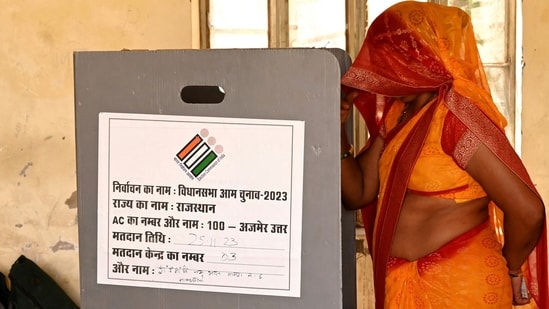
Polling stations in these states were not mere bureaucratic outposts; they were vibrantly decorated civic spaces. Voters, often dressed in colorful traditional attire, arrived in large numbers despite the sweltering April heat. The ECI’s community-centric initiatives were on full display, notably the ‘Pink Polling Booths’ (Sakhi booths)—facilities managed entirely by female polling staff and security personnel. These booths are specifically designed to empower women voters and provide a comfortable, welcoming environment.
Furthermore, the delegates praised the robust facilities provided for Persons with Disabilities (PwD) and senior citizens. The provision of ramps, wheelchairs, specialized volunteers, and even free transport facilities demonstrated an institutional empathy that transcends basic legal requirements, elevating the voting process into a truly inclusive celebration of civic rights.
## International Observers and Diplomatic Outreach
The presence of foreign delegates is a formalized aspect of the ECI’s International Election Visitors Programme (IEVP). For decades, India has utilized this program to foster South-South cooperation and build strong diplomatic bridges with both emerging and established democracies.
By inviting members of Election Management Bodies (EMBs) from around the globe, India essentially open-sources its electoral playbook. Delegates from neighboring countries, African nations, and European democracies frequently use these visits to study India’s handling of voter registration data, electronic voting logistics, and massive civilian mobilization.
This diplomatic outreach acts as a powerful form of soft power. While global news often focuses on political rhetoric, the administrative competence displayed during these multi-state visits reinforces India’s standing as the democratic anchor of the Global South. The mutual exchange of best practices ensures that the global democratic community continues to evolve, adapting to new challenges such as digital misinformation and voter apathy.
## Security and Peaceful Conduct
Securing an election of this magnitude requires a logistical choreography that rivals major military operations. The international delegates closely observed the tiered security deployment across the three vastly different states. To ensure a peaceful and coercion-free environment, the Election Commission strategically deploys Central Armed Police Forces (CAPF) alongside local state police units.
This deployment is meticulously planned months in advance. The central forces are tasked with guarding the EVM strong rooms and maintaining a strict perimeter around the polling stations, while local police handle broader law and order, traffic, and crowd management.
“Deploying immense security without intimidating the ordinary voter is a highly delicate balance,” noted Rajan Mathur, a public policy researcher specializing in South Asian electoral security. “The Indian model relies on phased voting and the dynamic movement of central forces. By staggering the election dates, authorities ensure that potential vulnerabilities in sensitive regions like parts of Assam or political hotspots in Kerala are mitigated long before the first ballot is cast.”
The observers reported a serene and highly disciplined environment at the booths they visited, a testament to the effective, non-intrusive security architecture implemented by the authorities.
## Conclusion: Implications for Global Democracies
The glowing assessments from the international delegation following their visits to Assam, Kerala, and Puducherry underscore a critical global reality: despite the unprecedented scale and complexity of its demographics, India’s electoral machinery remains profoundly resilient.
The key takeaways for the global community are multifaceted. First, technological integration in voting can be highly secure if decoupled from the internet and backed by physical paper trails. Second, inclusivity—manifested through initiatives like Pink booths and robust PwD support—is not merely an administrative afterthought, but a vital driver of high voter turnout. Finally, absolute transparency at the ground level, demonstrated through public mock polls, remains the ultimate antidote to electoral skepticism.
As the voting phases conclude and the nation looks forward to counting day, the ultimate winners and losers of the political contest remain to be decided. However, from the perspective of institutional integrity and global democratic standards, the successful execution of this massive logistical undertaking is already a definitive triumph. The “festival of democracy” continues to resonate, providing a viable, scalable blueprint for free and fair elections worldwide.





