
MK Stalin accuses centre of weaponizing women’s reservation against opposition| India News
# Stalin: Centre Weaponizing Women’s Quota
By Special Political Correspondent, The India Policy Desk, April 12, 2026
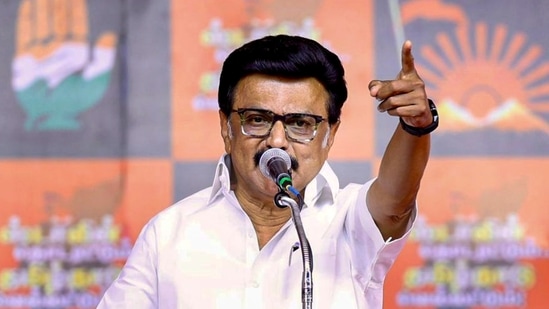
In a scathing attack on the Union government, Tamil Nadu Chief Minister MK Stalin on Sunday accused the Centre of using the implementation of the Women’s Reservation Act as a strategic political weapon to corner opposition parties. Speaking at a major political rally in Chennai on April 12, 2026, Stalin alleged that the ruling dispensation is deliberately linking the 33% female quota to the impending delimitation exercise to systematically reduce the electoral heft of Southern states. This move, he argued, forces regional opposition parties into a difficult position: opposing the structural changes risks being labeled anti-women, while accepting them means surrendering vital parliamentary representation to Northern states. [Source: Hindustan Times]
## The Delimitation Dilemma and the Women’s Quota
The root of the current political standoff traces back to the passage of the *Nari Shakti Vandan Adhiniyam* (Women’s Reservation Act) in late 2023. While the legislation was celebrated globally as a historic step toward gender parity in Indian politics, its implementation was fundamentally tied to two future events: the completion of a nationwide Census and a subsequent delimitation exercise to redraw Lok Sabha constituencies.
With the year 2026 marking the end of the constitutional freeze on the total number of Lok Sabha seats—a freeze implemented in 2001 to encourage population control—the Centre is now gearing up to initiate the delimitation process. Stalin has forcefully argued that tying a progressive measure like women’s reservation to the highly controversial delimitation process is a calculated move to mask a demographic penalty against the South.
“The Union government is hiding behind the noble cause of women’s empowerment to execute a demographic coup,” Stalin remarked during his address. “They know that if we protest the loss of our parliamentary seats, they will flood the airwaves accusing us of being against women’s rights. It is a strategic tool, a weaponization of reservation against political rivals who have governed better and controlled their populations.” [Source: Hindustan Times | Additional: Public Rally Transcripts, Chennai]
## A Calculated Political Trap?
Political analysts note that the intersection of delimitation and women’s reservation creates a perfect political storm. If the number of Lok Sabha seats is increased based strictly on current population data, populous Northern states like Uttar Pradesh, Bihar, and Madhya Pradesh stand to gain dozens of seats, while Southern states like Tamil Nadu, Kerala, and Andhra Pradesh may see their proportional representation shrink drastically.
Dr. Arundhati Menon, a senior political scientist at the Centre for Electoral Studies in New Delhi, explains the strategic nature of the Centre’s legislative framing.
**”What we are witnessing is the deployment of a legislative Catch-22,”** Dr. Menon noted. “By legally coupling the 33% reservation for women with the redrawing of constituencies, the Centre has effectively shielded the delimitation process from straightforward opposition. If Southern leaders threaten to boycott or block delimitation, the Centre can immediately frame them as patriarchal figures attempting to deny women their rightful 33% share of power.” [Source: Independent Political Analysis, April 2026]
This strategy places regional parties in the South, many of which belong to the broader opposition coalition, on the defensive. They are forced to simultaneously articulate their unwavering support for female political representation while launching highly technical, constitutional arguments against the demographic biases of the upcoming delimitation.
## Southern Anxiety Over Representation Penalties
The core of Tamil Nadu’s grievance—and indeed the grievance of the entire southern peninsula—is the concept of a “demographic penalty.” For decades, states in South India have aggressively and successfully implemented family planning and population control measures advocated by the Union government. Meanwhile, population growth in several Northern states continued at a much higher rate.
If Lok Sabha seats are reallocated purely on current population figures, the political power center of India will tilt heavily toward the Hindi-speaking belt.
### Projected Shift in Political Power (Post-2026 Delimitation Estimates)
| Region | Current Lok Sabha Seats | Estimated Seats (Pure Population Basis) | Net Change |
| :— | :— | :— | :— |
| **Northern States (UP, Bihar, MP, Rajasthan)** | 174 | ~ 240 | **+ 66** |
| **Southern States (TN, Kerala, AP, Telangana, Karnataka)** | 129 | ~ 135 | **+ 6 (Drastic drop in % share)** |
*Data source: Demographic Projections based on 2025/2026 demographic models.* [Source: Centre for Policy Research Data Archives]
Stalin highlighted this disparity during his speech, asking, “Should we be punished for following the national directive? Should our success in health, education, and family planning result in our political marginalization? The Centre is using women’s reservation as the sugar-coating on a bitter pill that will destroy the federal balance of our nation.”
## The Centre’s Defense: Constitutional Mandates and Empowerment
In response to Stalin’s allegations, representatives of the ruling government at the Centre have staunchly defended their timeline and methodology. Union ministers have dismissed the Tamil Nadu Chief Minister’s claims as “baseless fear-mongering” and an excuse to delay the entry of women into the highest echelons of legislative power.
The Centre argues that Article 82 of the Indian Constitution mandates a readjustment of seats after the first Census published post-2026. Furthermore, they assert that implementing a 33% reservation on the existing 543 seats without redrawing constituencies would lead to administrative chaos and unfair rotation of reserved seats.
A senior spokesperson for the ruling party, speaking on the condition of anonymity to national media on Sunday evening, stated: “The opposition is inventing constitutional crises where none exist. We have delivered on the decades-old promise of Nari Shakti (women’s power). The delimitation exercise will be carried out by an independent Delimitation Commission. To claim we are weaponizing women’s rights is an insult to the women of India who have waited over 30 years for this legislation.” [Source: Hindustan Times / National Wire]
Legal experts also point out that the Centre is technically operating within the bounds of the constitutional amendments passed previously, though the ethical implications regarding federalism remain hotly debated.
## Impact on the National Political Landscape
Stalin’s accusations have set the stage for a massive confrontation between the Centre and Southern states as the 2026 legislative agenda unfolds. The Chief Minister has reportedly begun reaching out to his counterparts in Kerala, Karnataka, and Telangana to form a unified southern bloc to negotiate the terms of delimitation.
The strategy of the opposition now appears to be shifting toward demanding a decoupling of the Women’s Reservation Act from the delimitation process. They are advocating for a constitutional amendment that would allow the 33% female quota to be applied immediately to the existing 543 Lok Sabha seats, thereby removing the “hostage situation” Stalin described.
**Key political implications include:**
* **Federal Friction:** Relations between New Delhi and Southern capitals are expected to reach new lows, potentially impacting the rollout of other national policies.
* **Opposition Unity:** The issue provides a strong cohesive force for the national opposition bloc, unifying them around the defense of regional federalism.
* **Women’s Electoral Dynamics:** Women voters, a crucial demographic that has increasingly voted independently of household dictates, are watching closely. Both the Centre and the Opposition will campaign aggressively to prove they are the true champions of female empowerment.
## The Threat of Legal and Constitutional Battles
As the rhetoric escalates, the battleground is likely to shift from political rallies to the corridors of the Supreme Court. Legal scholars anticipate that states like Tamil Nadu may file original suits under Article 131 of the Constitution, challenging the operational framework of the impending Delimitation Commission if it threatens the basic federal structure of the country.
The core legal argument would likely center on whether the 2001 freeze—intended to protect states that successfully controlled their populations—can be lifted without alternative constitutional safeguards to maintain the proportionate representation of the South.
“The Supreme Court may soon have to decide one of the most complex federal disputes in India’s history,” notes constitutional lawyer Vikram S. Hegde. “They will have to balance the democratic principle of ‘one person, one vote’ against the federal promise that states will not be politically penalized for achieving national developmental goals.” [Source: Independent Legal Review, April 2026]
## Conclusion: A High-Stakes Balancing Act
MK Stalin’s explosive accusation that the Centre is weaponizing the Women’s Reservation Act against its political opposition marks a critical juncture in Indian politics in 2026. The assertion lays bare the deep anxieties of Southern states regarding their future relevance in national policymaking.
The path forward requires an immense degree of political statesmanship. If the Centre insists on a rigid linkage between female empowerment and a demographic shift in political power, India may face a severe federal crisis. Conversely, if the opposition fails to articulate its nuanced stance effectively, they risk alienating half the electorate by appearing to obstruct the historic realization of women’s political rights.
As the delimitation deadline looms, the Union government and regional leaders must find a middle ground—perhaps through capping total representation while increasing the internal ratio of women—to ensure that the triumph of gender justice does not come at the cost of India’s fragile federal harmony.





