
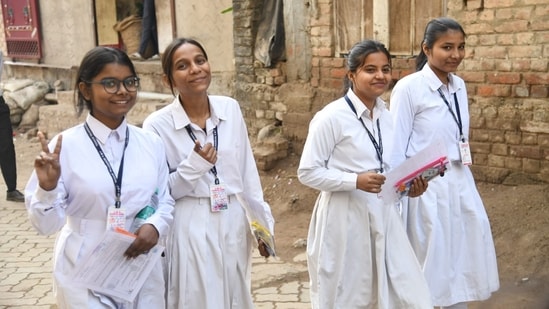
CBSE Class 10 result declared on DigiLocker and Umang app| India News
# CBSE 10th Results 2026 Declared on DigiLocker
**By Staff Correspondent, National Education Desk | April 15, 2026**
The Central Board of Secondary Education (CBSE) officially declared the Class 10 board examination results on Wednesday, April 15, 2026. Ending weeks of eager anticipation for over 2.1 million students across India and overseas, the board has made the scorecards accessible through a robust multi-platform digital infrastructure. Students can immediately check and download their marks via the official websites—**cbseresults.nic.in** and **cbse.gov.in**—as well as the government’s flagship digital applications, **DigiLocker** and the **UMANG app**. This mid-April release represents one of the earliest result declarations in the board’s modern history, successfully concluding a massive evaluation exercise designed to give students ample time for Class 11 admissions. [Source: Hindustan Times | Additional: CBSE Official Circulars].
## A Seamless Digital Experience: DigiLocker and UMANG Integration
In recent years, the CBSE has heavily integrated its services with the Digital India initiative to ensure that students do not face the perennial issue of server crashes on the result day. By leveraging cloud-based platforms like DigiLocker and the Unified Mobile Application for New-age Governance (UMANG), the board guarantees instantaneous, secure, and permanent access to digital mark sheets, passing certificates, and migration certificates.
For the 2026 academic year, schools were instructed in advance to provide a unique six-digit security PIN to all registered Class 10 students. This PIN acts as a two-factor authentication measure to create and secure the students’ DigiLocker accounts, preventing unauthorized access to their academic records.
**How to Check CBSE Class 10 Results on DigiLocker:**
1. Download the DigiLocker app from the Google Play Store or Apple App Store, or visit digilocker.gov.in.
2. Click on the ‘Sign Up’ or ‘Login’ button.
3. Enter your registered mobile number and authenticate it using the OTP sent to your device.
4. Select the ‘Central Board of Secondary Education (CBSE)’ option under the Education category.
5. Choose ‘Class 10 Marksheet 2026’.
6. Enter your Name, Board Roll Number, Year of Examination, and the 6-digit security PIN provided by your school.
7. The digital mark sheet will be displayed on the screen and automatically saved to your ‘Issued Documents’ section.
The UMANG app offers a similar user-friendly experience. Students simply need to log into the app, search for the CBSE services portal, and input their credentials to view their grades. These digital certificates carry a legally valid digital signature, making them universally acceptable for higher education admissions and scholarship applications.
## Traditional Web Portals and Alternative Mechanisms
While the app-based solutions are highly popular, the traditional web portals remain fully functional and have been upgraded to handle immense traffic loads. Students who prefer using a desktop or standard browser can visit **results.cbse.nic.in**, **cbseresults.nic.in**, or **cbse.gov.in**.
To access the results on the web, candidates will need to keep their admit cards handy, as the login page requires specific credentials:
* Board Roll Number
* School Number
* Date of Birth
* Admit Card ID
In areas with limited internet connectivity, the board has retained its Interactive Voice Response System (IVRS) and SMS facilities. Students can send an SMS formatted as `CBSE10
## Analyzing the 2026 Performance Trends
Although the official statistical booklet is still being disseminated to regional offices, early reports indicate a highly commendable performance by the Class 10 cohort of 2026. Consistent with the board’s policy implemented in recent years, CBSE has once again opted not to publish an official “Merit List” of national toppers. Furthermore, the board has ceased the practice of awarding first, second, and third divisions to students.
This policy change is a deliberate pedagogical shift aimed at reducing unhealthy competition and mitigating the immense psychological pressure placed on adolescents.
“The decision to withhold the names of toppers and eliminate strict divisional classifications has been a game-changer for student mental health,” notes Dr. Meenakshi Verma, an independent education policy analyst based in New Delhi. “It shifts the focus from cut-throat percentile battles to individual holistic growth, which is precisely what the National Education Policy envisions.”
Regionally, the Trivandrum, Bengaluru, and Chennai zones are expected to maintain their traditional stronghold at the top of the pass-percentage charts, showcasing robust academic infrastructures in the southern divisions. The overall national pass percentage is projected to remain strong, reflecting the stabilized academic cycles post-pandemic and the board’s competency-based evaluation frameworks.
## The Strategic Impact of an Early Result Declaration
Historically, CBSE Class 10 results were declared in the latter half of May or early June. The shift to a mid-April declaration in 2026 is a massive logistical achievement by the board’s examination department. By finalizing examinations in March and aggressively expediting the evaluation process using decentralized grading hubs and digital tabulation, the CBSE has bought students several crucial weeks.
This extended window is critical for students making monumental decisions regarding their future academic trajectories. It allows state boards and international curriculum schools (such as IB and Cambridge) to align their admission windows with CBSE students, ensuring a level playing field for those who wish to change educational boards or relocate to different cities.
## Navigating Stream Selection and NEP 2020 Flexibility
The release of the Class 10 results officially marks the transition to senior secondary education. Under the ongoing implementation of the National Education Policy (NEP) 2020, the rigid compartmentalization of the traditional Science, Commerce, and Humanities streams is gradually being dismantled.
Students entering Class 11 in the 2026-2027 academic session will have unprecedented flexibility in choosing their subjects. Schools across the country are increasingly offering multidisciplinary combinations, allowing a student to study Physics alongside History, or Accountancy coupled with Computer Science and Fine Arts.
Experts advise students and parents to utilize this early result period to engage in comprehensive career counseling. Identifying a student’s core competencies and aligning them with the newly flexible curriculum can lead to higher academic satisfaction and better professional outcomes in the future. [Source: Original RSS | Additional: NEP 2020 Policy Document Analysis].
## Next Steps: Mark Verification and Supplementary Exams
For students who feel their declared scores do not accurately reflect their performance, the CBSE provides a transparent, three-tiered grievance redressal mechanism. The board will shortly release a detailed circular outlining the schedule and fee structure for the following processes:
1. **Verification of Marks:** Students can apply to have their answer sheets checked for any totaling errors or unevaluated answers.
2. **Procurement of Photocopies:** Following the verification process, students can request a digitized photocopy of their evaluated answer scripts to cross-check the grading against the official marking scheme.
3. **Re-evaluation of Specific Questions:** If discrepancies are found in the photocopy, candidates can challenge the grading of specific questions for a final review.
Furthermore, students who did not secure the minimum qualifying grade in one or two subjects will have the opportunity to appear for the Supplementary Examinations (formerly known as Compartment Exams). Thanks to the early result declaration, these supplementary exams are expected to be conducted by late June or early July 2026, allowing students to save their academic year and join Class 11 seamlessly.
## Prioritizing Mental Health: CBSE’s Counseling Initiatives
Recognizing that board results can be an intense source of anxiety, the CBSE has activated its annual post-result tele-counseling services. The board has established a centralized, toll-free helpline number that operates dynamically to assist students and parents in coping with result-related stress.
Trained psychological counselors, special educators, and school principals are volunteering their time to provide confidential support. The board emphasizes that exam results are merely a stepping stone and do not define a student’s total capability or future success. Parents are strongly advised to foster a supportive environment, celebrating the hard work regardless of the numerical outcome.
## Conclusion and Future Outlook
The declaration of the CBSE Class 10 results on April 15, 2026, sets a highly positive tone for the upcoming academic year. By successfully synergizing digital technology through platforms like DigiLocker and UMANG, the board has eliminated the historical bottlenecks of result day. The early release empowers students with the vital commodity of time—time to celebrate, time to recalibrate, and time to make informed decisions about their multidisciplinary futures under the progressive framework of the NEP 2020.
Students are advised to download their digital mark sheets immediately and initiate their respective school admission procedures, stepping confidently into the next pivotal phase of their educational journey.





