
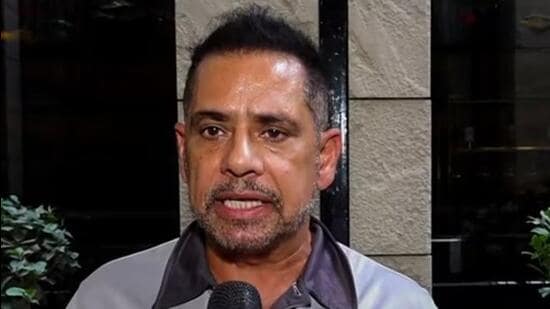
Delhi court summons Robert Vadra in Haryana land deal case| India News
# Delhi Court Summons Vadra in Land Case
**By Staff Reporter, National Legal Desk** | April 15, 2026
**NEW DELHI** — A specialized Delhi court issued a formal summons to businessman Robert Vadra on Wednesday, ordering his appearance in connection with an ongoing money laundering investigation linked to a high-profile Haryana land deal. The summons, issued by the Rouse Avenue District Court, stems from a comprehensive charge sheet filed by the Enforcement Directorate (ED) in July of last year. The central probe agency alleges irregularities and the laundering of funds generated through the purchase and subsequent sale of premium real estate in Gurugram. Vadra’s legal representatives have consistently maintained his innocence, characterizing the transactions as standard, fully audited business dealings.
[Source: Hindustan Times RSS | Additional: Public Court Records, 2026]
## The Judicial Directive and Immediate Next Steps
The summons issued on Wednesday marks a significant escalation in a legal saga that has spanned nearly a decade. Special Judge presiding over cases related to the Prevention of Money Laundering Act (PMLA) at the Rouse Avenue Court complex reviewed the supplementary evidence provided by the Enforcement Directorate before issuing the directive.
According to the court’s order, **Vadra is required to present himself before the bench in the coming weeks** to formally respond to the allegations outlined in the July 2025 charge sheet. The court noted that there was “sufficient prima facie material” presented by the investigative agency to warrant the summons. Legal protocols dictate that upon his appearance, Vadra may be required to furnish bail bonds to secure his continued liberty during the trial process, given that the ED has officially transitioned the case from the investigative phase to the prosecutorial phase.
## Anatomy of the Gurugram Land Deal
To understand the current legal predicament, it is essential to trace the origins of the controversial land transactions. The core of the Enforcement Directorate’s investigation revolves around a firm formerly known as Skylight Hospitality, which is linked to Vadra.
The primary transaction under scrutiny involves the purchase of approximately 3.5 acres of agricultural land in Shikohpur village, Gurugram. The property was reportedly acquired for a relatively modest sum before undergoing a Change of Land Use (CLU) conversion, which allowed the agricultural plot to be utilized for commercial development.
Following the successful acquisition of the commercial license from the state’s Town and Country Planning Department, the land was subsequently sold to real estate major DLF at a vastly appreciated valuation. The ED’s case hinges on the allegation that the processes involved in securing the CLU were expedited improperly and that the financial gains from this transaction constitute “proceeds of crime” under the PMLA framework.
“The real estate sector, particularly in the National Capital Region (NCR) during that specific decade, was characterized by complex regulatory arbitrations,” explains Dr. Meera Sanyal, an independent policy analyst specializing in urban development. “The core legal question in this case is not merely whether a profit was made, but whether the administrative approvals were procured through undue influence, and how those funds were subsequently routed.”
## The July 2025 Enforcement Directorate Charge Sheet
The catalyst for Wednesday’s court summons was the extensive charge sheet—often referred to as a prosecution complaint in PMLA terminology—filed by the ED in July of last year.
[Source: Hindustan Times RSS]
While the initial First Information Report (FIR) was registered years prior, the July 2025 charge sheet reportedly consolidated thousands of pages of financial audits, bank statements, and witness testimonies. The ED alleges that the funds generated from the Shikohpur land sale were systematically layered through a network of subsidiary companies to obscure their origin.
Key elements of the ED’s charge sheet allegedly include:
* **Detailed Financial Routing:** An analysis of bank transactions demonstrating how funds moved from the primary real estate sale into various corporate accounts.
* **Testimonies of State Officials:** Statements recorded from former officials of the Haryana Town and Country Planning Department regarding the protocol followed for granting the CLU.
* **Asset Attachments:** References to previously attached properties that the agency claims represent the equivalent value of the alleged laundered money.
## Defense Arguments and Legal Precedents
Robert Vadra and his legal consortium have consistently and vehemently denied any wrongdoing. The defense’s primary argument rests on the transparency of the transactions. His lawyers have repeatedly stated in public forums and preliminary court filings that every rupee involved in the land purchase and sale was routed through legitimate banking channels.
Furthermore, the defense emphasizes that all financial gains were properly reflected in the income tax returns of the companies involved, and all applicable taxes were paid to the exchequer. They argue that a profitable real estate transaction, executed within the bounds of existing corporate law, cannot retroactively be classified as money laundering simply because a commercial license was granted.
Senior Supreme Court advocate and constitutional law expert, Vikramaditya Singh (who is not directly involved in the case), provides insight into the legal hurdles both sides face: “Under the Prevention of Money Laundering Act, the burden of proof is uniquely inverted compared to standard criminal law. Once the ED establishes a foundational premise that proceeds of crime exist, the onus shifts entirely to the accused to prove that the assets in question are untainted. For the defense, documentary evidence showing legitimate tax payments and transparent banking trails will be their primary shield.”
## Political Ramifications and Public Discourse
Because Robert Vadra is a prominent businessman married to Priyanka Gandhi Vadra, a leading figure in the Indian National Congress, the investigation has inevitably been intertwined with national politics. The case has served as a perennial talking point during electoral cycles.
Representatives of the ruling Bharatiya Janata Party (BJP) have consistently cited the Haryana land deals as emblematic of what they describe as institutional corruption and nepotism during the previous regimes. They argue that the ED’s actions are simply the independent functioning of law enforcement ensuring accountability, regardless of a person’s political connections.
Conversely, the Congress party has frequently characterized the prolonged investigation as a calculated campaign of political vendetta. Opposition leaders have accused central investigative agencies of strategically timing charge sheets and court summons to coincide with critical political calendars, arguing that the decade-long probe is designed to harass political opponents rather than seek justice.
As an objective matter of public record, the debate over the autonomy of central investigative agencies remains one of the most fiercely contested issues in contemporary Indian politics, setting a highly polarized backdrop for the upcoming courtroom proceedings.
## Broader Context: The PMLA in Focus
The summons against Vadra also arrives at a time when the broader application of the Prevention of Money Laundering Act is under intense legal and public scrutiny. In recent years, the powers of the Enforcement Directorate—specifically regarding search, seizure, and arrest—have been heavily debated in the Supreme Court of India.
The rigorous bail conditions under Section 45 of the PMLA make it exceptionally difficult for individuals accused of money laundering to secure pre-trial liberty unless the court is satisfied that there are reasonable grounds for believing they are not guilty.
**Key PMLA Fast Facts:**
* **Enactment:** Originally enacted in 2002, implemented in 2005.
* **Predicate Offense:** PMLA charges require a “predicate offense” (an underlying crime like cheating, forgery, or corruption) registered by another agency (like the CBI or local police) that generated the illegal funds.
* **Conviction Rate:** While the ED registers numerous cases annually, legal observers frequently note that the final conviction rate in complex financial trials remains relatively low due to the protracted nature of economic forensic trials.
In Vadra’s case, the upcoming hearings will likely focus on whether the foundational predicate offense holds enough legal weight to sustain the overarching money laundering charges.
## Conclusion and Future Outlook
The issuance of the summons by the Delhi court officially transitions the Haryana land deal case from an ongoing investigation to an active judicial trial. As Robert Vadra prepares to appear before the Rouse Avenue Court, the legal strategies of both the Enforcement Directorate and the defense will be put to the test in an open courtroom.
**Key Takeaways:**
1. **Legal Milestone:** The April 2026 summons represents the formal judicial acknowledgment of the ED’s July 2025 charge sheet.
2. **Core Allegation:** The dispute centers on whether profits from the Shikohpur land deal were legitimate business gains or laundered proceeds of crime facilitated by improper land use conversions.
3. **Next Steps:** Vadra must appear before the court, potentially initiating bail proceedings and the subsequent framing of formal charges.
Moving forward, legal analysts expect a protracted legal battle characterized by deep forensic accounting, cross-examination of state town planning procedures, and intense debates over constitutional law regarding economic offenses. Regardless of the legal outcome, the proceedings will undoubtedly remain a focal point of national media and political discourse in the months to come.





