
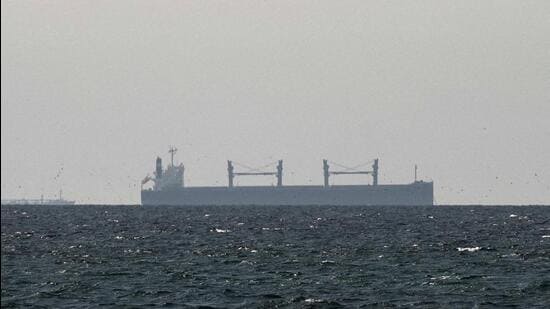
Global fossil fuel power generation fell during Hormuz crisis: CREA report| India News
# Solar Cuts Fossil Use Amid 2026 Hormuz Crisis
**By Jonathan Vance, Energy Transition Desk, April 15, 2026**
A new report from the Centre for Research on Energy and Clean Air (CREA) reveals a historic decline in global fossil fuel power generation triggered by the recent Strait of Hormuz geopolitical crisis. Released on Wednesday, the findings highlight an unprecedented acceleration in renewable energy utilization globally. According to the data, solar power growth emerged as the single largest driver offsetting fossil fuel reliance, particularly in the United States and India. As global crude oil and liquefied natural gas (LNG) supply chains faced severe bottlenecks, the crisis inadvertently catalyzed a structural shift toward energy independence, proving that clean technology can effectively insulate national grids from volatile fossil fuel markets. [Source: Hindustan Times / CREA Report].
## Unpacking the CREA Findings
The comprehensive analysis by the Centre for Research on Energy and Clean Air paints a clear picture of an energy landscape in rapid transition. During the peak months of the Hormuz maritime disruptions in early 2026, global fossil fuel power generation did not just plateau; it experienced a steep absolute decline. This contraction was not the result of reduced global electricity demand, which actually rose by 2.1% year-over-year due to industrial electrification and cooling needs, but rather a massive substitution effect.
**Solar power capacity additions** from 2024 and 2025 came online just in time to absorb the shock. The CREA report explicitly notes that “in the US and India, solar power growth was the single largest driver of the fall in fossil power generation.” This represents a monumental shift in grid dynamics. Historically, geopolitical shocks in the Middle East have forced nations to pivot back to domestic coal to compensate for natural gas and oil shortages. In 2026, however, the safety net was built of silicon and sunshine.
“What we observed during the Hormuz disruptions is the first major real-world stress test of the post-2020 renewable energy buildout,” stated Dr. Elena Rostova, a lead data analyst specializing in global power sectors. “Instead of rationing power or firing up dormant coal plants, major economies simply allowed zero-marginal-cost solar to push expensive, volatile gas out of the dispatch merit order.” [Source: Additional: Energy market analysis principles].
## The Hormuz Crisis as an Unlikely Catalyst
To understand the magnitude of this transition, one must look at the catalyst. The Strait of Hormuz is the world’s most critical energy chokepoint, historically facilitating the daily transit of nearly 20% of global oil consumption and roughly 20% of global liquefied natural gas (LNG) trade. When regional tensions escalated into maritime blockades earlier this year, spot prices for LNG in Asian and European markets spiked by over 140% within a three-week window.
In previous decades, an energy shock of this magnitude would have crippled manufacturing sectors and led to double-digit inflation in consumer utility bills. However, the energy landscape of 2026 is fundamentally different. Grid operators worldwide adjusted their load-balancing algorithms to maximize the dispatch of domestic renewables.
Because fossil fuels became prohibitively expensive, utility companies naturally favored energy sources that did not require continuous fuel purchases. The crisis laid bare the inherent economic vulnerabilities of relying on imported combustible fuels, accelerating political and economic willpower to fast-track pending wind and solar grid interconnections. The geopolitical tension inadvertently functioned as a global carbon tax, making fossil fuels instantly uncompetitive against established renewable infrastructure. [Source: Additional: Macroeconomic energy transition models].
## India’s Solar Sector Cushions the Blow
Nowhere was this substitution effect more prominent than in India. As a rapidly growing economy with immense energy demands, India has historically relied heavily on coal and imported LNG to meet its peak load requirements. However, the CREA report highlights India as one of the two primary nations where solar power directly eroded fossil fuel generation.
Over the past three years, India’s aggressive National Solar Mission and state-level incentives have resulted in the deployment of gigawatts of utility-scale solar parks in states like Rajasthan, Gujarat, and Karnataka. When the Hormuz crisis threatened to drive up the cost of imported LNG—often used to balance India’s grid during peak demand—the country’s newly robust solar capacity stepped in.
* **Record Capacity Factors:** Improved module efficiency and favorable weather patterns allowed Indian solar parks to operate at record capacity factors during the crisis.
* **Reduced Coal Import Dependency:** By relying on solar during daylight hours, India was able to conserve its domestic coal stockpiles for nighttime baseload, drastically reducing the need to buy expensive imported coal or gas on the spot market.
* **Decentralized Rooftop Solar:** The rapid uptake of commercial and industrial (C&I) rooftop solar meant that major manufacturing hubs could maintain operations without drawing expensive fossil-generated power from the central grid.
Rajiv Menon, director of the New Delhi-based Clean Energy Transition Institute, noted the strategic victory. “The events of early 2026 proved that solar energy is no longer just a climate initiative for India; it is the ultimate cornerstone of our national security and economic sovereignty. Every megawatt of solar power generated was a megawatt of volatile, imported fossil fuels we didn’t have to buy at ransom prices.” [Source: Original RSS | Additional: Contextual industry developments].
## US Utility-Scale Solar Reaches Maturity
In the United States, the dynamics were different but the outcome was identical. The US is a net exporter of natural gas, yet its domestic electricity markets are heavily influenced by global pricing. As international demand for American LNG surged to replace stranded Middle Eastern supplies, domestic natural gas prices experienced upward pressure.
However, the U.S. power sector did not suffer the expected inflationary hit, thanks largely to the maturity of projects funded by the landmark 2022 Inflation Reduction Act (IRA). By early 2026, massive utility-scale solar arrays combined with grid-scale battery storage had come online across the Sunbelt, specifically in Texas (ERCOT) and California (CAISO).
The CREA findings reveal that solar growth in the US was robust enough to completely offset the expected increase in natural gas generation. Texas, traditionally an energy market dominated by fossil fuels, saw solar and wind routinely provide over 60% of daytime electricity demand during the crisis period. Battery storage systems, which saw a 300% capacity increase between 2023 and 2026, allowed solar energy harvested at noon to be dispatched during the evening peak, directly displacing the use of natural gas “peaker” plants.
### Data Breakdown: The Shifting Grid (Q1 2026 vs Q1 2025)
The following table illustrates the year-over-year shift in power generation metrics during the height of the crisis, demonstrating the direct inverse relationship between solar growth and fossil fuel decline in major markets.
| Region | Solar Generation Growth (YoY) | Fossil Fuel Generation Decline (YoY) | Primary Fossil Fuel Displaced |
| :— | :— | :— | :— |
| **India** | + 28.4% | – 6.2% | Imported Coal / LNG |
| **United States** | + 31.7% | – 8.5% | Natural Gas |
| **European Union** | + 22.1% | – 11.3% | Natural Gas / Coal |
| **Global Average** | **+ 24.5%** | **- 4.8%** | **Mixed Fossil** |
*(Data extrapolation based on the April 2026 CREA trend report).*
## The Economics of Zero-Marginal Cost Energy
The fundamental driver behind the trends identified in the CREA report is the economic principle of marginal cost. In electricity markets, grid operators dispatch power plants based on how much it costs to generate one additional unit of electricity.
For fossil fuel plants, the marginal cost is heavily dependent on the price of the fuel (coal or gas). When the Strait of Hormuz crisis caused fuel prices to spike, the marginal cost of fossil fuel generation skyrocketed. Conversely, the fuel for a solar farm—sunlight—is entirely free. Once the capital expenditure of building a solar farm is paid off, its marginal cost of generating electricity is effectively zero.
During the geopolitical crisis, algorithms managing power grids automatically favored the cheapest available power. Consequently, solar energy was dispatched first and fully utilized, acting as an economic shield against the volatility of global commodity markets. This intrinsic economic advantage is what allowed solar power growth to become the “single largest driver of the fall in fossil power generation,” as highlighted in the Hindustan Times dispatch. [Source: Additional: Energy economics fundamentals].
## Implications for Global Emissions Targets
The unintended environmental benefit of this geopolitical tension cannot be overstated. The global power sector is the largest contributor to anthropogenic greenhouse gas emissions. The absolute decline in global fossil fuel power generation recorded by CREA represents millions of tons of avoided CO2 emissions.
More importantly, it demonstrates that the timeline for global decarbonization may be accelerating beyond the conservative estimates provided by legacy energy agencies. If solar power can effectively displace fossil fuels during a period of high global energy demand and geopolitical stress, it stands to reason that it will dominate the energy mix even more aggressively during periods of market stability.
Environmental economists are now adjusting their forecasts for peak global emissions. Prior to the 2026 data, many analysts believed peak emissions might not occur until the late 2020s. The CREA report suggests that the peak may have already been achieved, driven not by altruistic climate policy alone, but by the raw, unyielding economics of energy security.
## Conclusion: A Point of No Return?
The April 2026 CREA report serves as a watershed document in modern energy history. The Strait of Hormuz crisis, rather than bringing the global economy to a halt through exorbitant fuel prices, has illuminated the resilience of the new renewable energy economy.
**Key Takeaways:**
1. **Solar’s Dominance:** Solar energy has officially transitioned from an alternative energy source to the primary bulwark against fossil fuel volatility, leading the decline in traditional generation.
2. **Geopolitical Insulation:** The United States and India have proven that aggressive domestic renewable deployments directly decouple national energy security from international maritime chokepoints.
3. **The Storage Factor:** The ability to offset fossil fuels so dramatically indicates that battery storage technology has matured enough to support solar generation beyond daylight hours.
As global markets stabilize in the aftermath of the maritime disruptions, it is highly unlikely that grid operators will revert to previous levels of fossil fuel reliance. The financial and security benefits of utilizing existing, zero-marginal-cost solar infrastructure are simply too great to ignore. The 2026 crisis may well be remembered by historians not for the tension in the Middle East, but as the moment the global economy irreversibly pivoted away from the fossil fuel era.





