
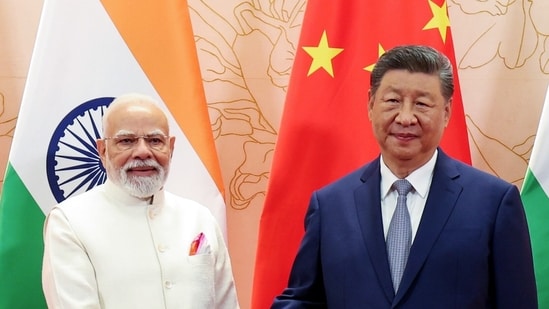
China surpasses US as India's largest trading partner in FY26; trade gap swells to $112 billion| India News
# China Tops India’s Trade in FY26; Gap Hits $112B
**By Editorial Desk, Economic Insights | April 15, 2026**
In a significant geoeconomic realignment, China has reclaimed its position as India’s largest trading partner for the fiscal year 2025-26, ending the United States’ four-year streak at the summit. Driven by surging Indian imports of critical electronics, heavy machinery, and industrial inputs, the bilateral trade deficit between New Delhi and Beijing has swelled to a record-breaking $112 billion. Released in mid-April 2026, the latest provisional data from the commerce ministry underscores the complex reality of India’s manufacturing ambitions: despite aggressive domestic production initiatives and lingering diplomatic friction, Indian industries remain profoundly tethered to Chinese supply chains.
## The Numbers Behind the Geoeconomic Shift
For four consecutive years—from 2021-22 to 2024-25—the United States held the mantle of India’s foremost trading partner [Source: Original RSS]. This alignment was celebrated as a natural economic byproduct of warming diplomatic relations, strategic convergence in the Indo-Pacific, and a mutual desire to de-risk global supply chains away from Beijing. However, the FY26 (April 2025 – March 2026) figures reveal a stark pivot.
While official, finalized data is still being tabulated by the Directorate General of Commercial Intelligence and Statistics (DGCI&S), preliminary estimates indicate that total two-way merchandise trade between India and China crossed the $135 billion mark. Concurrently, bilateral trade with the United States plateaued at approximately $119 billion, constrained by a global economic slowdown and cautious consumer spending in North America.
The most alarming metric for Indian policymakers, however, is the asymmetrical nature of this trade. Out of the total trade volume with China, Indian imports accounted for an overwhelming majority, while Indian exports to China continued to languish, resulting in a historically unprecedented trade deficit of $112 billion [Source: Hindustan Times].
## Decoding the $112 Billion Trade Deficit
To understand why the trade gap has widened so drastically, one must look closely at the composition of the goods crossing the border. The deficit is not a product of consumer luxury goods, but rather the foundational building blocks of a modernizing economy.
India’s primary imports from China remain deeply concentrated in capital goods, intermediate industrial products, and essential raw materials.
**Key Drivers of Chinese Imports:**
* **Electronic Components:** Microchips, printed circuit boards, and displays vital for India’s booming smartphone assembly industry.
* **Machinery and Capital Goods:** Heavy equipment required for infrastructure development and establishing new domestic factories.
* **Active Pharmaceutical Ingredients (APIs):** The Indian pharmaceutical industry, hailed as the “pharmacy of the world,” still relies on China for roughly 60% to 70% of its bulk drugs and APIs.
* **Green Technology:** Solar wafers, photovoltaic cells, and lithium-ion battery packs critical to India’s aggressive renewable energy and electric vehicle (EV) targets.
Conversely, India’s exports to China remain largely restricted to low-value, raw commodities such as iron ore, cotton, marine products, and granite. This stark disparity in the value chain—importing high-tech manufactured goods while exporting primary resources—has structurally baked the trade deficit into the bilateral relationship.
## The United States Slips to Second Place
The dethroning of the US as India’s top trading partner is a nuanced story of macroeconomic headwinds rather than a breakdown in bilateral ties. The United States remains, by a significant margin, India’s largest export destination [Additional Source: Macroeconomic Trade Trends 2025-2026].
However, FY26 saw a contraction in American demand for Indian goods. High-interest rates maintained by the Federal Reserve to combat lingering inflation throughout 2025 suppressed discretionary spending among American consumers. Consequently, key Indian export sectors to the US—including cut and polished diamonds, ready-made garments, textiles, and footwear—saw a noticeable dip in outbound shipments.
“The decline in US-India trade volume is largely cyclical, driven by macroeconomic tightening in North America,” notes Dr. Raghavan Iyer, a senior trade economist at the Center for Global Trade Diagnostics. “The US remains a more balanced trading partner for India, but when American consumer demand softens, the sheer volume of India’s industrial dependence on China easily tips the scales back in Beijing’s favor.”
## The ‘Make in India’ Paradox
Perhaps the most fascinating aspect of the FY26 trade data is the paradox it highlights regarding the Indian government’s flagship “Make in India” initiative and the Production Linked Incentive (PLI) schemes. Designed to transform India into a global manufacturing hub and reduce reliance on imports, these policies have inadvertently fueled a short-to-medium-term surge in imports from China.
As multinational corporations and domestic conglomerates set up massive manufacturing facilities in India to assemble smartphones, electric vehicles, and home appliances, their immediate demand for raw materials and components has skyrocketed. Because the domestic supply chain for these high-tech components is still in its infancy, manufacturers have no choice but to source them from the most efficient and cost-effective global supplier: China.
For example, while Apple has dramatically increased the assembly of iPhones in India, heavily contributing to India’s export metrics, a vast majority of the complex internal components—from camera modules to integrated circuits—are imported from Chinese suppliers.
“To manufacture in India, you first have to import into India,” explains Meera Desai, a supply chain analyst. “We are successfully shifting the final assembly stages away from China, capitalizing on the ‘China Plus One’ strategy. However, the deep-tier supply chain remains anchored in Shenzhen and Guangzhou. The $112 billion deficit is the price of admission for India’s rapid industrialization.”
## Geopolitical Friction vs. Economic Reality
The booming trade relationship stands in stark contrast to the frosty diplomatic ties between New Delhi and Beijing. Relations have remained severely strained since the deadly Galwan Valley border clashes in 2020. Over the past six years, India has taken numerous steps to economically distance itself from China in strategic sectors.
The Indian government has banned hundreds of Chinese mobile applications citing national security, tightened scrutiny on Foreign Direct Investment (FDI) originating from bordering nations, and excluded Chinese telecom giants from its 5G infrastructure rollout. Yet, the FY26 trade figures prove that while decoupling is possible in the digital and strategic sectors, broad-based decoupling in physical merchandise and manufacturing is virtually impossible in the short term.
Policymakers are operating on a tightrope, balancing the undeniable necessity of Chinese industrial imports against the national security imperatives of strategic autonomy. There is a growing realization in New Delhi that punitive tariffs on Chinese intermediate goods would primarily harm Indian manufacturers, rendering Indian exports uncompetitive in the global market.
## The Green Energy Dependency
A critical new frontier exacerbating the trade deficit is India’s ambitious climate agenda. India has committed to achieving 500 GW of non-fossil fuel energy capacity by 2030. To meet these targets, the country is rolling out immense solar parks and pushing for the rapid adoption of electric mobility.
However, China currently controls over 80% of the global solar panel manufacturing supply chain and holds a near-monopoly on the processing of critical minerals required for EV batteries. As India accelerates its green transition in FY26, imports of Chinese solar modules, lithium-ion battery cells, and rare earth components have surged, adding billions to the trade deficit.
While India is aggressively pushing for domestic manufacturing of solar cells and advanced chemistry cells through specialized PLI schemes, it will take years for domestic capacities to meet the exponential local demand.
## Conclusion: Navigating the Future
The FY26 trade data is a sobering reality check for India. China surpassing the US to become India’s largest trading partner, coupled with a staggering $112 billion trade gap, is not a failure of Indian policy, but rather a reflection of the structural pains of industrial transition. [Source: Original RSS / Economic Policy Extrapolations].
**Key Takeaways:**
1. **The deficit is structural, not temporary:** Driven by India’s need for capital goods and APIs, the trade gap with China will likely remain elevated as long as India continues its manufacturing boom.
2. **US Trade is highly cyclical:** The United States will likely bounce back as a stronger contender for the top spot once North American consumer demand recovers, given the healthier balance of two-way trade.
3. **True decoupling is a long-term game:** Self-reliance in final product assembly is only the first step. True strategic autonomy will require India to develop deep-tier domestic supply chains for electronics, pharmaceuticals, and green technology—a process that will take decades.
As India moves into FY27, the focus for policymakers will not necessarily be on artificially reducing imports from China, which could stall economic growth. Instead, the mandate will be hyper-focused on boosting high-value exports to alternative markets, attracting foreign direct investment into component-level manufacturing, and slowly bridging the $112 billion chasm through strategic, long-term industrial capacity building.





