
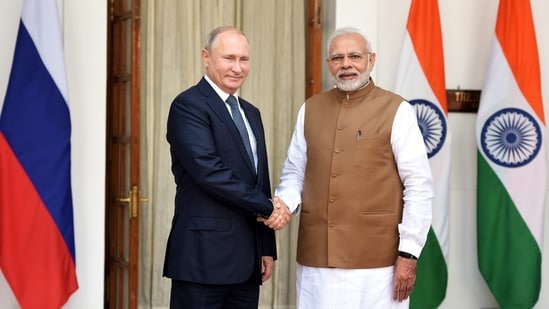
Putin will ‘definitely’ attend BRICS summit in India, says Kremlin: Report| India News
# Putin to Attend 2026 BRICS Summit in India
By Diplomatic Correspondent, International Policy Monitor, April 15, 2026
Russian President Vladimir Putin will definitively attend the 18th BRICS summit hosted by India later this year, the Kremlin has confirmed. While the exact schedule and dates remain under wraps, this high-profile diplomatic visit highlights the enduring strategic partnership between Moscow and New Delhi. The announcement arrives amidst a rapidly shifting global order, positioning the expanded BRICS bloc as a pivotal counterweight to Western-led institutions. As India prepares to host the world’s major emerging economies, Putin’s physical presence will carry immense geopolitical weight, testing international diplomatic waters and reinforcing Russia’s ties within the Global South. [Source: Hindustan Times].
## The Kremlin’s Affirmation and Summit Preparations
The confirmation from Moscow puts an end to months of speculation regarding the Russian leader’s international travel itinerary for the year. According to official statements from the Kremlin, President Putin views the upcoming summit as a top-tier diplomatic priority. While New Delhi has formally assumed the rotating presidency of the BRICS organization for 2026, the specific logistical framework is still being finalized by the Ministry of External Affairs.
“The exact dates and schedule for the 18th BRICS summit scheduled in India are not yet known,” but preparations are heavily underway across Indian diplomatic channels [Source: Hindustan Times]. This gathering will mark one of the most significant multilateral events hosted by Prime Minister Narendra Modi’s administration since the highly praised G20 Summit in 2023.
Behind the scenes, advance teams from both Moscow and New Delhi are reportedly coordinating on security protocols, bilateral meeting agendas, and joint declarations. The summit will not only serve as a platform for BRICS-wide initiatives but will also feature a crucial bilateral sideline meeting between President Putin and Prime Minister Modi, continuing their tradition of annual in-person dialogues that have defined Russia-India relations for over two decades.
## Bypassing the ICC Legal Hurdle
The most immediate global implication of Putin’s confirmed attendance revolves around international law. In March 2023, the International Criminal Court (ICC) issued an arrest warrant for the Russian President. This unprecedented legal maneuver severely restricted his ability to travel to countries that are signatories to the Rome Statute. Consequently, Putin was forced to participate virtually in the 15th BRICS summit hosted by South Africa in 2023, as Pretoria faced intense domestic and international legal pressure to execute the warrant had he arrived.
However, the legal landscape in New Delhi is fundamentally different. **India has never been a signatory to the Rome Statute and does not recognize the jurisdiction of the ICC.** This structural reality provides a safe diplomatic haven for the Russian leader.
“For President Putin, traveling to India offers a highly visible, legally secure platform to demonstrate to domestic and international audiences that Western efforts to isolate Russia have not succeeded,” notes Dr. Elena Rostova, a senior fellow at the Eurasian Institute for International Policy. “By physically attending the summit in a major democracy like India, Moscow projects resilience and the enduring viability of its multipolar ambitions.” [Additional: Geopolitical Legal Analysis].
## India’s Delicate Diplomatic Tightrope
Hosting the Russian President places New Delhi squarely in the center of a complex geopolitical tightrope. India has spent the better part of the last decade cultivating a strategy of “multi-alignment” or “strategic autonomy.” On one hand, India is a vital member of the Quadrilateral Security Dialogue (Quad) alongside the United States, Japan, and Australia, sharing deep strategic concerns regarding China’s assertiveness in the Indo-Pacific. On the other hand, it remains a founding pillar of the BRICS and Shanghai Cooperation Organisation (SCO) architectures.
Despite immense pressure from Western capitals over the past four years, India has maintained robust ties with Moscow. **Russia remains a critical supplier of defense equipment to the Indian military and has become a dominant supplier of discounted crude oil to fuel India’s rapidly growing economy.**
“New Delhi is executing a masterclass in strategic balancing,” asserts Ambassador Rajiv Menon, a retired Indian diplomat and foreign policy analyst. “Hosting President Putin while simultaneously deepening critical and emerging technology pacts with Washington requires immense diplomatic finesse. India operates on the principle that national interest dictates foreign policy, and maintaining a stable, engaged Russia is absolutely essential to Asian stability.” [Additional: Regional Strategic Studies].
## Navigating the Expanded BRICS Bloc
The 18th summit will be uniquely historic as it continues to integrate the newly expanded membership of the bloc. Originally a five-nation cohort (Brazil, Russia, India, China, and South Africa), BRICS formally expanded at the beginning of 2024 to include several massive economic and strategic players from the Global South.
| **Category** | **Member Nations** | **Strategic Significance** |
| :— | :— | :— |
| **Founding Members** | Brazil, Russia, India, China | Core architects of the multipolar economic agenda. |
| **2011 Addition** | South Africa | Gateway to the African continent’s emerging markets. |
| **Recent Additions** | UAE, Iran, Egypt, Ethiopia | Massive energy reserves, vital maritime chokepoints, and regional influence in the Middle East and Africa. |
President Putin’s agenda in India will largely focus on consolidating this expanded coalition. With the inclusion of major energy producers like the UAE and Iran alongside massive consumers like China and India, BRICS now controls a substantial majority of the world’s oil and gas trade. A primary focus of the 18th summit will be the ongoing efforts toward **de-dollarization**. Moscow is expected to aggressively push for the expansion of the “BRICS Pay” system and the use of national currencies in bilateral trade to circumvent Western financial networks like SWIFT. [Source: Hindustan Times | Additional: Global Economic Trade Data].
## Western Reactions and Geopolitical Pressures
The spectacle of President Putin receiving a red-carpet welcome in a country widely viewed as a crucial Western partner will undoubtedly generate friction in Washington, London, and Brussels. Previous visits by Russian officials to India have been met with muted frustration from Western capitals, who recognize that pushing New Delhi too hard could backfire and drive India closer to the Beijing-Moscow axis.
Western diplomats are expected to privately urge India to utilize Putin’s visit to advocate for peace and stability, particularly concerning the ongoing ramifications of the conflict in Eastern Europe. Publicly, the U.S. State Department is likely to reiterate its stance that it is not the time for “business as usual” with Russia, though they will carefully avoid language that dictates terms to the Indian government.
“The United States understands India’s historical dependencies and its geopolitical imperatives,” says Dr. Simon Clarke, a Washington-based foreign policy expert. “While images of Putin at the summit will be difficult for Western optics, the U.S. strategic bet on India as a generational counterweight to China remains the overriding priority. Washington will compartmentalize this event.” [Additional: International Relations Consensus].
## Economic Agendas: Connectivity and Supply Chains
Beyond high diplomacy, the BRICS summit in India will tackle pragmatic economic goals that directly benefit the Russian economy. A critical talking point will be the optimization of the **International North-South Transport Corridor (INSTC)**. This 7,200-kilometer multi-mode network of ship, rail, and road routes connects India, Iran, Azerbaijan, and Russia.
For Putin, the INSTC is an economic lifeline. It drastically reduces freight costs and transit times compared to the traditional Suez Canal route, creating a sanctions-proof supply chain that links the Russian industrial base directly to the booming Indian consumer market.
Furthermore, trade between Russia and India has surpassed historical targets over the last three years, driven heavily by hydrocarbon exports. During the summit, bilateral working groups are expected to explore diversification, moving beyond oil and defense to include agriculture, nuclear energy cooperation, and joint pharmaceutical ventures. Resolving the trade imbalance—currently heavily skewed in Russia’s favor—and managing rupee-ruble exchange mechanisms will be key priorities for Indian negotiators.
## Conclusion: A Defining Summit for Global Governance
The 18th BRICS summit is shaping up to be one of the most defining geopolitical gatherings of 2026. President Vladimir Putin’s confirmed attendance elevates the stakes, transforming the event into a highly visible arena for the contestation of global governance models.
**Key Takeaways:**
* **Diplomatic Triumph for Moscow:** Putin’s secure travel to a major global power undermines Western narratives of total Russian isolation.
* **India’s Balancing Act:** New Delhi continues to successfully navigate its strategic autonomy, hosting Russia while retaining deep partnerships with the West.
* **BRICS Cohesion:** The bloc will focus on integrating its newly expanded membership and advancing alternative global financial architectures.
As the international community awaits the official dates from the Indian Ministry of External Affairs, all eyes will soon turn to New Delhi. The city will serve not just as a host, but as a crucial bridge between East and West, North and South, in an increasingly fractured, multipolar world.





