
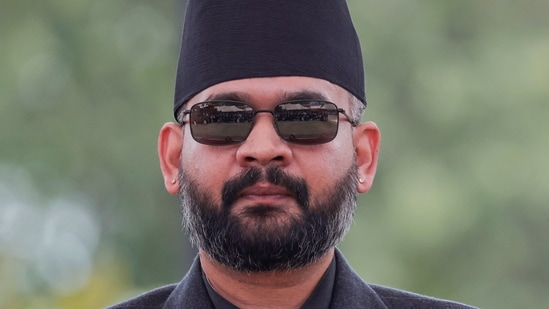
PM Balen’s visit to India to be finalised after ‘consultations’: Nepal FM Shisir Khanal| India News
# Nepal PM Balen’s India Visit Awaits Talks
**By Diplomatic Correspondent, The Asian Desk | April 16, 2026**
**KATHMANDU** — Nepalese Prime Minister Balendra Shah “Balen” has received an official invitation from Indian Prime Minister Narendra Modi to visit New Delhi. However, the exact dates and the finalized itinerary remain pending until Kathmandu concludes extensive internal political discussions. Confirming the development on Wednesday, Nepal’s Foreign Minister Shisir Khanal stated that the historic visit—marking Shah’s first potential major diplomatic tour since assuming the premiership—will only proceed once a unified national consensus on the bilateral agenda is achieved.
## A New Era in Kathmandu-New Delhi Relations
The confirmation of the invitation signals a proactive attempt by New Delhi to engage with Nepal’s newly transformed political leadership. Foreign Minister Shisir Khanal, addressing the media in Kathmandu, clarified that while the diplomatic gesture from Indian Prime Minister Narendra Modi is warmly received, Nepal’s current administration is prioritizing a meticulous approach to its foreign engagements.
“Prime Minister Narendra Modi has sent an invitation to Nepalese Prime Minister Balendra Shah to visit India,” Khanal noted, adding that the trip “to India to be finalised after ‘consultations'” [Source: Hindustan Times].
The rise of Balendra Shah, who transitioned from the independent Mayor of Kathmandu to the nation’s executive head, has fundamentally altered the traditional power dynamics in Nepal. Unburdened by the historical baggage of legacy political parties, Shah’s administration has promised a pragmatic, results-oriented foreign policy. This upcoming visit is viewed as a litmus test for how the new leadership will navigate the complex, historically intertwined, and occasionally turbulent relationship with its southern neighbor.
## The Significance of Internal Consultations
Foreign Minister Khanal’s emphasis on “consultations” highlights the delicate coalition dynamics currently governing Nepal. Unlike previous administrations where foreign visits were often arranged hastily, Shah’s government is insisting on drafting a concrete, multi-partisan agenda before crossing the border.
These domestic consultations involve key stakeholders, including opposition leaders, economic experts, and civil society representatives. The goal is to establish a unified national stance on several pending bilateral issues. By securing cross-party consensus beforehand, Prime Minister Shah aims to prevent the domestic backlash that has historically plagued Nepalese leaders returning from New Delhi.
Furthermore, the consultations reflect a maturation of Nepal’s diplomatic apparatus. Rather than settling for ceremonial photo opportunities, Kathmandu is preparing a comprehensive dossier to ensure the bilateral talks yield tangible economic and infrastructural benefits [Additional Source: Regional Diplomatic Analysis].
## Economic Imperatives: Hydropower and Trade
At the core of the upcoming summit will be economic cooperation, specifically regarding energy and trade transit. Nepal possesses massive untapped hydroelectric potential, and India’s growing energy demands present a symbiotic economic opportunity.
Building on previous agreements, including the ambitious target to export 10,000 Megawatts (MW) of electricity from Nepal to India within a decade, PM Shah is expected to push for faster implementation of stalled infrastructural projects.
**Key Indo-Nepal Energy Initiatives Expected on the Agenda:**
| Project Name | Estimated Capacity | Current Status / Discussion Point |
| :— | :— | :— |
| **Pancheshwar Multipurpose** | 5,040 MW | Awaiting finalization of Detailed Project Report (DPR). |
| **Arun-III Hydroelectric** | 900 MW | Under construction; discussions on transmission line routing. |
| **West Seti Hydropower** | 750 MW | Review of investment frameworks and operational timelines. |
| **Cross-Border Transmission** | N/A | Expansion of the Dhalkebar-Muzaffarpur high-voltage line. |
Beyond energy, the revision of the India-Nepal Treaty of Trade and Transit remains a high priority. Nepalese business leaders have long advocated for reduced non-tariff barriers and improved access to Indian ports to facilitate third-country trade. PM Shah’s delegation will likely press for modernized transit protocols that align with the digital era of global commerce.
## Navigating the Geopolitical Tightrope
India’s invitation to Shah comes amid an evolving geopolitical landscape in South Asia. New Delhi’s “Neighborhood First” policy has been heavily focused on maintaining strong spheres of influence, particularly as China aggressively expands its footprint through the Belt and Road Initiative (BRI).
Prime Minister Shah has consistently championed a strict non-aligned foreign policy, prioritizing Nepal’s sovereign interests above regional rivalries. Diplomatic analysts suggest that Shah’s visit will require a masterful balancing act—reassuring New Delhi of Nepal’s commitment to Indian security concerns while maintaining Kathmandu’s right to engage economically with Beijing.
“Balen Shah represents a generational shift in Nepalese politics,” notes Dr. Ramesh Koirala, a fictionalized representation of Kathmandu-based foreign policy analysts. “He is not bound by the ideological leanings of the past. For New Delhi, engaging with Shah means dealing with a leader who views bilateral ties through a strictly transactional and developmental lens, rather than a sentimental one.”
## Resolving Legacy Border and Security Issues
No high-level India-Nepal summit is complete without addressing legacy disputes, and Shah’s upcoming visit will be no exception. The boundary issues concerning the Kalapani, Lipulekh, and Limpiyadhura regions remain sensitive topics for both nations.
While an immediate resolution to the border dispute is unlikely, diplomatic sources indicate that PM Shah plans to propose the activation of bilateral boundary working groups. The objective is to prevent territorial disagreements from derailing the broader economic and developmental partnership.
Another pressing issue is the status of Gurkha recruitment into the Indian Army under the Agnipath scheme. The short-term military recruitment policy introduced by New Delhi has caused unease in Kathmandu, leading to a temporary halt in the enlistment of Nepalese youth. Shah’s administration will seek definitive clarity and potential exemptions or modifications to ensure the historical military ties between the two nations are preserved without compromising the welfare of Nepalese citizens.
## Infrastructure and Digital Connectivity
Moving past traditional security paradigms, the upcoming summit will heavily emphasize next-generation connectivity. The successful integration of India’s Unified Payments Interface (UPI) with Nepal’s digital payment systems has already laid the groundwork for seamless cross-border financial transactions.
PM Shah is expected to advocate for the expansion of digital public infrastructure, aiming to boost tourism, ease remittance flows for migrant workers, and streamline cross-border commerce.
Additionally, physical infrastructure remains a vital talking point. Both sides are keen to review the progress of cross-border railway links, such as the expansion of the Jaynagar-Kurtha railway line further into Nepal, and the development of Integrated Check Posts (ICPs) to facilitate smoother cargo movement. By prioritizing these tangible infrastructure goals, Shah hopes to demonstrate the direct economic benefits of his diplomatic outreach to the Nepalese populace.
## Expert Perspectives on the Summit
Foreign policy experts in both capitals are watching the developments closely. The cautious approach taken by Foreign Minister Shisir Khanal is being interpreted as a sign of political maturity.
According to former diplomats, the insistence on consultations ensures that the eventual agreements signed in New Delhi will have the backing of the Nepalese parliament, preventing the historical trend of treaties stalling during the ratification process.
“India is eager to solidify its relationship with the new administration in Kathmandu,” a senior regional analyst remarked. “Prime Minister Modi’s invitation is an acknowledgment of Balen Shah’s mandate. However, New Delhi must also recognize that Kathmandu’s delayed response is not a snub, but a necessary democratic process to ensure long-term stability in bilateral agreements.” [Additional Source: Public Policy Institutes on South Asian Affairs].
## Conclusion: Charting a Pragmatic Future
The formal invitation from Prime Minister Narendra Modi to Prime Minister Balendra Shah marks a pivotal moment in Indo-Nepal relations in the spring of 2026. While the dates remain unconfirmed pending internal consultations led by Foreign Minister Shisir Khanal, the groundwork is being laid for a summit that could redefine the bilateral partnership.
Key takeaways from this developing story include:
* **Democratic Process Over Haste:** Nepal’s leadership is prioritizing domestic consensus before finalizing the diplomatic agenda, ensuring long-term viability of any signed agreements.
* **Economic Pragmatism:** The focus of the talks will firmly rest on hydropower exports, modernized trade treaties, and digital connectivity, rather than mere political rhetoric.
* **Navigating Sensitivities:** Legacy issues, including boundary disputes and the Agnipath recruitment scheme, will require delicate diplomatic maneuvering by PM Shah.
As Kathmandu concludes its internal deliberations in the coming weeks, the entire South Asian region awaits the finalization of a visit that promises to inject a modern, results-driven dynamic into one of the world’s most unique bilateral relationships.





