
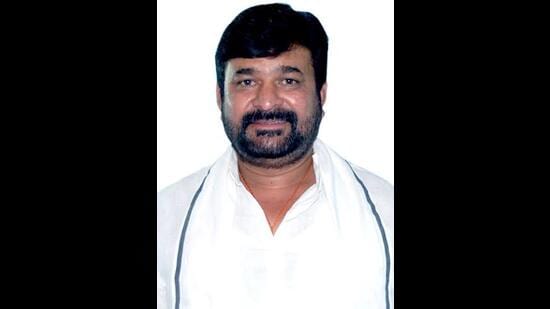
Court convicts Congress MLA in 2016 murder case in Karnataka| India News
# MLA Convicted in 2016 Karnataka Murder
**By Rajesh Menon, India Political Desk**
**April 16, 2026**
On Thursday, April 16, 2026, a special court in Karnataka convicted Congress MLA Vinay Kulkarni and 18 co-accused in the brutal 2016 murder of BJP leader Yogesh Gowda. The sweeping verdict brings a decisive end to a grueling ten-year legal battle that evolved from a controversial local police inquiry into a high-profile Central Bureau of Investigation (CBI) probe. Gowda, a prominent Dharwad Zilla Panchayat member, was assassinated over a bitter political rivalry. This landmark judicial ruling not only delivers long-awaited closure to the victim’s family but also triggers significant political shockwaves across Karnataka, ensuring Kulkarni’s immediate disqualification from the state legislative assembly. [Source: Hindustan Times | Additional: Public Court Records]
## A Decade-Long Pursuit of Justice
The origins of this sprawling criminal case trace back to the morning of June 15, 2016. Yogesh Gowda, an ascendant political figure within the Bharatiya Janata Party (BJP) and a sitting member of the Dharwad Zilla Panchayat, was managing his gym in Saptapur, Dharwad. In a brazen daylight attack, unidentified armed assailants stormed the premises and hacked Gowda to death.
The assassination immediately sparked outrage and protests across the Hubballi-Dharwad twin cities. Gowda’s family, particularly his brother Gurunath Gowda, alleged from the outset that the murder was a meticulously orchestrated political hit designed to eliminate a rising challenger. Suspicion quickly centered on Vinay Kulkarni, who was then a powerful cabinet minister in the state government and a heavyweight leader in the region.
Initial investigations by the local police resulted in the arrest of several individuals, but the Gowda family and the state BJP leadership continuously expressed dissatisfaction, accusing the state apparatus of actively shielding the true mastermind behind the conspiracy. The local police characterized the murder as the tragic outcome of a localized real estate dispute, a narrative that the victim’s family vehemently rejected.
## The CBI Investigation and Key Breakthroughs
The trajectory of the investigation shifted dramatically following a change in the state’s political leadership. In 2019, the newly formed BJP state government transferred the case to the Central Bureau of Investigation (CBI), citing the need for an impartial inquiry free from local political interference.
The premier investigative agency undertook a massive forensic and operational review of the case. By tracing financial transactions, analyzing call data records from the time of the murder, and securing testimonies from key witnesses who had previously been intimidated into silence, the CBI dismantled the original local police narrative.
In a massive breakthrough in November 2020, the CBI officially arrested Vinay Kulkarni, formally charging him with criminal conspiracy and murder. The agency’s charge sheet explicitly detailed how Kulkarni, feeling his political dominance threatened by Gowda’s rising popularity in the Zilla Panchayat, allegedly conspired with his uncle, Chandrashekhar Indi, and several local enforcers to eliminate the BJP leader.
## Legal Proceedings and the Final Verdict
The trial, conducted in a designated Special Court for MPs and MLAs, was a protracted affair characterized by fierce legal maneuvering. Kulkarni spent nine months in judicial custody before the Supreme Court granted him conditional bail in August 2021. A highly unusual condition of his bail was a strict prohibition from entering the Dharwad district without prior judicial permission, to prevent witness tampering.
Remarkably, Kulkarni successfully contested the 2023 Karnataka State Assembly elections from outside his constituency, managing his campaign remotely to win the Dharwad seat. However, his electoral success did not shield him from judicial scrutiny.
On April 16, 2026, the Special Court delivered its voluminous judgment. The court found **Vinay Kulkarni and 18 accomplices guilty** of charges including murder, criminal conspiracy, and the destruction of evidence. The judge meticulously noted the prosecution’s success in establishing an unbroken chain of circumstantial and direct evidence linking the political leader to the hitmen.
### Key Timeline of the Yogesh Gowda Murder Case
| Date | Event Description |
| :— | :— |
| **June 15, 2016** | BJP leader Yogesh Gowda is murdered at his gym in Dharwad. |
| **September 2019** | Karnataka government hands the investigation over to the CBI. |
| **November 5, 2020** | The CBI arrests Congress leader Vinay Kulkarni. |
| **August 2021** | Supreme Court grants bail to Kulkarni, barring his entry to Dharwad. |
| **May 2023** | Kulkarni wins the Dharwad Assembly seat while barred from the district. |
| **April 16, 2026** | Special Court convicts Kulkarni and 18 others in the murder case. |
## The Underlying Political Rivalry
To understand the motive behind the assassination, one must examine the fierce political ecosystem of the Kittur Karnataka region. Vinay Kulkarni is a prominent leader of the Panchamasali Lingayat community, a crucial demographic in the state’s electoral matrix. For years, he held unchallenged sway over the Dharwad region.
Yogesh Gowda’s electoral victory in the 2016 Zilla Panchayat elections—where he defeated a candidate heavily backed by Kulkarni—was viewed as a direct challenge to the Congress leader’s regional hegemony. Testimonies presented in court revealed a pattern of escalating intimidation. Gowda was reportedly pressured to step down from his position or switch allegiances, threats he repeatedly ignored. The court concluded that this refusal to capitulate ultimately led to the fatal conspiracy.
## Disqualification and Electoral Implications
The conviction carries immediate and severe constitutional consequences for Vinay Kulkarni. Under Section 8(3) of the Representation of the People Act, 1951, any elected representative convicted of a crime and sentenced to a minimum of two years in prison is automatically disqualified from the date of conviction. Furthermore, they are barred from contesting elections for an additional six years after their release.
“This verdict is a textbook application of the Lily Thomas judgment,” notes Dr. Ramesh Narayan, a Bengaluru-based constitutional analyst. “Kulkarni’s status as a sitting Member of the Legislative Assembly is rendered void immediately. The Election Commission of India will now be obligated to declare the Dharwad seat vacant and announce a by-election within the next six months.”
This impending by-election will be a massive prestige battle for the ruling Congress party, which must now defend a seat previously held by a convicted murderer. The BJP has already launched a vehement political offensive, demanding apologies from the state’s Congress leadership for offering a legislative ticket to Kulkarni while he was actively facing trial for a political assassination.
## Expert Analysis on Criminalization in Politics
The conviction of a sitting MLA for a politically motivated murder is a rare occurrence in Indian jurisprudence, marking a critical milestone in the ongoing fight against the criminalization of politics. According to data routinely published by the Association for Democratic Reforms (ADR), a significant percentage of lawmakers across India’s state assemblies and the national parliament have declared criminal cases against themselves. However, actual convictions—particularly in capital offenses—remain exceptionally low due to witness intimidation, systemic delays, and political interference.
Senior Supreme Court advocate Meera Viswanathan emphasized the broader systemic importance of the ruling: “The Dharwad verdict shatters the pervasive myth of political invincibility. It sends a chilling message to the political class that the judicial system, when supported by independent investigative agencies like the CBI, can and will pierce through layers of power and patronage to hold powerful actors accountable.”
## What Lies Ahead for Vinay Kulkarni?
Following the conviction, Kulkarni and the 18 co-accused were immediately remanded to judicial custody. The court is expected to pronounce the quantum of the sentence in the coming days, with legal experts anticipating rigorous life imprisonment, given the premeditated nature of the crime and the use of mercenaries.
Kulkarni’s legal defense team has already announced their intention to challenge the verdict in the Karnataka High Court. They maintain that the CBI’s investigation was politically motivated, engineered by the rival BJP government to neutralize a prominent Congress leader in the crucial North Karnataka belt. The defense will likely seek an urgent suspension of the conviction to prevent his automatic disqualification, though legal precedents suggest such relief is exceedingly difficult to secure in murder convictions.
## Conclusion
The conviction of Congress MLA Vinay Kulkarni in the 2016 assassination of Yogesh Gowda is a watershed moment for Karnataka’s political and legal landscape. It highlights the dangerous intersections of local governance, caste politics, and organized violence that often simmer beneath the surface of Indian democracy.
As Dharwad prepares for an inevitable, high-stakes by-election, the political narrative in Karnataka will be deeply influenced by this judicial outcome. For the family of Yogesh Gowda, the verdict represents a hard-fought victory after a decade of legal perseverance. For the broader public, it serves as a crucial reaffirmation of the rule of law—demonstrating that the scales of justice, while frequently delayed, can ultimately outweight political muscle and systemic impunity.





