
Intersection between India’s democracy and demography| India News
# Democracy Meets Demography in India
By Vikram Anant, *National Policy Review*, April 16, 2026
The impending expiration of the freeze on India’s parliamentary delimitation has sparked a constitutional conundrum, pitting the core democratic principle of “one person, one vote” against the demographic realities of federal equity. When the Constitution was adopted, the state-wise distribution of Lok Sabha seats was never meant to be permanent. However, uneven population growth between India’s northern and southern states over the last fifty years has transformed a routine administrative exercise into an existential political debate. As the nation steps into 2026, lawmakers must decide how to apportion political power without punishing states that successfully stabilized their populations.
## The Constitutional Intent and the 1976 Freeze
Article 81 of the Indian Constitution originally mandated that the allocation of seats in the Lok Sabha (the lower house of Parliament) be based on the population of each state, with realignments occurring after every decennial census. The foundational logic was simple and strictly democratic: every citizen’s vote should carry equal weight, regardless of their geographical location. For the first two decades post-independence, this system functioned exactly as intended, with minor adjustments made following the 1951 and 1961 censuses.
However, the trajectory changed dramatically during the 1970s. As the national government aggressively pushed family planning initiatives, it became apparent that states implementing these policies effectively were inadvertently diluting their own political influence at the national level. [Source: Hindustan Times | Additional: Constitutional History Archives].
To resolve this paradox, the 42nd Amendment in 1976 froze the state-wise distribution of Lok Sabha seats based on the 1971 census. This freeze was initially intended to last for 25 years, providing states ample time to achieve demographic parity. In 2001, realizing that the demographic divergence had only widened, the 84th Amendment extended the freeze for another 25 years—specifically until the first census published after the year 2026. Today, we have reached that critical temporal landmark.
## The North-South Demographic Divergence
Over the past fifty years, the demographic trajectories of India’s states have completely decoupled. Southern states such as Kerala, Tamil Nadu, Karnataka, and Andhra Pradesh achieved replacement-level fertility (a Total Fertility Rate of 2.1) decades ago. In contrast, populous northern states, particularly Uttar Pradesh, Bihar, and Rajasthan, continued to experience robust population growth well into the 21st century.
“We are witnessing a demographic transition operating at two entirely different speeds within the borders of a single nation,” notes Dr. Rajesh Chidambaram, a senior fellow specializing in demographic studies at the Institute for Policy Research. “A state like Kerala acts demographically like a developed European nation, with an aging population and low birth rates, while Bihar’s demographic profile resembles that of a developing African nation.”
This divergence means that the 1971 census baseline—which currently dictates that Uttar Pradesh holds 80 Lok Sabha seats and Tamil Nadu holds 39—is vastly outdated. If seats were reapportioned today based strictly on current population estimates, the political center of gravity would shift drastically toward the Hindi heartland, fundamentally altering the balance of power in New Delhi.
## The Penalty for Progress: Southern Apprehensions
The core of the current crisis is the perception of a “penalty for progress.” Southern states argue that they adhered to national directives on population control, invested heavily in female education, and improved public health outcomes. To lose parliamentary representation as a direct result of these developmental successes is viewed as a deep betrayal of the federal compact.
If a pure proportional expansion is executed post-2026, projections indicate that states like Bihar and Uttar Pradesh could see their representation increase by as much as 40 to 50 percent. Conversely, the representation of southern states would remain stagnant or even shrink as a percentage of the total house.
**Projected Electoral Shifts Under Pure Proportionality:**
* **Uttar Pradesh:** Currently 80 seats. Could expand to over 120 seats.
* **Bihar:** Currently 40 seats. Could expand to over 60 seats.
* **Tamil Nadu:** Currently 39 seats. Unlikely to see significant absolute growth, resulting in a severe drop in proportional national influence.
* **Kerala:** Currently 20 seats. Would experience the sharpest decline in national parliamentary weight.
“The fear in the South is not just about political optics; it is about policy survival,” explains Dr. Malini Krishnan, a constitutional lawyer and political analyst. “When a specific geographical block gains overwhelming control of the Lok Sabha, the economic, linguistic, and cultural policies dictated by that block can easily marginalize the rest of the country. We saw the precursor to this tension during the fiscal devolution debates of the 15th and 16th Finance Commissions.” [Source: Hindustan Times | Additional: Public Policy Institute Data, 2026].
## The Role of the New Parliament Building
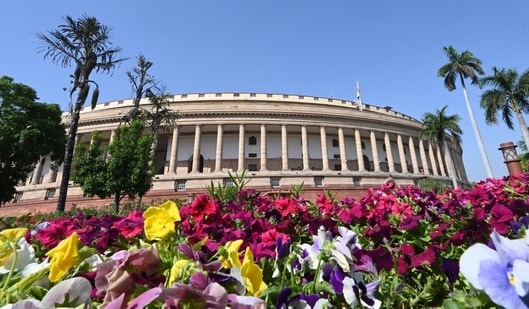
The physical infrastructure for an expanded Parliament is already in place. The new Parliament building, inaugurated in 2023, was designed with the future in mind. Its Lok Sabha chamber can accommodate 888 members, a significant increase from the current strength of 543.
While the government has maintained that the architectural expansion was necessary to modernize facilities and accommodate joint sessions, political observers have long recognized the 888-seat capacity as a clear physical precursor to a post-2026 delimitation exercise.
However, merely expanding the number of seats does not solve the proportional dilemma. Even if the total number of seats increases so that no state *loses* its current absolute number of MPs (a commonly proposed compromise), the northern states would still gain a massive number of *new* seats. Therefore, their proportional dominance in the lower house would still be overwhelmingly fortified.
## Exploring Institutional Compromises
To prevent a constitutional crisis and maintain federal harmony, policymakers and constitutional scholars are currently exploring several complex compromises. Reconciling democracy (equal representation of populations) with federalism (equal representation of states) is not a uniquely Indian problem, but India’s vast scale makes it uniquely volatile.
### 1. Empowering the Rajya Sabha
One proposed solution is to fundamentally restructure the powers of the Rajya Sabha (the upper house or Council of States). Modeled somewhat on the United States Senate, the Rajya Sabha could be recalibrated to offer equal, or at least heavily weighted, representation to states regardless of their population. If the Rajya Sabha is given veto power over certain types of legislation—particularly regarding fiscal devolution and linguistic policy—it could act as a robust safeguard for southern and smaller states against a numerically dominant Lok Sabha.
### 2. Decoupling the Freeze
Another highly debated option is to separate the intra-state delimitation from the inter-state delimitation. Under this model, the total number of seats assigned to each state would remain permanently frozen (or modified only slightly), protecting federal equity. However, the boundaries of the constituencies *within* each state would be redrawn based on the latest census to ensure equal voter sizes per constituency locally. This solves the issue of wildly unequal constituency sizes within a state (e.g., a massive urban constituency versus a tiny rural one) without transferring power between states. [Source: Hindustan Times | Additional: Election Commission Advisory Notes].
### 3. Fiscal Compensation
Some economists suggest that if political power must inevitably shift north to satisfy the “one person, one vote” mandate, southern states must be aggressively compensated through fiscal federalism. The ongoing 16th Finance Commission has already faced intense lobbying from southern chief ministers demanding a larger share of the central tax pool to offset their looming political disenfranchisement. By tying political loss to immense financial gain, the central government might attempt to buy federal peace.
## The Timeline and Immediate Next Steps
The legal text of the 84th Amendment specifically freezes seat allocation until the publication of the first census taken *after* the year 2026. Because India’s decennial census was delayed significantly due to the COVID-19 pandemic and subsequent logistical hurdles, the timeline for the post-2026 census remains fluid.
If a new census is initiated in 2027 and its data published by 2029, the actual reapportionment of seats might not take effect until the general elections of the early 2030s. However, the political maneuvering has already begun. Northern political parties are emphasizing the democratic necessity of equal representation, arguing that a voter in Uttar Pradesh should not have a mathematically lesser voice than a voter in Kerala. Meanwhile, southern leaders are forming unified legislative blocs to resist any move that diminishes their regional autonomy.
## Conclusion: A Test of the Republic’s Mettle
The intersection between India’s democracy and demography represents the most severe test of the nation’s federal structure since the linguistic reorganization of states in the 1950s. The framers of the Constitution could not have foreseen a scenario where regional demographic trajectories would diverge so radically, nor did they anticipate that successful governance in health and education would become a political liability.
As 2026 unfolds, the impending delimitation debate requires exceptional statesmanship. The Union government must facilitate a consensus that honors the democratic sanctity of the individual vote without violating the federal trust of the states that helped build the modern Indian economy. How New Delhi navigates this demographic minefield will not just determine the composition of the next Parliament; it will define the structural integrity of the Indian Republic for the rest of the 21st century.





