
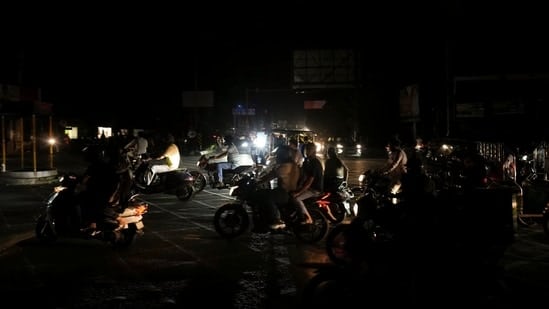
Mock drill in Punjab tonight, locals asked to keep lights off
# Punjab Blackout Drill Tonight: Dos and Don’ts
By Senior Correspondent, National Security Desk, April 24, 2026
In a significant civil defense initiative, the Punjab state administration, in close coordination with regional security agencies, will conduct a comprehensive blackout mock drill across the state tonight, April 24, 2026. Designed to evaluate emergency preparedness and the operational readiness of the public and state machinery, authorities have mandated all residents to switch off non-essential lighting during the stipulated time frame. Organizers aim to simulate severe emergency scenarios, ensuring civilian infrastructure can rapidly adapt to sudden blackout requirements to mitigate potential aerial threats or large-scale vulnerabilities [Source: Hindustan Times]. The state-wide exercise will serve as a critical test for local law enforcement, disaster management teams, and community responsiveness.
## The Scope and Objective of the Blackout Drill
The primary objective of tonight’s blackout drill is to assess the efficiency of the state’s Air Raid Precautions (ARP) and the general public’s ability to respond swiftly to emergency protocols. Mock drills of this nature are a standard operating procedure in strategically significant regions. For Punjab, which shares a sensitive international border, routine assessments of civil defense mechanisms are an essential component of state security.
Authorities have outlined that the drill will span across major districts, with an acute focus on border-adjacent cities such as Amritsar, Pathankot, Ferozepur, and Tarn Taran, while simultaneously encompassing central urban hubs like Ludhiana, Jalandhar, and the capital, Chandigarh. The sounding of local sirens will mark the commencement of the blackout period, at which point the rapid reduction of the urban light footprint will be closely monitored by aerial units and ground patrols.
This exercise is not just about turning off lights; it is a holistic evaluation of grid management. The Punjab State Power Corporation Limited (PSPCL) will utilize this window to test grid stability during a sudden, massive drop in civilian power consumption, ensuring that the electrical infrastructure does not suffer from dangerous voltage surges.
## Official Guidelines: Critical Dos and Don’ts
To ensure the mock drill proceeds smoothly without causing public inconvenience or compromising safety, the state disaster management authority has issued a comprehensive list of directives. Residents are urged to familiarize themselves with these guidelines immediately.
**The Dos:**
* **Switch Off Non-Essential Lights:** Ensure that all exterior lighting, balcony lights, neon signs, and commercial hoardings are completely switched off during the designated drill period [Source: Hindustan Times].
* **Use Heavy Curtains:** If indoor lighting is strictly necessary for vulnerable individuals (such as the elderly or infants), ensure windows are covered with heavy, opaque curtains so no light escapes outside.
* **Keep Emergency Kits Ready:** Use this opportunity to locate and organize your household emergency kits, which should include flashlights, extra batteries, a first-aid box, and essential medications.
* **Stay Indoors:** Citizens are strongly advised to remain inside their homes or workplaces to prevent traffic accidents on unlit roads.
* **Listen to Official Channels:** Keep a battery-operated radio tuned to local state broadcast stations or monitor official verified social media handles of the Punjab Police for real-time updates.
**The Don’ts:**
* **Do Not Panic:** This is strictly a mock drill and a routine preparedness exercise. There is no actual threat.
* **Do Not Use Car Headlights Unnecessarily:** If you are caught in transit during the drill, pull over safely to the side of the road and turn off your headlights until the drill concludes, unless directed otherwise by traffic personnel.
* **Do Not Hoard Resources:** The drill will only last for a short duration. There is no need to rush to markets to hoard fuel, groceries, or supplies.
* **Do Not Spread Rumors:** Refrain from forwarding unverified messages on WhatsApp or other social media platforms that might incite unnecessary panic among the populace.
## Strategic Necessity for a Border State
Understanding the geography and history of Punjab is vital to comprehending the necessity of such drills. Sharing an extensive and highly sensitive 553-kilometer international border with Pakistan, Punjab has historically been the frontline of national defense. During the conflicts of 1965 and 1971, civil defense measures, particularly city-wide blackouts, played a crucial role in protecting civilian populations from night-time aerial bombardments [Additional: Ministry of Defence Historical Archives].
While the nature of modern warfare and aerial threats has evolved with the advent of precision-guided munitions, radar systems, and unmanned aerial vehicles (UAVs), the fundamental principle of minimizing the visual footprint of a city remains a globally recognized civil defense tactic. An illuminated city serves as a distinct navigational waypoint. By darkening the urban landscape, authorities can effectively disorient hostile navigations and protect critical infrastructure, such as railway junctions, military cantonments, and power plants.
Furthermore, civil defense exercises build a culture of resilience. When civilians know exactly how to act during an emergency, the risk of mass hysteria, stampedes, and secondary casualties drops significantly. The drill tonight is a proactive measure to ensure that this generational knowledge is not lost on the younger demographic.
## Expert Perspectives on Civil-Military Synergy
Defense analysts emphasize that civil-military coordination is the backbone of internal security. Tonight’s exercise will require seamless communication between the Indian Air Force (IAF), the National Disaster Response Force (NDRF), the Punjab Police, and municipal bodies.
Dr. Arindam Sen, a senior fellow specializing in internal security and civil defense, notes the complexity of modern blackout drills. “A blackout drill in 2026 is vastly different from one in 1971. Today, we are dealing with a highly interconnected grid, smart cities, and a population heavily reliant on digital infrastructure. The true test tonight will be how effectively municipal corporations can execute a planned power-down of streetlights and public spaces without disrupting essential telecom networks.”
Sen further elaborated on the psychological aspect of the drill: “Regular training normalizes emergency procedures. When the government conducts these drills transparently, it builds public trust. The citizens become active participants in national security rather than passive bystanders.”
## Managing Essential Services and Vulnerable Populations
A critical component of the mock drill is the exemption of essential and emergency services. Hospitals, nursing homes, fire stations, and critical police control rooms are strictly exempt from the blackout protocol. These institutions operate under independent Standard Operating Procedures (SOPs) that allow them to function normally without compromising the overall objective of the exercise.
However, state health departments have issued advisories to private clinical establishments and nursing homes to ensure their backup generators are fully functional and that exterior signage is turned off to comply with the spirit of the drill.
For the general public, law enforcement agencies have augmented their nighttime patrols to deter any opportunistic petty crime that could occur under the cover of darkness. Women’s safety helplines and emergency response numbers (Dial 112) have been reinforced with additional staffing to ensure rapid deployment of quick reaction teams if any genuine civilian emergency coincides with the mock drill.
## Combating Misinformation and Ensuring Public Calm
In the digital age, the rapid spread of misinformation poses a greater threat during emergency drills than the logistical challenges themselves. The announcement of a “blackout” can easily be misconstrued or maliciously spun by bad actors as an indicator of an imminent conflict, leading to unwarranted public anxiety.
To counter this, the Punjab government’s cyber cell has been highly active over the past 48 hours. Authorities have launched a comprehensive pre-drill awareness campaign across print, television, and social media platforms, repeatedly emphasizing the word “mock drill.” District collectors have also engaged with local community leaders, residential welfare associations (RWAs), and village panchayats to ensure the message permeates down to the grassroots level.
Citizens are urged to exercise extreme caution before sharing any sensationalist news or unverified audio clips regarding the drill. Relying solely on official government channels, verified journalistic institutions, and the Directorate of Public Relations, Punjab, is the most effective way to stay accurately informed.
## The Evolution of Emergency Alert Systems
Tonight’s drill will also test the efficacy of the state’s modern emergency alert infrastructure. Traditional mechanical air raid sirens, while still functional, are increasingly being supplemented by digital early warning systems.
As part of the National Disaster Management Authority’s (NDMA) ongoing modernization projects, authorities will evaluate the penetration of SMS-based Cell Broadcast Alert Systems during the blackout window. These systems are designed to push geo-targeted alerts directly to all active mobile phones in a specific region, overriding silent modes to ensure immediate attention [Additional: NDMA Public Protocols].
Evaluating how these modern digital alerts complement traditional siren networks gives disaster management officials invaluable data. It reveals dead zones in cellular coverage and determines the actual latency—the time it takes for a warning issued at the central command to reach a citizen’s device on the ground.
## Conclusion: Key Takeaways and Future Outlook
The scheduled blackout drill in Punjab tonight is a vital, proactive measure designed to fortify the state’s internal security and disaster response capabilities. By asking locals to switch off non-essential lights, authorities are testing a complex web of civil-military coordination, grid stability, and public compliance [Source: Hindustan Times].
**Key Takeaways for Residents:**
* Adhere to the specified timings and switch off all exterior and non-essential interior lights.
* Do not panic; the event is purely a preparatory exercise.
* Ensure emergency supplies are easily accessible.
* Rely strictly on official sources for updates and refrain from spreading rumors.
Moving forward, regular implementation of such drills is expected to become a cornerstone of public safety policy, not just in border states but across India’s rapidly expanding urban centers. Preparedness is the ultimate deterrent against disaster, and tonight’s exercise is a collective step toward a more resilient, vigilant, and secure society. Citizens’ cooperation remains the most crucial element in ensuring the success of this large-scale civil defense initiative.





