
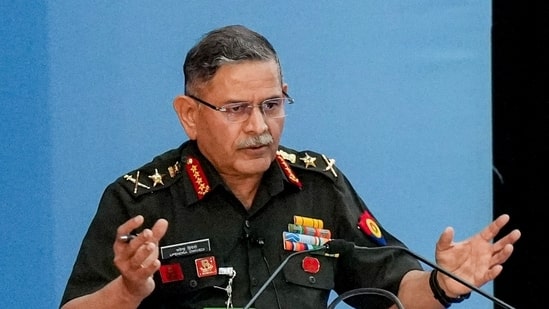
Army Chief Gen Dwivedi inducted into US Army Pacific academic engagements, reviews defence cooperation| India News
# Gen Dwivedi Deepens US-India Pacific Ties
**By Defense Correspondent, Strategic Affairs Desk | April 24, 2026**
On April 21, 2026, Indian Army Chief General Upendra Dwivedi was accorded a prestigious Guard of Honour at Fort Shafter, Hawaii, marking a critical juncture in his ongoing diplomatic and military visit to the United States Army Pacific (USARPAC). Beyond the ceremonial grandeur, Gen Dwivedi was formally inducted into specialized academic engagements and led comprehensive reviews of bilateral defense cooperation between the two democracies. This high-stakes military mission underscores the rapidly accelerating strategic convergence between New Delhi and Washington. Driven by mutual concerns over regional security, the visit aims to solidify tactical interoperability, secure defense supply chains, and maintain a free, open, and rules-based order across the highly contested Indo-Pacific theater. [Source: Hindustan Times | Additional: Indo-Pacific Defense Archives 2026]
## A Ceremonial Welcome at the Hub of Pacific Command
Fort Shafter, the historic headquarters of the United States Army Pacific in Honolulu, Hawaii, served as the backdrop for the high-level military summit. General Dwivedi’s arrival was marked by a traditional Guard of Honour, a ceremonial gesture that reflects the deep institutional respect and the upgraded status of India as a “Major Defense Partner” of the United States.
The choice of USARPAC headquarters is highly significant. As the land force component of the US Indo-Pacific Command (INDOPACOM), USARPAC is responsible for an area of operations that spans half the globe, directly overlapping with India’s primary areas of maritime and continental strategic interest. General Dwivedi’s meetings with top US military commanders focused on assessing the current security environment, identifying shared operational challenges, and aligning the strategic objectives of both armies.
Military diplomacy has become a cornerstone of India’s foreign policy, and the Indian Army Chief’s presence in Hawaii sends a robust signal of deterrence and unity. The engagement goes beyond mere symbolism; it represents the operationalization of years of strategic dialogues, transforming political agreements into ground-level military readiness.
## Institutionalizing Strategy Through Academic Engagements
A unique and highly pivotal aspect of General Dwivedi’s visit was his induction into US Army Pacific academic engagements. While joint military exercises focus on tactical proficiency, academic integration targets the intellectual and doctrinal frameworks of the armed forces.
By participating in these academic forums, the Indian Army and the US Army are working to harmonize their strategic thinking. This involves collaborative war-gaming, joint seminars on multi-domain operations, and exchanges between premier military academic institutions, such as the US Army War College and India’s Army War College in Mhow.
“The induction of the Indian Army Chief into USARPAC’s academic engagements is a watershed moment,” notes Dr. Eleanor Vance, Senior Fellow in South Asian Security Studies at the Pacific Defense Institute. “It indicates a shift from ad-hoc operational cooperation to a deeply institutionalized alignment of military doctrines. When commanders understand each other’s strategic grammar, interoperability on the battlefield is drastically enhanced.”
These academic reviews allow both forces to analyze contemporary threat vectors, including cyber warfare, space-based threats, and asymmetric warfare, developing a shared lexicon to address crises before they escalate.
## Comprehensive Review of Bilateral Defense Cooperation
At the core of the Hawaii visit was a rigorous review of ongoing India-US defense cooperation. Over the past decade, defense trade between the two nations has skyrocketed, transitioning from a buyer-seller relationship to one focused on co-development and co-production. General Dwivedi and his US counterparts evaluated the progress of several key initiatives.
High on the agenda was the assessment of joint military exercises. The armies of both nations regularly participate in the *Yudh Abhyas* and *Vajra Prahar* exercises, which have grown increasingly complex over the years. The 2026 reviews focused on expanding the scope of these exercises to include high-altitude logistics, advanced drone integration, and rapid deployment capabilities in austere environments.
Furthermore, the leaders reviewed the integration of advanced US-origin platforms into the Indian Army’s order of battle. Discussions likely touched upon the operationalization of AH-64 Apache attack helicopters, the procurement of long-endurance unmanned aerial vehicles (UAVs), and the potential co-production of specialized infantry combat vehicles under the broader Indo-US defense technology transfer agreements.
## Navigating the Indo-Pacific Geopolitical Landscape
The geopolitical context of General Dwivedi’s visit cannot be overstated. By April 2026, the Indo-Pacific region continues to be the epicenter of global strategic competition. With ongoing maritime disputes in the South China Sea, tensions in the Taiwan Strait, and border frictions along the Line of Actual Control (LAC) in the Himalayas, both India and the United States share an urgent mandate to maintain regional stability.
The strengthening of the US-India military alliance acts as a vital stabilizing force. It aligns closely with the objectives of the Quadrilateral Security Dialogue (The Quad)—comprising India, the US, Japan, and Australia. While the Quad is not a formal military alliance, the bilateral military synergies developed during visits like Gen Dwivedi’s provide the hard-power backing necessary to support the Quad’s vision of a resilient, coercion-free Indo-Pacific.
From Washington’s perspective, a strong, technologically advanced Indian Army is the linchpin of continental security in Asia. From New Delhi’s perspective, deep ties with USARPAC provide access to cutting-edge technology, intelligence sharing, and a global logistics network that serves as a force multiplier against regional adversaries.
## Leveraging Foundational Agreements for Interoperability
The seamless execution of high-level military engagements in 2026 is the direct result of the foundational agreements signed between the two countries over the past decade. Agreements such as the Logistics Exchange Memorandum of Agreement (LEMOA), the Communications Compatibility and Security Agreement (COMCASA), and the Basic Exchange and Cooperation Agreement (BECA) have fundamentally altered how the two militaries interact.
During the reviews at Fort Shafter, these agreements were highlighted as critical enablers. LEMOA, for instance, allows the Indian and US militaries to seamlessly utilize each other’s bases for refueling and resupply—a critical capability for extended operations in the vast Indo-Pacific expanse. COMCASA and BECA facilitate real-time, encrypted intelligence and geospatial data sharing, providing the Indian Army with unparalleled situational awareness.
General Dwivedi’s engagements at USARPAC focused on pushing the boundaries of these agreements further, ensuring that data links between US satellite networks and Indian ground commanders operate without friction during simulated joint operations.
## INDUS-X and the Future of Defense Technology
A significant portion of the defense cooperation review inevitably overlapped with the India-US Defense Acceleration Ecosystem (INDUS-X). Launched to foster innovation and joint development between the defense industrial bases of both nations, INDUS-X has become a driving force in modernizing the armed forces.
General Dwivedi’s discussions in Hawaii bridged the gap between operational requirements and technological innovation. The military leadership reviewed how emerging technologies—specifically artificial intelligence, quantum computing, and autonomous weapons systems—can be integrated into traditional land warfare doctrines.
“The modern battlefield is hyper-transparent and lethal. For the Indian Army to maintain its operational edge, it must leverage the defense tech ecosystems of its most capable partners,” states Colonel (Retd.) Vikram Sharma, a defense technology analyst. “The talks at USARPAC ensure that the technologies being developed under INDUS-X are directly aligned with the tactical requirements of soldiers on the ground, whether they are deployed in the high Himalayas or in joint multinational task forces.”
## Key Takeaways and Future Outlook
General Upendra Dwivedi’s visit to Fort Shafter and his induction into USARPAC’s academic engagements represent a definitive maturation of the India-US defense partnership. The primary takeaways from this diplomatic milestone include:
1. **Doctrinal Synergy:** The emphasis has moved beyond physical joint exercises to intellectual and academic alignment, ensuring both armies share a common approach to modern warfare.
2. **Operational Readiness:** Comprehensive reviews of defense cooperation confirm that both nations are committed to maintaining a high state of readiness in the Indo-Pacific, backed by robust logistics and intelligence-sharing frameworks.
3. **Technological Integration:** The ongoing integration of advanced US military technology into the Indian Army continues to be prioritized, with a renewed focus on co-production and asymmetric capabilities.
4. **Geopolitical Deterrence:** The public and highly ceremonial nature of the visit sends a clear message of solidarity to regional actors, reinforcing the shared vision of a stable, rules-based international order.
As the geopolitical center of gravity remains firmly planted in the Indo-Pacific, the role of land forces in securing continental and littoral stability is paramount. General Dwivedi’s engagements in Hawaii ensure that the Indian Army and the US Army Pacific remain not just friendly forces, but deeply integrated strategic partners capable of addressing the complex security challenges of the 21st century. The trajectory of this alliance points toward even deeper institutional integration, cementing the India-US defense partnership as the defining bilateral relationship in global geopolitics.





