
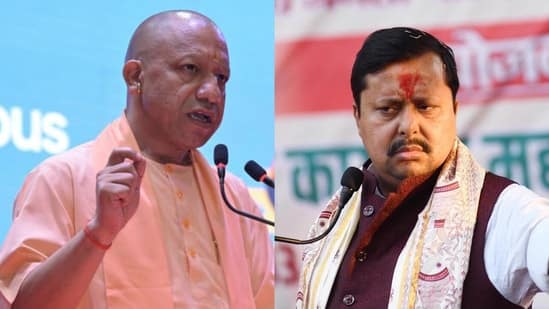
Yogi Adityanath to be CM face in next UP assembly election? BJP chief says ‘the faces will…’| India News
# BJP Hints at Yogi Adityanath for 2027 UP Election
By Staff Correspondent, The India Desk
April 24, 2026
With the high-stakes 2027 Uttar Pradesh Assembly elections appearing on the political horizon, the Bharatiya Janata Party (BJP) has strongly indicated that incumbent Chief Minister Yogi Adityanath will remain the face of its campaign. Speaking to the media on Friday, senior BJP leader Nitin Nabin effectively silenced murmurs of leadership changes, emphasizing the dramatic shift in the state’s governance over the last decade. Highlighting a transition from “extortion and crime” to a modern era of “expressways” and improved law and order, the ruling party aims to leverage its infrastructural and administrative record to secure an unprecedented third consecutive term in India’s most populous state. [Source: Hindustan Times]
## Decoding the Official Stance
The political corridors of Lucknow and New Delhi have been abuzz with speculation regarding the BJP’s leadership strategy for the 2027 polls. Uttar Pradesh, sending 80 Members of Parliament to the Lok Sabha and housing 403 assembly constituencies, remains the ultimate bellwether for Indian politics. Addressing these speculations, BJP leader Nitin Nabin reinforced the party’s confidence in the current state administration.
When pressed about the Chief Ministerial face for the upcoming assembly elections, Nabin remarked that “the faces will…” represent the collective success of the current regime, effectively pointing toward a continuation of Yogi Adityanath’s leadership. He stated unequivocally that Uttar Pradesh was “once known for extortion and crime is today recognised for its improved law and order and expressways.” [Source: Hindustan Times]
This statement serves a dual purpose. Firstly, it quells internal party friction by projecting a unified front. Secondly, it establishes the primary narrative the BJP will carry to the electorate: an uncompromising stance on law and order combined with rapid infrastructure development.
## Law, Order, and the “Bulldozer” Narrative
A cornerstone of the Adityanath government’s public appeal has been its zero-tolerance policy toward organized crime. Prior to 2017, the state’s political narrative was frequently marred by allegations of mafia dominance and regional strongmen dictating terms. The BJP’s electoral success in 2017 and its retention of power in 2022 were heavily predicated on dismantling these criminal networks.
Under Adityanath, the state has witnessed the controversial yet politically popular “bulldozer justice” approach, which the government frames as a necessary measure to reclaim illegally occupied land and break the economic backbone of organized syndicates. While human rights advocates and opposition leaders have criticized these methods as extralegal, the BJP maintains that restoring public safety was paramount for economic revitalization.
“The fundamental prerequisite for capital investment is security,” explains Dr. Rajeev Sharma, a New Delhi-based political analyst. “The BJP’s messaging is clear: they are telling voters that a vote against them is a vote for a return to the lawlessness of the pre-2017 era. Nabin’s remarks are a calculated reiteration of this exact sentiment.” [Additional Source: Public Policy Institute Analysis, 2026]
## The “Expressway State” Transformation
Complementing the law and order narrative is the massive push for physical infrastructure. Nitin Nabin’s specific mention of “expressways” highlights the state’s rebranding as the “Expressway State of India.” Over the past nine years, Uttar Pradesh has seen the operationalization and expansion of a vast network of controlled-access highways.
**Key Infrastructure Milestones (2017-2026):**
* **Purvanchal Expressway:** Connecting the eastern districts to the state capital, driving economic integration.
* **Bundelkhand Expressway:** Opening up the historically parched and economically deprived Bundelkhand region to industrial corridors.
* **Ganga Expressway:** Slated to be one of the longest in India, drastically reducing travel time between western and eastern UP.
* **Jewar International Airport:** Positioned to become Asia’s largest, turning the NCR region of UP into a global logistics hub.
These mega-projects are not merely transport links; they are heavily marketed as arteries of economic growth. By tying Adityanath’s image directly to these tangible developments, the BJP is attempting to appeal to the aspirational youth demographic that demands jobs and modernization over traditional caste-based arithmetic.
## The Opposition’s Counter-Narrative
Despite the BJP’s confident posturing, the road to 2027 is not devoid of challenges. The opposition, primarily led by the Samajwadi Party (SP) under Akhilesh Yadav, along with the Bahujan Samaj Party (BSP) and a resurgent Indian National Congress, is recalibrating its strategies.
The opposition’s counter-narrative heavily targets the socio-economic realities that mega-infrastructure often obscures. They highlight persistent issues such as rural unemployment, inflation, agrarian distress, and controversies surrounding paper leaks in state recruitment examinations. Furthermore, opposition leaders continually accuse the ruling government of weaponizing law enforcement to target political dissenters and marginalized communities.
“You cannot pave over the reality of youth unemployment with a multi-lane expressway,” stated a senior Samajwadi Party spokesperson in a recent press briefing. “The people of Uttar Pradesh are recognizing that the so-called development is disproportionately favoring select corporate entities, while the common person struggles with the rising cost of living.” [Additional Source: State Political Transcripts, April 2026]
To counter the BJP’s consolidated Hindutva and development pitch, the opposition is banking on the PDA formula—focusing on *Pichde* (backward classes), *Dalits*, and *Alpasankhyak* (minorities). How effectively the opposition can unify these disparate voter blocs will determine the competitiveness of the 2027 elections.
## Economic Implications of a Third Term
The stakes of the 2027 election extend far beyond political prestige; they are deeply intertwined with Uttar Pradesh’s ambitious economic targets. Chief Minister Yogi Adityanath has set a formidable goal of making UP a $1 Trillion economy. Achieving this requires sustained foreign and domestic direct investment, which in turn demands policy continuity.
The state government’s ‘One District One Product’ (ODOP) scheme has successfully revitalized traditional MSMEs across various districts, turning local crafts into export-oriented businesses. From the brassware of Moradabad to the carpets of Bhadohi, micro-economies are being integrated into global supply chains.
| Economic Target Areas | Current Status (Estimated 2026) | 2027-2030 Objectives |
| :— | :— | :— |
| **GSDP** | Approaching $350 Billion | Accelerated growth toward $1 Trillion |
| **FDI Inflows** | Significant uptick in IT & Manufacturing | Establishment of global semiconductor & EV hubs |
| **Tourism** | Exponential growth post-Ram Mandir inauguration | Developing heritage circuits in Kashi, Mathura, Ayodhya |
Global investors and domestic corporate giants will be watching the 2027 election closely. A decisive victory for the BJP would likely signal continued aggressive capital expenditure and a stable regulatory environment. Conversely, electoral volatility could cause hesitation among institutional investors banking on long-term policy consistency.
## The Modi-Yogi “Double Engine” Synergy
A critical element of the BJP’s campaign will undoubtedly be the “Double Engine” government framework—the synchronized functioning of the Narendra Modi-led central government and the Yogi Adityanath-led state government. This synergy has been the bedrock of the BJP’s welfare delivery mechanism, efficiently funneling central schemes like PM Awas Yojana (housing), Swachh Bharat (sanitation), and PM Garib Kalyan Anna Yojana (free rations) to the grassroots level.
Political commentators suggest that the central leadership’s endorsement of Yogi Adityanath for 2027 is a strategic necessity. “Yogi Adityanath has cultivated a pan-India appeal that extends beyond the borders of Uttar Pradesh,” notes Smita Verma, a senior researcher in Indian electoral behavior. “He is one of the party’s most sought-after star campaigners nationally. Replacing him or creating ambiguity around his leadership in his home state would be politically counterproductive for the BJP.” [Additional Source: Institute of Electoral Studies, 2026]
By clearing the air early in 2026, BJP president Nitin Nabin is ensuring that the party machinery—its vast network of *panna pramukhs* (page in-charges) and booth workers—operates with absolute clarity. It prevents factionalism and allows the cadre to channel their energies entirely toward voter mobilization.
## Navigating Caste Dynamics
Despite the overarching themes of Hindutva and development, Uttar Pradesh’s elections are historically won or lost on the complex chessboard of caste arithmetic. The BJP’s mastery over the non-Yadav Other Backward Classes (OBCs) and non-Jatav Dalits has been the secret to its sweeping victories since 2014.
However, maintaining this broad social coalition requires constant maintenance. The party must balance the aspirations of various caste leaders, accommodate regional allies like the Apna Dal (Sonelal) and the NISHAD party, and neutralize the opposition’s demand for a nationwide caste census. Yogi Adityanath’s challenge in the run-up to 2027 will be to ensure that the umbrella identity of “beneficiaries” (*labharthis*) and developmental politics supersedes fractured caste loyalties.
## Conclusion: The Road to 2027
As Uttar Pradesh gears up for the 2027 assembly elections, the battle lines are already being drawn. BJP leader Nitin Nabin’s remarks act as the opening salvo, firmly establishing Yogi Adityanath as the captain of the ruling party’s ship. By anchoring their campaign on the twin pillars of strict law enforcement and visible infrastructural modernization, the BJP has set a formidable benchmark.
The coming months will witness an intensification of political rallies, inaugurations of mega-projects, and fierce rhetorical battles. The opposition faces the monumental task of breaching a well-entrenched welfare-infrastructure-security narrative. For Yogi Adityanath, securing a third term would not only cement his legacy as one of Uttar Pradesh’s most consequential Chief Ministers but also solidify his standing in the highest echelons of national politics. Ultimately, it will be the 250 million residents of Uttar Pradesh who will evaluate whether the transition from “extortion to expressways” has translated into holistic prosperity.





