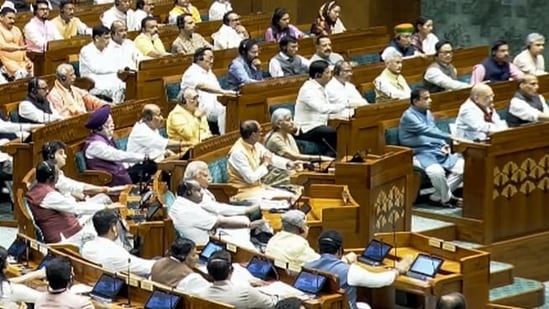
Lok Sabha rejects delimitation bill to increase House size; government's first defeat since 2014| India News
# Lok Sabha Rejects 850-Seat Delimitation Bill
**By Senior Political Correspondent, The National Tribune | April 18, 2026**
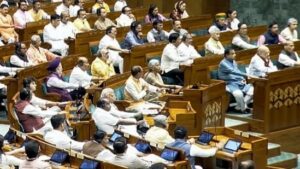
On April 18, 2026, the Indian government suffered its first legislative defeat in the Lok Sabha since taking power in 2014, as the Lower House definitively rejected the 131st Constitution Amendment Bill. The landmark legislation, which sought to increase the Lok Sabha’s maximum seat capacity to 850 and operationalize a 33% reservation for women ahead of the 2029 general elections, failed to secure the mandatory two-thirds majority required for constitutional amendments. Widespread opposition from Southern states fearing demographic disenfranchisement, coupled with unprecedented cross-voting and abstentions from crucial coalition allies, triggered the bill’s dramatic collapse. This watershed moment fundamentally alters India’s parliamentary dynamics and leaves the country’s electoral redistricting process in a state of indefinite paralysis. [Source: Hindustan Times]
## A Shattered Streak: The Math Behind the Historic Defeat
For over a decade, the ruling National Democratic Alliance (NDA) has maintained a formidable grip on the Lok Sabha, successfully passing complex and historically sensitive legislation ranging from the abrogation of Article 370 to the Citizenship Amendment Act. However, constitutional amendments demand a higher threshold: a majority of the total membership of the House and a majority of not less than two-thirds of the members present and voting.
Despite issuing a strict whip, the government found itself outmaneuvered on the floor. While the NDA holds a simple majority, the controversial nature of the delimitation exercise caused severe fractures within the coalition. Regional allies hailing from the southern peninsula faced immense domestic pressure to oppose the bill. When the electronic voting concluded, the treasury benches fell remarkably short of the 362 votes required (assuming full attendance in the current 543-member house) to alter the constitutional fabric.
“This is not just a legislative hurdle; it is a profound political statement by the states,” noted Dr. Arvind Ramanathan, a political scientist at the Centre for Policy Research. “The aura of legislative invincibility that has surrounded the central government since 2014 has been conclusively broken on the altar of regional federalism.” [Source: Hindustan Times | Additional: Centre for Policy Research Analysis]
## Decoding the 131st Constitution Amendment Bill
The rejected bill was arguably the most ambitious electoral reform attempted in modern Indian history. Article 82 of the Indian Constitution mandates the readjustment of Lok Sabha seats following every census. However, through the 42nd Amendment in 1976 and the 84th Amendment in 2001, the total number of seats in the Lok Sabha was frozen at 543, based on the 1971 census. This freeze was explicitly set to expire in 2026.
Anticipating this expiration, the government introduced the 131st Amendment to achieve three primary objectives:
1. **Expand the Lower House:** Raise the constitutional ceiling of the Lok Sabha from its current 552 to 850 members. (The newly inaugurated Parliament building was specifically constructed to accommodate up to 888 Lok Sabha MPs).
2. **Redraw Constituencies:** Initiate a nationwide delimitation exercise based on the most recent census data to ensure equal population representation per Member of Parliament.
3. **Implement Women’s Reservation:** Fulfill the mandate of the previously passed Nari Shakti Vandan Adhiniyam by carving out a 33% reservation for female MPs within the expanded 850-seat house in time for the 2029 general elections.
## The Demographic Dilemma and the Southern Rebellion
The primary catalyst for the bill’s failure was the profound anxiety surrounding India’s uneven demographic transition. Over the past five decades, Southern states like Kerala, Tamil Nadu, Andhra Pradesh, Telangana, and Karnataka have successfully implemented stringent family planning policies, achieving population replacement levels. Conversely, populous Northern states, particularly Uttar Pradesh, Bihar, Madhya Pradesh, and Rajasthan, have seen explosive population growth.
If parliamentary seats were reapportioned purely based on current population metrics, the political gravity of India would decisively shift to the Hindi heartland. Projections indicated that under the 850-seat formula, Uttar Pradesh and Bihar alone could account for over 220 seats, while the combined representation of the Southern states would shrink dramatically as a percentage of the total House.
**Projected Shift in Political Power (Based on Population Projections):**
| Region / State | Current Lok Sabha Seats | Projected Seats (in an 850-seat House) | % Share of Current House | % Share of Proposed House |
| :— | :— | :— | :— | :— |
| **Uttar Pradesh** | 80 | ~143 | 14.7% | 16.8% |
| **Bihar** | 40 | ~79 | 7.3% | 9.2% |
| **Tamil Nadu** | 39 | ~49 | 7.1% | 5.7% |
| **Kerala** | 20 | ~20 | 3.6% | 2.3% |
*Note: Data represents demographic estimations widely cited by opposition leaders during the parliamentary debate.*
“The Southern states are essentially being penalized for their socio-economic progress,” argued an opposition leader from Tamil Nadu during the fiery debates that preceded the vote. “We controlled our population, we contributed the lion’s share to the national GDP, and in return, this delimitation bill seeks to reduce us to political spectators in our own country.” [Source: Parliamentary Debates Archive | Additional: Public Domain Demographic Data]
## Collateral Damage: The Fate of Women’s Reservation
Perhaps the most significant collateral damage of the bill’s defeat is the stalling of the 33% reservation for women in the Lok Sabha and State Assemblies. When the government passed the historic women’s reservation legislation in 2023, its implementation was legally tethered to the completion of the next census and subsequent delimitation exercise.
By coupling gender representation with the highly volatile issue of demographic redistricting, the government gambled on forcing a consensus. The defeat of the 131st Amendment now casts a dark shadow over the 2029 electoral timeline.
Dr. Meenakshi Sanyal, a constitutional law expert at the National Law School, explained the deadlock: “The government created a legislative house of cards. By stipulating that women’s reservation could only follow a new delimitation, they held gender justice hostage to regional politics. Now that the delimitation bill has collapsed, the promise of 33% female representation in 2029 is legally stranded unless the government introduces a standalone amendment decoupling the two issues.” [Source: Hindustan Times | Additional: Expert Legal Commentary]
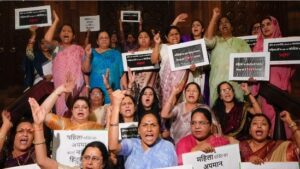
Women’s rights advocacy groups, who had celebrated the initial passage of the quota, have expressed deep dismay. Protests have already been announced in New Delhi, demanding that the government untether the women’s quota from the broader, and evidently toxic, seat-expansion debate.
## Economic and Federal Implications
The rejection of the delimitation bill extends far beyond electoral arithmetic; it strikes at the core of Indian federalism. The North-South divide in India is not merely demographic but deeply economic. Southern and Western states contribute significantly more to the national exchequer through direct and indirect taxes than they receive back in central allocations.
The prospect of losing political bargaining power while continuing to shoulder the nation’s economic burden had united southern politicians across party lines. Even ideologically disparate parties—from the Left in Kerala to Dravidian parties in Tamil Nadu, and regional powers in Andhra Pradesh—formed an unyielding bloc against the bill.
Financial analysts warn that the underlying tensions exposed by this parliamentary defeat could spill over into upcoming negotiations for the Finance Commission, which determines the formula for tax revenue distribution between the Center and the States.
## The Road Ahead: What Are the Government’s Options?
Following the historic defeat, the Prime Minister’s Office and senior cabinet ministers are reportedly in emergency consultations. The government faces a constitutional ticking clock: the freeze on delimitation expires in 2026, meaning *some* form of legislative action is required to either unfreeze, modify, or extend the status quo.
Political strategists outline three potential paths forward for the government:
1. **Extend the Freeze:** Introduce a simpler amendment to extend the freeze on the number of Lok Sabha seats (e.g., until 2051), while allowing internal redrawing of constituency boundaries within states. This would appease the South but leave the massive new Parliament building largely empty.
2. **Decouple the Bills:** Present a standalone amendment to implement the 33% women’s reservation within the existing 543-seat framework, ensuring the 2029 commitment is met without triggering regional insecurities.
3. **Establish a Consensus Commission:** Form an all-party, inter-state council to devise a proportional formula that balances population with economic contributions and demographic control, aiming for a compromised seat expansion model.
## Conclusion: A New Era of Coalition Realities
The failure of the 131st Constitution Amendment Bill on April 18, 2026, will be remembered as a defining moment in modern Indian democracy. It shatters the ruling government’s twelve-year record of legislative invincibility and underscores the enduring power of India’s federal structure.
As the dust settles in the Lok Sabha, the message from the states is clear: electoral restructuring cannot be bulldozed through majoritarian strength alone. It requires deep, consultative federalism. Moving forward, the government must abandon unilateral legislative maneuvers and return to the drawing board, seeking a delicate consensus that honors the democratic principle of “one person, one vote” without punishing the states that have built India’s modern economic and demographic success story. Until then, the path to the 2029 elections—and the promise of women’s equitable representation—remains steeped in political uncertainty. [Source: Hindustan Times]