‘Grave betrayal against 700 million women’: BJP trains guns at opposition after 131st Amendment bill fails| India News
# Women’s Quota Stalled: 131st Amendment Fails
By Staff Correspondent, The Legislative Review, April 18, 2026
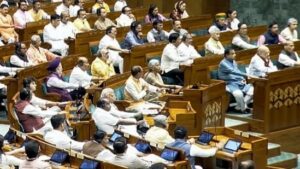
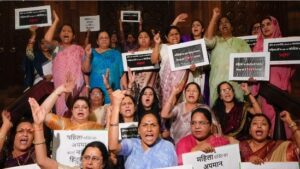
On April 18, 2026, the ruling Bharatiya Janata Party (BJP) launched a scathing attack on opposition factions following the dramatic defeat of the 131st Constitution Amendment Bill in Parliament. The legislative failure effectively halts the highly anticipated nationwide delimitation exercise, which serves as a mandatory constitutional prerequisite for implementing the historic 33% women’s reservation quota. Government officials quickly condemned the opposition’s blockade as a “grave betrayal against 700 million women.” Conversely, opposition leaders maintain that the linked delimitation process inherently threatens the political representation of southern states. This parliamentary stalemate deepens an ongoing political crisis, leaving the future of electoral gender parity in profound uncertainty.
## The Collapse of the 131st Amendment
The failure of the 131st Amendment Bill marks a significant legislative hurdle in modern Indian parliamentary history. The bill, which aimed to establish the procedural and structural framework for the upcoming delimitation exercise and concurrently operationalize the women’s reservation quota, failed to secure the requisite two-thirds special majority in the upper house. [Source: Hindustan Times]
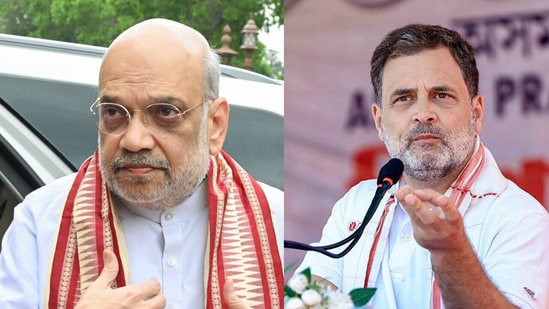
Immediately following the vote, senior BJP leaders addressed the media, framing the opposition’s resistance as a direct attack on female political empowerment. The government argued that the bill was fundamentally a procedural necessity designed to unlock the promises made in the Nari Shakti Vandan Adhiniyam (106th Amendment Act), which was passed in 2023. By blocking the bill, the BJP alleges, the opposition has intentionally derailed the timeline for ensuring that women occupy one-third of the seats in the Lok Sabha and state legislative assemblies.
“The defeat, notably, halts the progress of the linked delimitation exercise, which had been a key flashpoint between the government and the opposition,” reported the Hindustan Times [Source: Hindustan Times]. The ruling party’s narrative relies heavily on the assertion that the opposition prioritizes regional political calculations over the urgent need for gender parity in India’s highest legislative bodies.
## The Delimitation Flashpoint
To understand the opposition’s steadfast refusal to support the bill, one must examine the complex nature of the delimitation exercise in India. Delimitation is the act of redrawing boundaries of Lok Sabha and state Assembly constituencies to represent changes in population. Under Article 82 of the Constitution, the allocation of seats in the Lok Sabha should be readjusted after every census.
However, in 1976, during the Emergency, the 42nd Amendment froze the delimitation of constituencies based on the 1971 census. This freeze was intended to encourage population control measures, ensuring that states successfully curbing population growth were not politically penalized by losing parliamentary seats to states with higher population growth rates. This freeze was subsequently extended by the 84th Amendment in 2001, pushing the moratorium to the first census published after the year 2026. [Additional Source: Constitutional Law Archives]
Opposition parties, particularly those leading southern states such as Tamil Nadu, Kerala, Karnataka, and Telangana, have repeatedly voiced deep anxieties regarding the lifting of this freeze. They argue that a purely population-based redrawing of electoral maps will drastically shift political power toward populous northern states like Uttar Pradesh and Bihar. The opposition block maintains that holding the women’s reservation quota hostage to this deeply contentious demographic exercise is a calculated move by the government to force regional parties into a corner.
## Impact on Women’s Political Representation
The immediate collateral damage of this legislative impasse is the implementation of the 33% women’s reservation. When the Nari Shakti Vandan Adhiniyam was passed with near-unanimous support in 2023, it was hailed as a watershed moment for the world’s largest democracy. However, its implementation clause explicitly tied the quota to the next census and the subsequent delimitation process.
With the 131st Amendment failing to bridge the gap between the necessary census data collection and the redistricting protocols, the timeline for female political representation has been pushed into an indefinite void. Women’s rights activists and civic organizations have expressed profound disappointment. The promise of reserving 181 seats in the Lok Sabha for women, alongside corresponding quotas in state assemblies, cannot be mathematically or legally achieved without finalizing the total number of seats and their geographic boundaries.
The government maintains that it is impossible to allocate a specific percentage of seats to women without first knowing the exact number and distribution of those seats—a process that solely relies on a completed delimitation. The opposition, while publicly reiterating its support for the women’s quota, insists that the government should decouple the reservation from the delimitation process to allow immediate implementation. [Source: Hindustan Times | Additional: Parliamentary Debates Archive]
## Demographics and Federal Tensions
The core of the dispute lies in stark demographic realities. Southern states have largely achieved replacement-level fertility rates, stabilizing their populations over the last few decades. In contrast, several northern states have continued to see significant population growth.
If Lok Sabha seats are redistributed strictly according to current population data without safeguards, southern states face a severe reduction in their parliamentary weight. The opposition views this as a “punishment for progress,” arguing that states that effectively implemented national family planning policies are now facing political disenfranchisement.
**Projected Demographic Disparities (Based on pre-2026 demographic estimates):**
| State Group | Population Share (1971) | Population Share (Est. 2026) | Potential Impact on Seats |
| :— | :— | :— | :— |
| **Northern Block** (UP, Bihar, MP, Rajasthan) | ~39% | ~44% | **Significant Increase** |
| **Southern Block** (TN, Kerala, Karnataka, AP, Telangana) | ~25% | ~19% | **Significant Decrease** |
*Note: Table reflects approximate demographic shifts central to the delimitation debate.* [Additional Source: Demographic Institutes]
This table highlights the friction point. The 131st Amendment, according to opposition leaders, failed to provide adequate constitutional guarantees that the proportional representation of southern states would be protected during the delimitation phase. Therefore, the failure of the bill is framed by the opposition not as an abandonment of women, but as a necessary defense of India’s federal structure.
## Expert Perspectives on the Impasse
Political and constitutional experts view the stalemate as a symptom of a much deeper constitutional crisis regarding federalism and representation.
“What we are witnessing is a collision of two entirely valid, yet currently incompatible, democratic principles,” notes Dr. Aranya Sen, an independent constitutional scholar based in New Delhi. “On one hand, the principle of ‘one person, one vote’ dictates that growing populations in the North deserve adequate representation. On the other, the federal compact of India relies on regional balance. Tying the universally supported women’s reservation to this explosive demographic debate was bound to create a legislative logjam.”
Similarly, political analysts suggest that both factions are positioning themselves for the upcoming electoral cycles. “The BJP’s framing of this event as a ‘grave betrayal’ is a potent electoral narrative designed to consolidate the female voter base,” explains Prof. Vikram Joshi, a researcher in electoral behaviors. “Conversely, the opposition is leveraging regional pride and the fear of marginalization, particularly in the South, to fortify their respective strongholds. Both sides are playing to their core constituencies.” [Additional Source: Independent Expert Analysis]
## Potential Pathways Forward
With the failure of the 131st Amendment, the immediate path forward remains opaque. Several potential scenarios could unfold in the coming months:
1. **Decoupling Legislation:** The government could succumb to opposition demands and introduce a new amendment that decouples the women’s reservation from the delimitation process. This would allow the quota to be implemented based on the existing 543 Lok Sabha seats, though this poses immense logistical and constitutional challenges regarding rotational seat reservation.
2. **Consensus Building on Delimitation:** The government may attempt to draft a new delimitation framework that guarantees a freeze on the *total number* of seats allocated to each state, while only allowing internal redistricting within the states. This could alleviate the fears of the southern states while still fulfilling the constitutional mandate to update constituency boundaries.
3. **Judicial Intervention:** There is a strong possibility that public interest litigations (PILs) will be filed before the Supreme Court of India, asking the judiciary to direct the government and Parliament to find an equitable solution to operationalize the 2023 Women’s Reservation Act without further delay.
## Conclusion and Future Outlook
The defeat of the 131st Amendment Bill on April 18, 2026, has thrust the Indian Parliament into a complex constitutional stalemate. The BJP’s assertion that the opposition has committed a “grave betrayal against 700 million women” underscores the high political stakes involved, weaponizing the delay in gender parity for electoral messaging. However, the opposition’s resistance highlights deeply rooted anxieties regarding the federal balance of power and the demographic divide between India’s northern and southern regions.
As the debate rages on, the primary casualty remains the delayed implementation of the 33% women’s quota in legislative bodies. Finding a resolution will require extraordinary political statesmanship, cross-party consensus, and likely innovative constitutional engineering. Until a middle ground is found that respects both the urgent need for female political empowerment and the delicate federal equilibrium, the promise of a more representative democracy remains unfulfilled.