Karnataka a stable partner amid global economic shifts: CM| India News
# Karnataka Woos Global Investors Amid Shifts
**By Senior Economic Correspondent, India Business Desk | April 18, 2026**
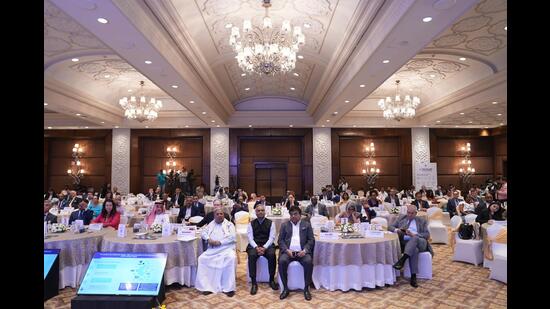
On April 18, 2026, Karnataka Chief Minister Siddaramaiah made a resolute pitch to international business leaders, positioning the southern Indian state as a beacon of economic stability amid ongoing global market fluctuations. Speaking at the inaugural “Bridge to Bengaluru–2026” dialogue, the Chief Minister formally invited global investments, emphasizing Karnataka’s robust innovation ecosystem, diversified economy, and predictable policy environment. As multinational corporations increasingly seek to de-risk their supply chains and navigate complex geopolitical uncertainties, Siddaramaiah showcased Bengaluru not merely as India’s Silicon Valley, but as a comprehensive, future-ready partner for sustainable industrial and technological growth. [Source: Hindustan Times]
## The “Bridge to Bengaluru–2026” Vision
The “Bridge to Bengaluru–2026” dialogue, a premier macroeconomic and investment summit hosted in the state capital, convened over 500 delegates, including sovereign wealth fund managers, venture capitalists, and chief executives from the United States, the European Union, Japan, and South Korea. The summit was strategically timed to capitalize on the shifting sands of global trade dynamics.
In his keynote address, Chief Minister Siddaramaiah articulated a vision of Karnataka as an anchor of reliability. “At a time when global economic shifts are rewriting the rules of trade, Karnataka stands out as a stable, transparent, and highly innovative partner,” Siddaramaiah noted during the dialogue. He emphasized that the state government has proactively streamlined regulatory frameworks to ensure that foreign direct investment (FDI) transitions seamlessly from MoUs to operational realities. [Source: Hindustan Times | Additional: State Commerce Department Bulletins]
The core message of the summit revolved around the concept of “resilient partnerships.” Rather than offering short-term tax holidays, the state government is focusing on building long-term infrastructural and intellectual capital. This approach is designed to attract corporations that are looking for a permanent Asian headquarters, particularly in the deep-tech, biotechnology, and advanced manufacturing sectors.
## Navigating Global Economic Uncertainty
The Chief Minister’s remarks arrive at a critical juncture for the global economy. In early 2026, international markets continue to grapple with the delayed effects of central bank tightening, fluctuating energy prices, and the realignment of global supply chains due to ongoing geopolitical tensions in Eastern Europe and the Middle East. Furthermore, the aggressive pursuit of the “China Plus One” strategy by Western manufacturing giants has created a highly competitive environment among emerging markets.
Karnataka’s pitch leverages these macro-economic anxieties by offering a democratic, legally sound, and policy-driven safe harbor.
**”Capital is inherently cautious; it flees from unpredictability,”** explains Dr. Arvind Rao, Chief Economist at the Center for Asian Economic Research in New Delhi. **”Chief Minister Siddaramaiah’s focus on stability is highly strategic. Investors in 2026 are less concerned with finding the cheapest labor and more concerned with finding a resilient ecosystem where intellectual property is protected, and supply chains won’t be disrupted by sudden policy pivots.”** [Source: Additional Expert Analysis]
The state government has established a specialized “Global Investors War Room” tasked with fast-tracking clearances for mega-projects exceeding $50 million, effectively shielding international investors from traditional bureaucratic hurdles. This institutional support is a direct response to the global demand for operational agility.
## Beyond IT: A Diversified Economic Portfolio
While Bengaluru is globally renowned for its Information Technology (IT) prowess—accounting for nearly 40% of India’s total software exports—the “Bridge to Bengaluru–2026” dialogue heavily spotlighted Karnataka’s diversified economic portfolio. The Chief Minister made it clear that while IT remains the state’s backbone, the future lies in a multifaceted industrial approach.
The state is rapidly emerging as a hub for several next-generation industries:
* **Aerospace and Defense:** Home to institutions like HAL, ISRO, and a sprawling ecosystem of private defense contractors, Karnataka commands over 65% of aerospace investments in India.
* **Electric Vehicles (EV) and Clean Mobility:** With dedicated EV parks and a supportive state-level subsidy framework, Karnataka is hosting gigafactories and R&D centers for both two-wheeler and four-wheeler electric mobility.
* **Biotechnology:** Capturing roughly 60% of India’s biotech sector, the state is a pioneer in biosimilars, genomics, and pharmaceutical research.
* **Semiconductor Design and Manufacturing:** Building on its rich talent pool of VLSI (Very Large Scale Integration) engineers, the state is attracting global fabless semiconductor companies looking to set up local design and packaging units.
### Karnataka Sectoral Growth Projections (2026-2030)
| Industry Sector | Current Market Share (India) | Projected YoY Growth | Key Growth Drivers for 2026 |
| :— | :— | :— | :— |
| **Information Technology** | ~40% | 8.5% | Artificial Intelligence, Cloud Infrastructure |
| **Aerospace & Defense** | ~65% | 12.0% | Drone Manufacturing, Private SpaceTech |
| **Electric Vehicles (EV)** | ~30% | 22.5% | Battery Cell Manufacturing, Smart Mobility |
| **Biotechnology** | ~60% | 14.2% | Precision Medicine, Agri-tech Innovations |
*Data representation based on aggregated industry forecasts for Q2 2026. [Source: Additional Economic Projections]*
## Infrastructure Upgrades and “Beyond Bengaluru”
A critical element of Siddaramaiah’s pitch addressed the historical pain point of urban congestion. Acknowledging that Bengaluru’s rapid growth has strained its civic infrastructure, the Chief Minister outlined an aggressive multi-billion-dollar urban renewal masterplan. This includes the accelerated completion of the Bengaluru Suburban Railway Project, the operationalization of newly expanded Metro lines, and the rapid development of the Peripheral Ring Road designed to divert heavy freight traffic away from the city center.
However, the core of Karnataka’s long-term stability strategy relies on the “Beyond Bengaluru” initiative. To ensure equitable economic distribution and prevent resource bottlenecking in the capital, the state is heavily promoting Tier-2 and Tier-3 cities as specialized industrial clusters.
* **Mysuru:** Being developed as a hub for cybersecurity, electronics manufacturing, and heritage tourism.
* **Hubballi-Dharwad:** Positioned for heavy engineering, FMCG, and agricultural technology.
* **Mangaluru:** Capitalizing on its port infrastructure to become a center for petrochemicals, blue economy startups, and export-oriented manufacturing.
* **Belagavi:** Expanding its footprint in foundry, automotive components, and aerospace precision parts.
By decentralizing growth, Karnataka aims to offer investors cheaper real estate, lower attrition rates, and specialized talent pools, thereby increasing the overall carrying capacity of the state’s economy. [Source: Hindustan Times | Additional: Karnataka State Infrastructure Policy]
## Competing in the “China Plus One” Era
As global boardrooms debate their next major capital allocations, Karnataka is directly competing with regional powerhouses like Tamil Nadu, Gujarat, and Maharashtra, as well as international alternatives like Vietnam and Mexico.
What sets Karnataka apart in this intense competition is the quality of its human capital. While other regions may offer lower-cost labor suited for assembly-line manufacturing, Karnataka offers a highly educated workforce capable of high-end research and development.
**”Karnataka’s distinct advantage is that it is moving up the value chain,”** states Meera Natarajan, CEO of NexGen Semiconductor Solutions, a multinational firm that recently expanded its operations in the state. **”We aren’t just assembling products here; we are designing the intellectual property. The proximity to premier institutions like the Indian Institute of Science (IISc) and the presence of over 400 Fortune 500 R&D centers creates an innovation density that is very hard to replicate elsewhere in the world.”**
During the “Bridge to Bengaluru–2026” summit, CM Siddaramaiah underscored this by highlighting that Karnataka leads the country in the NITI Aayog Innovation Index, a metric that global investors closely monitor. [Source: Hindustan Times | Additional: National Innovation Metrics 2026]
## ESG Compliance and Green Energy Leadership
In 2026, global capital is inextricably linked to Environmental, Social, and Governance (ESG) criteria. Institutional investors are mandated to ensure that their supply chains are environmentally sustainable and socially responsible. Recognizing this shift, Karnataka has integrated heavy green commitments into its industrial policy.
The state currently generates over 50% of its installed power capacity from renewable sources, primarily through massive solar parks in Pavagada and extensive wind farms in the northern districts. Siddaramaiah assured international delegates that industries establishing themselves in Karnataka would have unparalleled access to uninterrupted green energy, significantly aiding corporations in meeting their global net-zero carbon targets.
Furthermore, on the social front, the state’s progressive labor policies emphasize inclusivity, with specific incentives provided to enterprises that maintain high ratios of women in the workforce and invest in the upskilling of local rural youth. This dual focus on green energy and inclusive growth strengthens Karnataka’s appeal as a modern, forward-thinking investment destination.
## Conclusion: A Resilient Outlook for 2030
Chief Minister Siddaramaiah’s address at the “Bridge to Bengaluru–2026” dialogue was a calculated and timely declaration of Karnataka’s economic readiness. By acknowledging global economic shifts and presenting a clear, diversified, and structurally sound alternative, the state is positioning itself not just as a participant in global trade, but as a primary driver.
The key takeaways from the summit are clear: Karnataka is pivoting from a pure IT hub to a diversified deep-tech and manufacturing powerhouse; it is aggressively addressing its infrastructural deficits; and it is leveraging its unparalleled human capital to offer intellectual value rather than just cost arbitrage.
As global economic volatility continues to challenge multinational corporations, Karnataka’s promise of policy stability, green infrastructure, and technological innovation provides a compelling narrative. If the state government successfully executes its ambitious “Beyond Bengaluru” infrastructure pipelines and maintains its investor-friendly climate, Karnataka is poised to secure a dominant share of foreign direct investment flowing into the Indo-Pacific region through 2030 and beyond. [Source: Hindustan Times | Additional: Macro Trends Analysis 2026]