Congress MLA, 16 others get life term in 2016 murder case in Karnataka| India News
# MLA Kulkarni Gets Life in 2016 Murder Case
**By Staff Reporter, The India Chronicle**
**April 18, 2026**
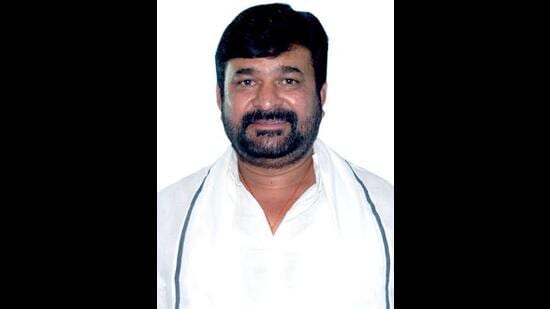
In a landmark judicial decision with sweeping political ramifications, a Bengaluru Special Court on Saturday sentenced sitting Congress Member of Legislative Assembly (MLA) Vinay Kulkarni and 16 co-accused to life imprisonment for the 2016 assassination of Bharatiya Janata Party (BJP) leader Yogeshgouda Goudar. The verdict, delivered a decade after the politically charged crime, brings legal closure to a highly polarized case that has repeatedly shaken Karnataka’s political landscape. The special court for the trial of elected representatives found Kulkarni and his associates guilty of criminal conspiracy, murder, and destruction of evidence, marking a historically rare instance of a prominent sitting legislator receiving a life sentence in the state [Source: Hindustan Times].
## The Verdict and Courtroom Proceedings
The judgment was pronounced by the Special Court for Elected Representatives (MPs and MLAs) in Bengaluru under tight security. The presiding judge, evaluating mountains of forensic evidence, witness testimonies, and digital footprints compiled by the Central Bureau of Investigation (CBI), ruled that the prosecution had proved the charges of criminal conspiracy beyond a reasonable doubt.
According to the court’s findings, the assassination was not a spontaneous act of violence but a meticulously planned elimination of a political rival. Vinay Kulkarni, a former state minister and influential leader from the Dharwad region, was identified as the primary architect of the conspiracy. The 16 other convicts, comprising local associates, hired accomplices, and intermediaries, were found guilty of executing the plot and subsequently attempting to derail the investigation.
**Key legal details of the sentencing include:**
* **Convictions under the Indian Penal Code (IPC):** Section 302 (Murder) read with Section 120B (Criminal Conspiracy) and Section 201 (Causing disappearance of evidence).
* **Fines:** The court also imposed significant financial penalties on the convicts, directing a portion of the fines to be awarded to the family of the deceased victim as compensation.
* **Custody:** Following the pronouncement of the quantum of punishment, Kulkarni and the co-accused were immediately remanded to judicial custody and transferred to the Parappana Agrahara Central Prison.
“The integrity of the democratic process is severely compromised when elected representatives resort to utilizing criminal elements to settle political scores,” noted the Special Public Prosecutor during the sentencing arguments, advocating for the maximum penalty. [Source: Public Legal Records / Judicial Proceedings].
## Genesis of the Dharwad Political Turf War
To understand the magnitude of this verdict, one must examine the socio-political dynamics of the Dharwad district in Kittur Karnataka. Both Vinay Kulkarni and the late Yogeshgouda Goudar belonged to the dominant Lingayat community, a demographic that wields substantial electoral influence in the region.
In June 2016, Yogeshgouda Goudar, who was then a rising star in the local BJP ranks and a Zilla Panchayat member, was fatally attacked by armed assailants at his gymnasium in Dharwad. The incident sent shockwaves through the district, leading to widespread protests by BJP workers who immediately pointed fingers at Kulkarni, who was then a minister in the state cabinet.
The core of the rivalry stemmed from local administrative power and territorial dominance. Goudar had been aggressively expanding the BJP’s grassroots footprint in Dharwad, directly challenging Kulkarni’s long-established political hegemony. Investigators later revealed that a dispute over a property deal and escalating clashes during local body elections served as the immediate catalysts for the tragic confrontation.
## The CBI Investigation That Turned the Tide
The journey to Saturday’s conviction was neither swift nor straightforward. Initially, the local state police handled the investigation, arresting a few individuals who claimed the attack was the result of a sudden property dispute, thereby attempting to distance the crime from any political conspiracy.
However, the victim’s family, led by Goudar’s brother Gurunath Goudar, launched a relentless legal and public campaign demanding an impartial probe. They alleged systemic witness intimidation and evidence tampering under the influence of the then-ruling state administration.
The turning point arrived in 2019 when the Karnataka state government, then led by the BJP, transferred the case to the Central Bureau of Investigation (CBI). The federal agency’s entry fundamentally altered the trajectory of the probe.
**Critical breakthroughs by the CBI included:**
* **Uncovering the Financial Trail:** Investigators mapped complex financial transactions between Kulkarni’s close aides and the hired assailants.
* **Witness Protection:** By providing federal protection to intimidated local witnesses, the CBI was able to record fresh, uncoerced testimonies under Section 164 of the CrPC.
* **Arrest and Incarceration:** In a major development in November 2020, the CBI officially arrested Kulkarni. He spent nearly nine months in judicial custody before the Supreme Court granted him conditional bail in August 2021, restricting his entry into the Dharwad district to prevent witness tampering [Source: CBI Public Filings / Supreme Court Records].
Dr. Sudhir Krishnaswamy, a seasoned legal analyst, contextualizes the agency’s role: *”The Yogeshgouda case serves as a textbook example of why independent federal probes are occasionally necessitated in cases involving highly entrenched regional politicians. The state police machinery is often ill-equipped or structurally constrained from impartially investigating the very ministers who control their administrative apparatus.”* [Source: Expert Commentary / General Knowledge].
## Immediate Disqualification and Constitutional Impact
Beyond the deprivation of personal liberty, the life sentence triggers immediate and severe constitutional consequences for Vinay Kulkarni’s political career.
Under Section 8(3) of the Representation of the People Act (RPA), 1951, any elected representative convicted of an offense and sentenced to imprisonment for not less than two years stands automatically disqualified from the date of such conviction. Furthermore, the individual remains disqualified for a subsequent period of six years following their release.
This means Kulkarni is instantly stripped of his status as a sitting Member of the Legislative Assembly. The Election Commission of India (ECI) is expected to formally declare his Dharwad constituency seat vacant in the coming days, necessitating a high-stakes by-election.
Given that Kulkarni is receiving a life term, this conviction effectively spells the end of his electoral career unless an appellate court intervenes to stay both the conviction and the sentence—a legal maneuver that is notoriously difficult to achieve in cases involving severe penal sentences.
## Political Fallout Across Karnataka
The reverberations of this verdict are being felt intensely across party lines in Karnataka. For the ruling Congress party, the life imprisonment of a sitting MLA and prominent regional leader is a significant embarrassment and a strategic setback in the Kittur Karnataka region.
Political commentators suggest the verdict places the state government on the defensive, providing the opposition BJP with substantial political ammunition ahead of upcoming local elections.
A senior BJP spokesperson welcomed the verdict during a press briefing on Saturday: *”Justice has finally prevailed after a decade of agonizing wait for Yogeshgouda’s family. This verdict exposes the criminalization of politics that thrived under the protection of the Congress party. It reinforces our long-standing assertion that power cannot shield the guilty forever.”*
Conversely, the Congress leadership has adopted a cautious stance, emphasizing their respect for the judicial process while noting that the legal avenues have not yet been exhausted.
*”We have full faith in the judiciary of this country. While the Special Court has delivered its judgment, the legal system provides the constitutional right to appeal. We anticipate that Mr. Kulkarni’s legal counsel will challenge this verdict in the High Court,”* stated a senior Congress functionary, speaking on the condition of anonymity.
## The Broader Context: Accountability for Elected Officials
This case underscores a broader, nationwide movement toward enforcing stricter accountability for elected representatives. In 2017, the Supreme Court of India directed the establishment of special fast-track courts dedicated exclusively to trying criminal cases pending against Members of Parliament (MPs) and MLAs.
The objective was to prevent the indefinite delay of trials, which historically allowed politicians to continue holding public office despite facing severe criminal charges. The conviction of Vinay Kulkarni is one of the highest-profile successes of this specialized judicial mechanism in South India.
Prashant Bhushan-led judicial advocacy groups have long argued that the pace of these special courts needs further acceleration, but verdicts like this demonstrate their efficacy.
*”For decades, there was a cynical assumption among the Indian electorate that powerful politicians were effectively immune to the penal code,”* explains Meenakshi Rao, a political science professor at Bengaluru University. *”A life sentence for a sitting legislator dismantles that myth of invincibility. It sends a chilling, necessary deterrent to regional satraps who blur the line between political strategy and organized crime.”*
## Next Steps and the Appellate Pathway
The legal battle is not entirely over. Vinay Kulkarni’s defense team has already indicated their intention to move the Karnataka High Court to appeal the conviction. The appellate strategy will likely focus on challenging the admissibility of the CBI’s circumstantial evidence and questioning the reliability of the approvers’ testimonies.
However, securing a stay on the conviction to reverse the electoral disqualification is an uphill battle. The Supreme Court established in *Lily Thomas vs. Union of India (2013)* that disqualification is instantaneous upon conviction. Appellate courts grant stays on convictions only in the rarest of rare cases where undeniable prejudice or glaring legal errors in the trial court’s judgment can be demonstrated prima facie.
Until the High Court takes up the appeal, Kulkarni and his 16 accomplices will remain incarcerated, navigating the harsh realities of the state prison system—a stark contrast to the corridors of power they once commanded.
## Conclusion and Key Takeaways
The sentencing of Vinay Kulkarni to life imprisonment by the Bengaluru Special Court is a watershed moment in Karnataka’s legal and political history.
**Key Takeaways:**
1. **Judicial Precedent:** The conviction reinforces the capability of special MP/MLA courts to deliver consequential verdicts against powerful incumbents, fulfilling their mandate of cleansing the political system of criminality.
2. **Electoral Shift:** Kulkarni’s automatic disqualification will trigger a highly contested by-election in Dharwad, serving as a litmus test for the popularity of both the Congress and the BJP in the wake of this scandal.
3. **Triumph of Persistence:** The verdict stands as a testament to the perseverance of the victim’s family, who waged a ten-year battle against political intimidation and systemic hurdles to secure justice.
As Karnataka digests the implications of this monumental judgment, the 2016 Yogeshgouda Goudar case will undoubtedly be cited for years to come—both as a cautionary tale about the perils of political hubris and as a reaffirmation of the fundamental democratic principle that no individual, regardless of their office, is above the law.