Why can't women's quota be implemented in existing House of 543? What Oppn, govt have said, and why OBC question remains| India News
# Women’s Quota Delay: The 543-Seat Dilemma
By Special Correspondent, The India Policy Review, April 18, 2026
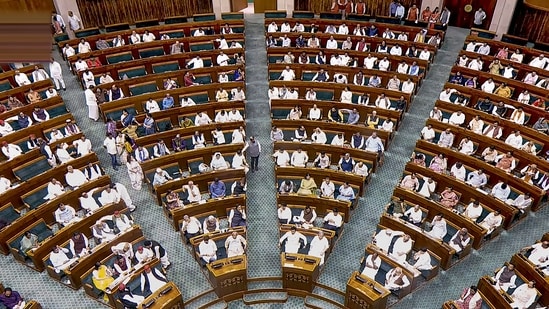
**New Delhi** — More than two and a half years after the historic passage of the Nari Shakti Vandan Adhiniyam in September 2023, the promise of reserving 33% of seats for women in India’s lower house of parliament and state assemblies remains trapped in a state of legislative limbo. As of April 2026, the law is formally etched into the Constitution, yet it is practically unimplementable in the existing Lok Sabha structure of 543 seats. The primary roadblock holding up the empowerment of female lawmakers is the rigid constitutional prerequisite linking the quota’s execution to a fresh decennial Census and a subsequent delimitation exercise. While opposition alliances demand immediate implementation via an emergency constitutional amendment, the Union government insists on procedural sanctity. Furthermore, the unresolved debate surrounding a sub-quota for Other Backward Classes (OBCs) continues to complicate the political landscape. [Source: Hindustan Times | Additional: Parliamentary Records].
## The Constitutional Hurdle: Why Not the Current 543 Seats?
The most frequent question raised by civil society and voters is straightforward: If the law has been passed unanimously, why can’t the Election Commission simply reserve 181 out of the current 543 Lok Sabha seats for women immediately?
The answer lies in the complex machinery of Indian electoral law and constitutional architecture. The Nari Shakti Vandan Adhiniyam explicitly mandates that the reservation will come into effect only after an exercise of delimitation is undertaken for this purpose, based on the relevant figures of the first Census taken after the commencement of the Act.
**Delimitation**, the process of fixing limits or boundaries of territorial constituencies, has been effectively frozen in India since 1976 (via the 42nd Amendment) to encourage population control, with the freeze extended to 2026 by the 84th Amendment. Arbitrarily selecting 181 seats from the existing map without a scientific, demographic basis would almost certainly face insurmountable legal challenges.
“Reserving seats without a dedicated Delimitation Commission would violate the foundational principles of equal representation,” explains Dr. Meenakshi Iyer, a constitutional law expert and former advisor to the Election Commission. “The process requires an independent body to transparently allocate which specific geographic constituencies will be reserved, ensuring demographic fairness and establishing a systematic rotation policy. You cannot simply draw lots in the current House.” [Source: Original RSS | Additional: Expert Analysis].
## The Government’s Stance: Transparency and Legality
The Union government has consistently maintained that rushing the implementation would result in legal chaos. Speaking during various parliamentary debates and press briefings through 2024 and 2025, government representatives have reiterated that the delay is not a lack of political will, but a commitment to constitutional propriety.
The government argues that identifying women-only constituencies requires granular, up-to-date demographic data. Since the 2021 Census was delayed due to the COVID-19 pandemic and subsequent logistical hurdles, there is currently no legal framework to redraw the constituency map. The ruling dispensation insists that a rushed implementation could lead to the Supreme Court striking down the methodology, essentially killing the bill they worked to pass.
Furthermore, the government emphasizes the importance of **seat rotation**. The reservation is designed to rotate among different constituencies in subsequent elections, preventing any single geographic area from being permanently locked out of general contestation. This mechanism, they argue, cannot be retrofitted into the existing 1971-population-based constituency map without an official delimitation framework.
## The Opposition’s Counter-Demand: A Crisis of Political Will
Conversely, the opposition framework—primarily led by the INDIA bloc—views the Census and delimitation clauses as intentional stalling tactics. They argue that the government orchestrated the passage of the 2023 bill purely for electoral optics ahead of the 2024 General Elections, fully aware that it would not alter the political reality for a decade.
Opposition leaders have pointed out that Parliament possesses the absolute power to amend the Constitution. They suggest that a simple amendment could de-link the women’s quota from the delimitation process for a transitional period of one or two election cycles.
“The argument of geographic limitation is a smokescreen,” claims a senior spokesperson for the opposition. “When the 33% reservation for women in Panchayati Raj institutions (local rural bodies) was implemented in the 1990s, it did not require a nationwide freeze on delimitation to be lifted. We can identify 181 seats based on objective criteria—such as reserving seats where women outnumber men, or using a lottery system temporarily—until the official delimitation takes place.” [Source: Hindustan Times | Additional: Public Political Discourse].
## The Unresolved OBC Question: A Quota Within a Quota
Perhaps the most deeply entrenched political landmine surrounding the Act is the demand for a sub-quota for Other Backward Classes (OBCs). This “quota within a quota” debate is precisely what torpedoed previous iterations of the Women’s Reservation Bill in 1996, 1998, 1999, and 2008.
The 2023 Act provides for sub-reservation for Scheduled Castes (SCs) and Scheduled Tribes (STs). Specifically, one-third of the seats already reserved for SCs and STs in the Lok Sabha and state assemblies will be reserved for women from those communities. However, there is **no such provision for OBC women**.
The constitutional hurdle here is that there is currently no broader political reservation for OBCs in the Lok Sabha or state assemblies. Therefore, creating a sub-quota for OBC women would first require establishing a general political quota for the OBC community at large—a move that would fundamentally alter India’s electoral mathematics.
Regional parties and social justice advocates argue that without an OBC sub-quota, the 33% reservation will be monopolized by women from privileged, upper-caste backgrounds, further marginalizing backward-class women.
**Key aspects of the OBC debate include:**
* **The Caste Census Demand:** The opposition has made a nationwide caste census a non-negotiable demand, arguing that accurate demographic data is essential to implement an OBC sub-quota fairly.
* **Representation vs. Tokenism:** Social justice leaders warn that the current format of the bill might result in “proxy representation,” where political families field upper-caste female relatives, sidelining grassroots women leaders from marginalized communities.
* **Legislative Gridlock:** The government argues that tying the women’s quota to an OBC sub-quota would require an entirely new constitutional amendment, plunging the historic legislation back into decades of political deadlock. [Source: Original RSS | Additional: Legislative History Analysis].
## Timeline: Census, Delimitation, and the Road to 2029
As of April 2026, the timeline for actualizing women in Parliament remains protracted. The roadmap involves three sequential, highly complex administrative phases:
1. **The Decennial Census:** The delayed Census must be completed and published. If the government initiates this massive administrative exercise in late 2026, the final, actionable data will likely not be published until 2028.
2. **The Delimitation Commission:** Once Census data is public, the President must constitute a Delimitation Commission. Historically, delimitation exercises take two to three years. The commission must draft proposals, hold public hearings across every state, resolve disputes regarding redrawn borders, and publish final orders.
3. **Seat Allocation:** Only after the new constituencies are carved out (which will likely increase the total number of Lok Sabha seats beyond the current 543) can the Election Commission identify the 33% of seats to be reserved for women.
Given this rigorous sequence, political analysts uniformly agree that the earliest feasible implementation of the women’s quota is the **2029 General Elections**, with some state assemblies possibly seeing it roll out between 2029 and 2031.
## Implications for Indian Democracy
The stalling of the women’s quota has profound implications for the world’s largest democracy. Despite a rapidly increasing female voter turnout—which outpaced male voter turnout in several states during recent election cycles—women remain grossly underrepresented in the legislative arena.
Currently, women make up roughly 14% of the Lok Sabha, a figure that places India behind several developing nations in global indices for political gender parity. The delay means that India will endure at least one more full electoral cycle where policy-making, budget allocation, and legislative agendas are predominantly steered by men.
Furthermore, the expansion of the Lok Sabha post-delimitation (with projections suggesting the House could grow to over 800 seats to reflect population growth in Northern states) means that when the quota is finally implemented, the absolute number of female MPs could jump dramatically. A 33% quota in an 800-seat House would introduce roughly 264 women into Parliament—a seismic shift in the corridors of power.
## Conclusion
The Nari Shakti Vandan Adhiniyam was heralded as a watershed moment in Indian political history, a triumph of consensus after nearly three decades of partisan bickering. Yet, as we navigate 2026, the legislation serves as a stark reminder of the complexities of Indian constitutional law.
The dilemma of the 543 seats is not merely an administrative hiccup; it is a profound collision between the desire for immediate gender justice and the rigid demands of electoral constitutionality. Until the dominoes of the Census and Delimitation fall into place, and until the deeply sensitive issue of OBC representation is politically reconciled, the promise of a truly inclusive Parliament will remain, frustratingly, on paper. For millions of aspiring women leaders at the grassroots, the wait continues.