
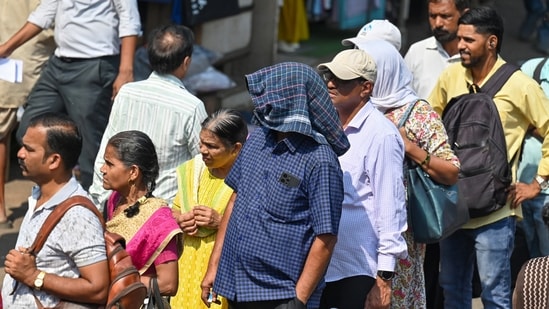
Weather news: North India sizzles under heatwave, yellow alert for Delhi, 45 degrees in UP's Prayagraj| India News
# North India Sizzles: Delhi on Alert, UP Hits 45C
**By Staff Correspondent, National Weather Desk, April 25, 2026**
A punishing early-season heatwave has firmly gripped North India this Saturday, with temperatures soaring to a blistering 45 degrees Celsius in Prayagraj, Uttar Pradesh. On April 25, 2026, the India Meteorological Department (IMD) officially issued a yellow alert for the national capital, Delhi, warning of severe heatwave conditions in isolated pockets. This rapid surge in mercury levels, following a sharp overnight increase in minimum temperatures, has prompted immediate public health advisories across multiple states. As regional governments from Rajasthan to Odisha grapple with these scorching conditions, authorities are urging citizens to remain indoors during peak hours, highlighting the growing severity and early onset of extreme weather events across the subcontinent. [Source: Hindustan Times | Additional: India Meteorological Department]
## Delhi Triggers Yellow Alert Amid Soaring Temperatures
The meteorological situation in Delhi escalated rapidly over the weekend. The IMD’s yellow alert—a directive for residents and authorities to “be aware” and stay updated—was triggered after the Safdarjung base observatory recorded a sharp spike in both minimum and maximum temperatures. Earlier today, the city experienced an unusually warm morning, with minimum temperatures hovering several notches above the seasonal average, stripping away the brief nocturnal cooling that residents typically rely on.
“The presence of dry, hot northwesterly winds blowing in from the arid regions of Rajasthan and Pakistan has significantly disrupted the local microclimate of the National Capital Region (NCR),” explains Dr. Somnath Sen, a senior climatologist analyzing the current atmospheric patterns. “When the minimum temperatures remain high, the baseline for daytime heating is elevated. This is why isolated pockets of Delhi, particularly concrete-heavy areas like Najafgarh and Mungeshpur, are experiencing heatwave conditions earlier than historically anticipated.”
The urban heat island effect is severely exacerbating the situation in Delhi. Heat absorbed by dense infrastructure—asphalt roads, concrete buildings, and sparse green cover—is radiating back into the atmosphere, making the perceived temperature (or heat index) feel significantly higher than the ambient air temperature. Local civic bodies have been instructed to ensure continuous water supply and to sprinkle water on major arterial roads to suppress dust and bring down surface temperatures. [Source: Hindustan Times | Additional: Local Municipal Corporation Directives]
## Uttar Pradesh Bears the Brunt: Prayagraj at 45°C
While Delhi simmers, the state of Uttar Pradesh is bearing the most intense brunt of the current weather system. Prayagraj recorded a staggering maximum temperature of 45 degrees Celsius today, placing it among the hottest cities in the world for this time of year. Other major hubs in the state, including Varanasi, Lucknow, and Agra, are not far behind, consistently recording temperatures between 42°C and 44°C.
The primary culprit behind this intense heat in the Gangetic plains is the strengthening of the ‘Loo’—the strong, hot, and dry summer afternoon wind characteristic of North India. The Loo has swept across the plains with unyielding intensity, dropping humidity levels to single digits and turning the outdoors into what locals describe as an “open furnace.”
Authorities in Prayagraj and surrounding districts have begun curtailing outdoor work hours. District administrations have advised schools to either shift to morning-only sessions or suspend outdoor assembly and physical education classes entirely. The severe heat has also begun to impact the water levels in the Ganges and Yamuna rivers, raising concerns about localized water scarcity if pre-monsoon showers do not arrive in the coming weeks.
## Heatwave Ripple Effects Across Rajasthan and Odisha
The thermal anomaly is not restricted to the northern plains. The heatwave’s footprint is vast, stretching westward into the desert state of Rajasthan and eastward toward the coastal state of Odisha.
In Rajasthan, cities like Barmer, Phalodi, and Churu have breached the 44°C mark. The state government has activated its emergency response protocols, ensuring that primary health centers in rural and desert areas are fully stocked with Oral Rehydration Solution (ORS) and intravenous fluids.
Conversely, in Odisha, the nature of the threat shifts from dry heat to a lethal combination of high heat and coastal humidity. While actual temperatures in Odisha may read slightly lower—around 40°C to 42°C—the high moisture content in the air prevents human sweat from evaporating effectively. This drives the “wet-bulb temperature” upward, creating a stifling environment where the risk of thermal shock is exceptionally high. The Odisha government has mandated the halt of public infrastructure projects during peak afternoon hours (11:00 AM to 3:00 PM) to protect daily wage laborers. [Source: Hindustan Times | Additional: National Disaster Management Authority]
## The Public Health Emergency and Action Plans
The intersection of extreme heat and human vulnerability is triggering a massive public health response. Heatwaves are classified as a silent disaster, often claiming more lives globally than more visible weather events like cyclones or floods.
“Prolonged exposure to temperatures exceeding 42 degrees Celsius, particularly when the body is not acclimatized so early in the season, can lead to severe heat exhaustion and fatal heatstroke,” warns Dr. Anjali Mehta, a public health expert based in New Delhi. “We are particularly concerned about the urban poor, construction workers, traffic police, and the elderly. When the minimum nighttime temperatures fail to drop below 28 degrees Celsius, the human body gets no respite, leading to cumulative thermal stress.”
In response, several states have activated their municipal Heat Action Plans (HAPs). These plans involve a multi-tiered approach:
* **Public Awareness:** SMS alerts, radio broadcasts, and social media campaigns advising the public to drink water frequently, even if not thirsty.
* **Infrastructure Adaptation:** Creating shaded areas in public markets and keeping public parks open later into the evening.
* **Medical Readiness:** Hospitals across UP and Delhi have designated “heat-stroke wards” equipped with ice packs, rapid cooling blankets, and extra nursing staff.
## Power Grids Under Massive Strain
As millions of households and commercial establishments turn to air conditioning and cooling appliances to survive the blistering conditions, the regional power grids are facing an unprecedented surge in demand. Delhi’s peak power demand has already crossed projected April limits, inching dangerously close to all-time summer highs normally reserved for late May or June.
The Ministry of Power is closely monitoring the situation. Despite India’s aggressive push toward renewable energy, including solar and wind, the sheer magnitude of the base load requirement during a severe heatwave heavily relies on thermal power plants. Authorities are expediting coal supply chains via the railway network to ensure that power generation facilities in Uttar Pradesh, Haryana, and Punjab have adequate buffer stocks. Continuous, uninterrupted power is not just an issue of comfort; it is a critical lifeline for hospitals, water pumping stations, and industrial cold storage.
## Agricultural Impact and Food Security Concerns
The agrarian sector, the backbone of the North Indian economy, is watching the skies with growing anxiety. Late April is a critical transitional period for Indian agriculture. While a significant portion of the Rabi (winter) wheat crop has been harvested, late-sown wheat in parts of UP and Punjab is highly susceptible to “terminal heat stress.”
When temperatures spike prematurely, it forces the wheat grains to mature too quickly, leading to shriveling and a substantial drop in crop yield. “We saw the devastating impact of an early March-April heatwave on wheat yields a few years ago. If these 45-degree conditions persist in the Gangetic belt for another week, we could see a noticeable dent in the overall agricultural output for the region,” notes agricultural economist Dr. R.V. Singh.
Furthermore, summer vegetables, fruit orchards (particularly mangoes in the UP belt), and poultry farming are highly sensitive to sudden thermal spikes. Farmers are being advised by local Krishi Vigyan Kendras (Agricultural Science Centers) to apply light, frequent irrigation to their fields to maintain soil moisture and lower the ambient canopy temperature of the crops. [Source: Additional: Ministry of Agriculture and Farmers Welfare Data]
## The Climate Change Connection
The events unfolding across North India today are not isolated anomalies; they are consistent with the long-term climatic projections modeled by global environmental agencies. Historically, the transition from spring to summer in India was gradual. However, meteorological data over the last decade clearly indicates that “spring” is shrinking, replaced by a sudden, harsh onset of summer temperatures in early April.
According to the Intergovernmental Panel on Climate Change (IPCC), the frequency, duration, and intensity of heatwaves in the Indian subcontinent will continue to rise as global baseline temperatures increase. The current 45°C mark hit in Prayagraj serves as a stark metric of this shifting baseline. Furthermore, changes in large-scale weather phenomena, such as shifts in the jet stream and the residual impacts of global oceanic temperature oscillations, are making localized weather forecasting more challenging and extreme events more common.
## Conclusion: Navigating the New Normal
As Delhi remains under a yellow alert and Uttar Pradesh battles the fierce 45-degree reality, the immediate focus remains on survival and damage control. The coming days will test the resilience of North India’s healthcare infrastructure, power grids, and disaster management capabilities.
**Key Takeaways:**
* **Stay Informed:** Follow IMD updates and adhere strictly to local yellow or orange alerts.
* **Hydration is Critical:** Regular intake of water, ORS, and traditional summer drinks like buttermilk can prevent severe thermal stress.
* **Protect the Vulnerable:** Community efforts must focus on the elderly, children, and outdoor workers who bear the highest risk of heatstroke.
Looking ahead, this early April heatwave is a loud, unequivocal siren. It underscores the urgent need for long-term urban planning—such as mandating cool roofs, expanding urban forestry, and rethinking water management—to ensure that the dense populaces of North India can adapt to a climate where 45°C is no longer the exception, but the new, punishing normal.





